Agriculture Minister explains urea shortage in Assembly

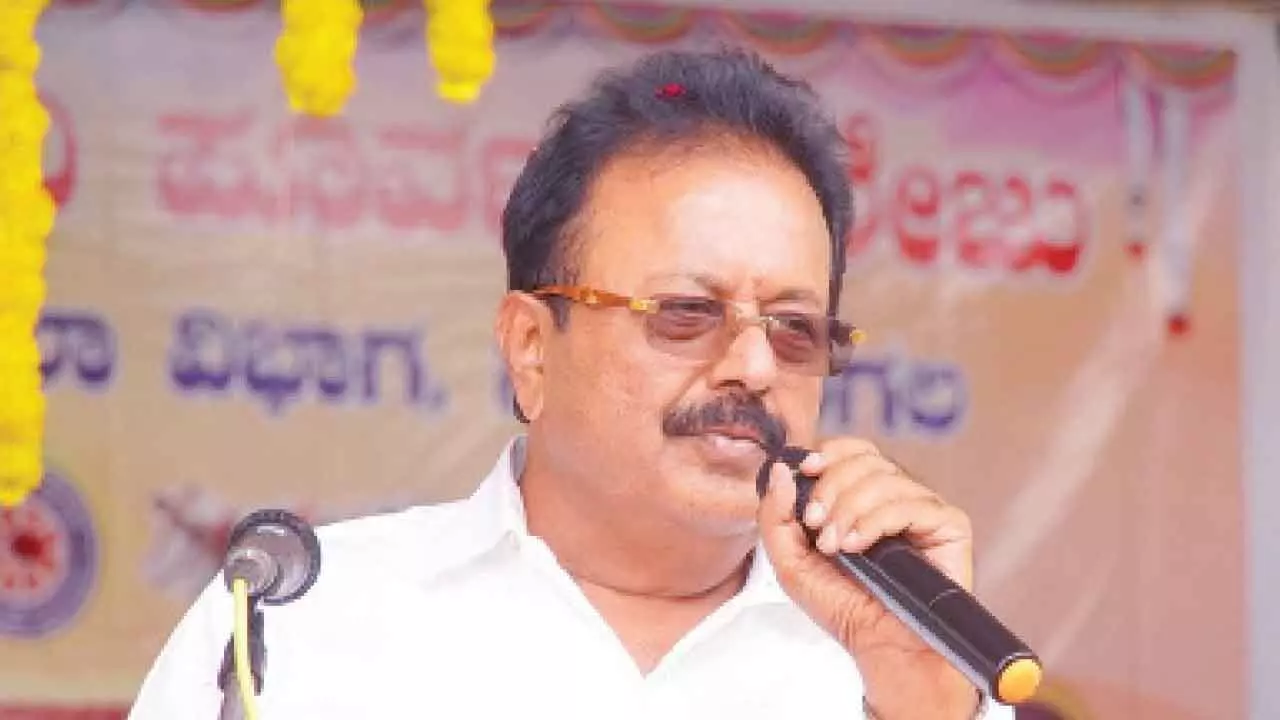
Bengaluru: Karnataka has been facing a shortage of urea fertiliser, prompting protests by farmers in several districts. The issue was raised in the Legislative Assembly on Wednesday by opposition parties BJP and JD(S), who sought an explanation from the government. Responding to their queries, Agriculture Minister Chaluvarayaswamy said the state had requested 11.95 lakh metric tonnes of fertiliser from the Centre, but only 11.17 lakh metric tonnes were supplied. “Since April, we have been holding meetings at various levels. Both the Chief Minister and I have written to the Union government, urging additional supplies. Our officials have been in constant touch with the Centre,” he said.
The minister added that the Centre had advised reduced usage of DAP fertiliser to prevent depletion of soil nutrients, resulting in a cutback of 70,000 metric tonnes. Farmers were advised to adopt a phased approach in urea usage.
Accusing the opposition of politicising the matter, Chaluvarayaswamy said, “Even though the Centre supplied 2.70 lakh metric tonnes less than required, we managed the situation. From April to September, 2.75 lakh metric tonnes of fertiliser is expected. I had to clarify the facts because you have turned this into a political issue.”
He also pointed out that the sale of fertilisers in the black market was not a new problem. “The previous government registered nine cases and handed them over to the CID for investigation. This year, we have conducted round-the-clock monitoring and seized 450 metric tonnes of illegally sold fertiliser,” he said. Chaluvarayaswamy defended his department’s handling of the crisis, saying, “For two years, we managed without issues. This is the first time we are facing such a problem. I am working with sincerity and commitment.
The shortage is not limited to Karnataka—Telangana and Andhra Pradesh have also witnessed farmer protests over fertiliser scarcity. The shortage in Karnataka is comparatively less.”