High-speed rail to go underground in Bengaluru

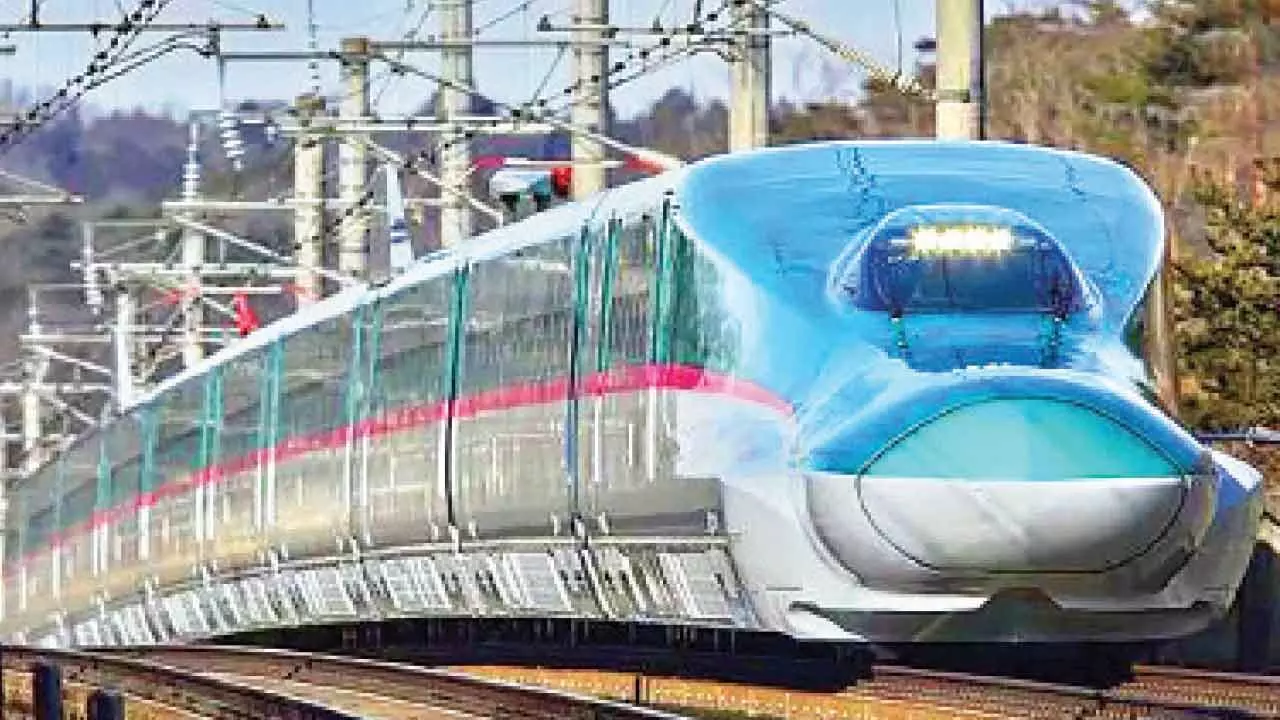
NHSRCL finalises 306- km corridor alignment
Commuters traveling between Bengaluru and Chennai may soon experience a journey lasting only 1 hour and 13 minutes. This ambitious timeline is a core feature of the proposed high-speed rail corridor, which is set to introduce significant infrastructure changes to the regional landscape.
Sources from the National High-Speed Rail Corporation Limited (NHSRCL) indicate that the Karnataka capital will feature two pivotal underground stations located at Baiyappanahalli and Whitefield.
The final alignment survey for this 306-kilometer stretch has reached completion. Officials selected this specific path after evaluating four different route options, prioritising the shortest distance while accounting for technical hurdles and terrain restrictions.
This corridor will connect several strategic hubs, including Chennai Central, Poonamallee, and Parandur—the latter being the intended site for Chennai’s second airport. Other essential stops include Ramapuram near Chittoor, Hudukula in Kolar, and Kodihalli near Hoskote.
Subterranean construction will play a vital role in the project’s design. While the majority of the track will be at ground level, specialised tunnel sections are planned for high-density or difficult areas. These include a 12-kilometer underground stretch within Bengaluru, an 11.5-kilometer tunnel through the Mogili Ghat section in Andhra Pradesh, and a 2.5-kilometer segment in Chennai. Maintenance operations will be supported by dedicated depots at Kodihalli and Poonamallee.
Strategic planning has also influenced the exact placement of regional stations. Hudukula was chosen to serve the twin needs of Kolar and Bangarapet. Similarly, the Chittoor station was relocated from its originally proposed city-center site to Ramapuram near Gudipala to better align with the Katpadi region. To bring these plans to life, NHSRCL has engaged specialised firms as RV is overseeing the survey and final alignment, Subudhi Tech is managing utility mapping, and Translink is responsible for the general alignment drawings.
Economic momentum for this project was solidified in the 2026-27 Union Budget. Finance Minister Nirmala Sitharaman proposed seven high-speed corridors, including the Bengaluru-Chennai and Bengaluru-Hyderabad routes. Collectively, these seven projects represent a 4,000-kilometer network requiring an estimated investment of 16 lakh crore Rupees.
Railway Minister Ashwini Vaishnaw highlighted the broader impact on travel, noting that Bengaluru-Hyderabad trips will take roughly two hours, while Chennai-Hyderabad journeys will take just under three hours. One notable detail is the current exclusion of Mysuru from the immediate corridor. Although an earlier 435-kilometer plan linked Chennai to Mysuru via Bengaluru, the current phase terminates at Bengaluru. Officials clarified that Mysuru remains part of the long-term vision and will be integrated during the second phase of expansion.