




- 'Hanuman Ansh' Producer Confirms Sequel After Film's Blockbuster Success
- CM Adhikari says Bengal economy on slow road to recovery
- 'Confident he can contribute': Bailey defends Labuschagne retaining Test spot for SA tour
- Indian visitor nights in Germany steady in Jan-June
- UN Climate Week opens in Azerbaijan capital with focus on climate action, finance
- One more body recovered from building collapse site; death toll climbs to 7 in Delhi's Satya Niketan tragedy
- Kailash Kher reveals why he never chases music trends: ‘I never compromise with my style’
- ‘Bigg Boss 20’: Nehal Chudasama says watching new season brought back ‘a lot of flashbacks’
The Rising Cost of Hospital Care in India: Are Families Financially Prepared?
In Short
Explore the rising cost of hospital care in India, its impact on family finances, medical inflation, health insurance gaps, and why financial preparedness is becoming increasingly important.

Share :
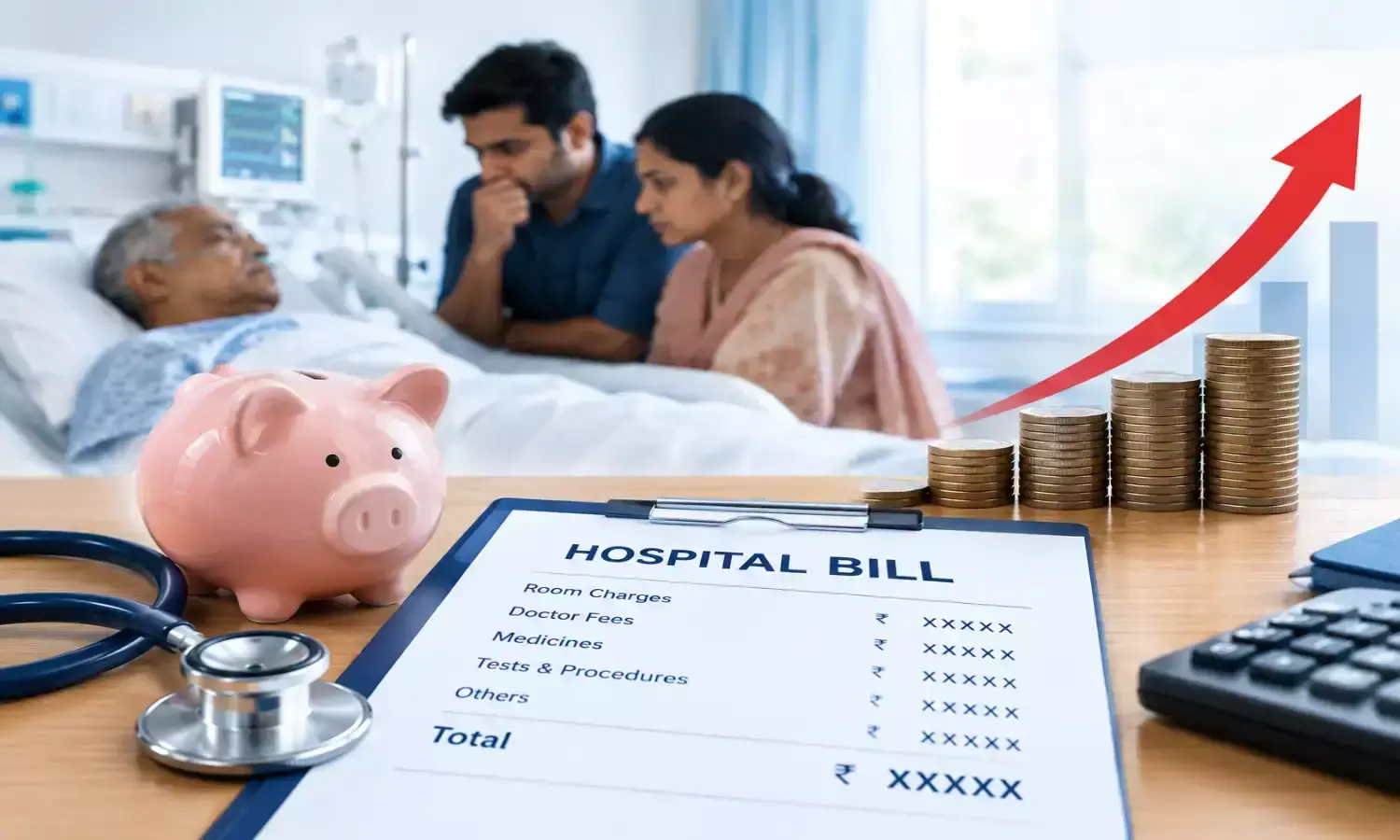
The Rising Cost of Hospital Care in India: Are Families Financially Prepared?
Imagine you have been saving money for your child’s marriage for years. Suddenly, you need surgery, and a large portion of your savings is spent on the hospital bill within a few days. Now, saving the same amount can take years, causing you to compromise with your original plans for your child’s marriage.
Healthcare costs in India are constantly rising – from room rent to treatment costs, medicines to diagnostics, everything has become expensive over the past few years.
This raises an important question: ‘Are Indian families financially prepared for the rising medical costs?’
How Rising Medical Costs Impact Common People?
Medical treatments are becoming expensive year by year. Advances in medical science and infrastructure have improved treatment outcomes, but they have also increased the overall hospitalization costs.
Here is a brief illustration of how much a major treatment in India can cost you:
Medical Treatment/Surgery | Approximate Cost |
Bypass Surgery Cost | ₹1.5 lakh - ₹6 lakh |
Kidney Transplantation Cost | ₹5 lakh - ₹12 lakh |
Brain Tumor Surgery Cost | ₹2 lakh - ₹8 lakh |
Total Cancer Treatment Cost | ₹2 lakh - ₹25 lakh+ |
Knee Replacement Cost (per knee) | ₹1.8 lakh - ₹4.5 lakh |
Cataract Surgery Cost (per eye) | ₹12,000 - ₹2 lakh |
Gallbladder Surgery Cost | ₹35,000 - ₹1.5 lakh |
Disclaimer: The mentioned costs are indicative, and may vary depending on the hospital, city and treatment’s complexity.
As illustrated in the table above, a single medical treatment can cost several lakhs of rupees. Most families are not prepared for this kind of financial burden.
Moreover, medical inflation in India exceeds the general inflation rate. What it means for an average Indian family is that the cost of medical treatment is likely to rise faster than everyday essentials.
Hence, even if you do not have an existing health condition currently and feel the rising costs is not a concern for you, you must prepare yourself financially for any future illness or medical emergency. Financial protection ensures the treatment is not delayed because you were not prepared for the hospital bills.
Hospital Bill Goes Beyond the Surgery Cost
When we talk about hospital bills, most people think about doctors’ fees and surgery costs. However, it is much more than that.
A hospital bill usually has the following components:
- Room rent
- ICU charges
- Surgery or treatment cost
- Diagnostics
- Medicines
- Doctor’s fees
- Nursing charges
- Ambulance charges
- Consumables (like gloves, kits, etc.)
- Follow-up consultations
Hence, the total hospital bill can far exceed your expectations, as you may initially overlook additional costs, underestimating the bill value. Even a small treatment or hospitalization for a few days can result in substantial expenses that you may not be prepared for.
Why Are Hospital Costs Increasing?
Let us now look at the reasons why hospital costs are increasing in India:
Advanced medical infrastructure: Procedures requiring modern technology, robotic surgeries and specialized equipment are costly and increase the hospital bill.
Medical devices & medicines: New or imported medical devices, drugs and injections are costlier than regular ones, significantly increasing treatment costs.
Rising ICU and emergency care costs: Critical medical procedures and post-care require advanced monitoring systems, expensive equipment and trained professionals, thereby increasing the overall cost of treatment.
Higher professional fees: Specialized doctors and experienced healthcare professionals usually have higher consultation fees and service charges.
High costs of complex or experimental treatments: Some treatments require multiple diagnostic tests and longer hospital stays, raising the overall costs. Experimental treatments (those under trial or with limited availability) are usually costly too.
How Families Usually Manage Healthcare Costs and Why is it a Problem?
When faced with a medical emergency, most families immediately focus on arranging funds.
And the most common way is utilizing savings meant for other financial goals. In most cases, even this is not sufficient.
Here are some of the common ways through which people manage hospital expenses:
- Using emergency funds
- Borrowing from friends or relatives
- Breaking fixed or recurring deposits
- Withdrawing from investments or retirement savings
- Taking personal loans
These options may provide financial support, but often come at the cost of other long-term goals. You can lose your lifelong savings in one go. If you take a loan, repaying it increases your financial obligations, and you may have to postpone or compromise on other life goals, such as purchasing a home or funding your children’s education.
When you do not have a preset system to manage rising healthcare costs, it increases financial pressure not just during a medical crisis but also beyond it.
How Does Health Insurance Help Reduce the Financial Burden?
Health insurance plans for family help to reduce the financial impact of a medical crisis by covering eligible hospitalization expenses. This reduces the amount you have to pay from your own pocket, giving you the confidence to get quality treatment without having to think twice about the high medical costs.
Here is how health insurance helps manage medical costs:
- Financial coverage: It usually covers expenses incurred on hospitalization, pre- and post-hospitalization, surgeries, daycare procedures, ICU/room rent, doctor’s fees, procedures related to AYUSH and ambulance charges, depending on the policy terms.
- Cashless hospitalization: If the treatment is taken at a network hospital, the insurer settles the eligible medical expenses directly with the hospital. This allows you to receive timely treatment without making large upfront payments.
- Get Quality Treatment: A plan with a wide network of cashless hospitals ensures you are able to get medical care at a hospital of your choice and do not have to compromise on the quality of treatment.
- Protection against rising medical costs: As medical inflation continues to rise, a health insurance plan for family with an adequate sum insured ensures you remain protected not only against today’s healthcare expenses but also against future medical costs.
While every health insurance plan provides basic hospitalization coverage, many modern plans offer additional features that increase financial protection, lower premiums or improve the overall policy experience.
Modern-age plans do more than just pay hospital bills.
- Most plans offer restoration benefits that automatically refill or restore the sum insured upon its partial or full exhaustion. This allows you to receive continued coverage for additional claims during the same policy year, even when the base sum insured is exhausted.
- The cumulative bonus benefit pays a certain percentage of the sum insured for not making any claim during a policy year and adds this bonus to your sum insured up to the specified limit, thus increasing your overall coverage amount.
- Value-added benefits, such as preventive health check-ups, in modern health insurance plans for family allow you to monitor your family’s health and assess early signs of potential health risks.
Compare plans to find the one that suits your healthcare needs.
With multiple insurers offering a variety of health insurance plans, it is natural to feel overwhelmed when buying a policy. To make an informed decision, you must compare plans based on different factors and determine their value for money.
While you can buy a plan directly from the insurer or through an authorized insurance intermediary, comparing plans is important in both cases. Online insurance broking platforms like Policybazaar.com allow you to easily compare health insurance plans based on their features, waiting periods, network hospitals and premiums on a single screen. It can save you the hassle of visiting each insurer’s website and reviewing each plan separately.
Choose a plan that offers comprehensive coverage, shorter waiting periods, fewer restrictions or sub-limits and has a large network of cashless hospitals. Always consider your specific healthcare needs and future medical costs to choose a plan with an adequate sum insured. And remember to review your policy regularly to ensure its coverage meets your healthcare needs.
Final Takeaway
Illnesses and accidents often occur unannounced and can become a significant burden for your family if you are not financially prepared. In a medical crisis, your focus must be on getting quality treatment and not on arranging money. As hospital costs continue to rise, relying solely on savings and borrowing money may not be a viable solution.
A health insurance policy ensures that you do not have to lose years of your hard-earned savings to pay hospital bills. To reduce financial stress, you must evaluate your family’s healthcare needs and choose adequate health insurance coverage. Review your policy regularly to assess whether the sum insured is sufficient to cover current medical costs.
Taking steps toward financial preparedness today helps you protect your family’s health as well as your life goals in the coming years.
Vijayasai Reddy announces about new party, outlines vision, says he is not CM candidate
BRS MLAs Protest At Gunpark Over Congress Government’s 1,000 Days In Power
Delhi Satya Niketan Building Collapse: HC To Hear Plea As Death Toll Rises To Six
Air India Express Kochi-Abu Dhabi Flight Returns After Engine Oil Drops Mid-Air
OpenAI scientist warns no one is ready for smarter AI: 5 key points
Tamil Nadu CM Vijay Targets DMK, Invokes Anna, MGR, NTR And Jayalalithaa In Assembly Speech


