




- WhatsApp Business Messages to Be Paid From October 1: India Pricing Explained
- High Court Rejects Bail Pleas Of Umar Khalid, Sharjeel Imam
- October OTT Calendar: Must-Watch Movies And Web Series
- AP minister Mandipalli Ramprasad Reddy hails archers’ Asian Games gold
- Nani Is All Ready To Join The Sets Of Bloody Romeo
- R Veeramani Faces Third POCSO Case Over 2004 Death Of Class 11 Student
- Trump Calls Sundar Pichai a ‘Monster’ at Lunch with AI CEOs
- Vijayasai Reddy outlines five-point plan for North Andhra
India’s Counter-Terror Response: A Decade of Strategic Action
In Short
India’s counter-terrorism strategy has evolved significantly over the past decade, marked by key operations including the 2015 Myanmar strike, 2016 surgical strikes, 2019 Balakot airstrike, and Operation Sindoor in 2025. The government says these actions reflect a broader shift toward proactive security and counter-terror measures.

Share :
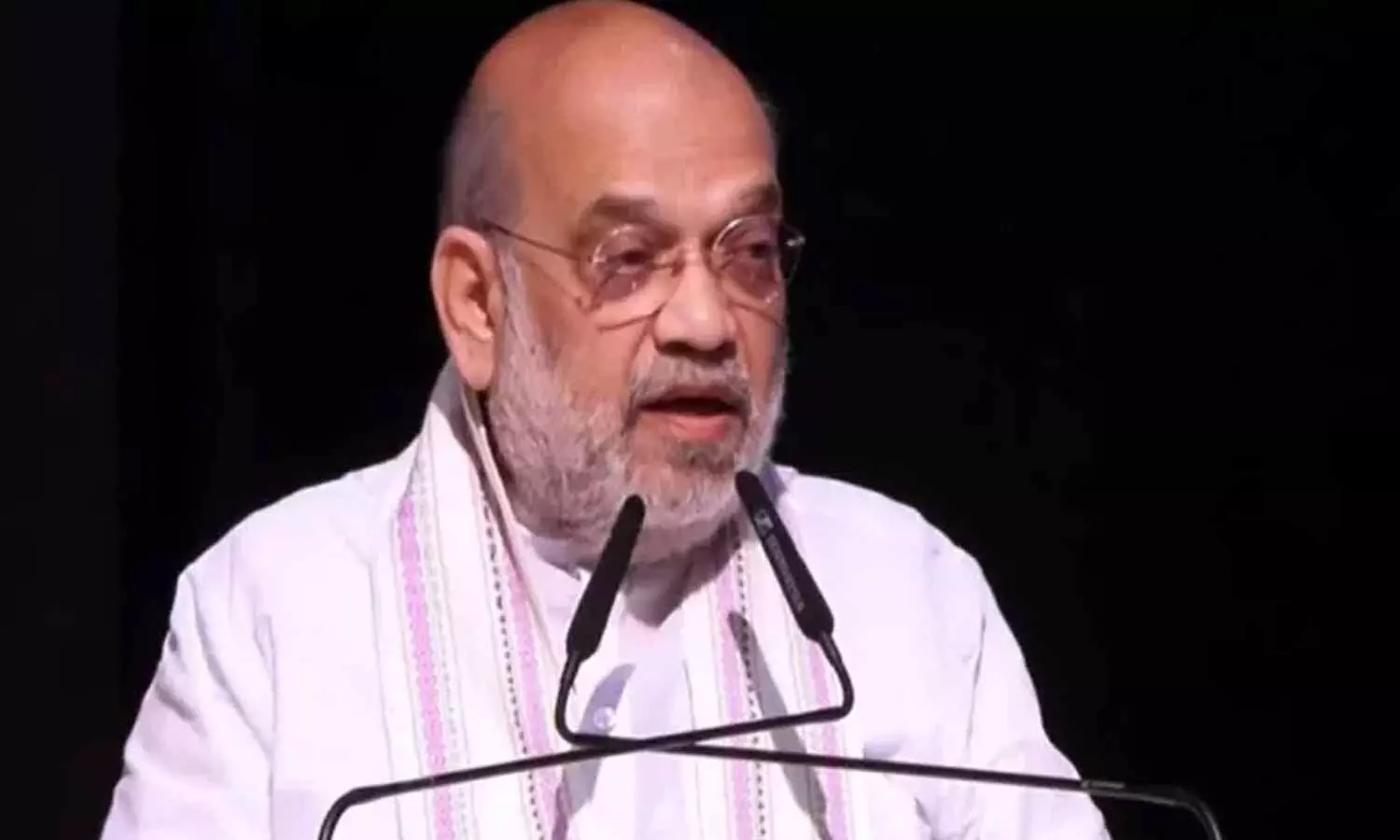
Union Home Minister Amit Shah
Bengaluru: India’s approach to countering cross-border terrorism has undergone a significant shift over the past decade, moving from predominantly diplomatic responses to a more direct use of military force, with the 2016 surgical strikes emerging as a defining moment in this change.
In the 138th episode of Mann Ki Baat on September 27, Prime Minister Narendra Modi recalled the surgical strikes of September 28-29, 2016, describing them as a decisive response to the long-standing challenge of terrorism. He said the operation had presented a new example of India’s counter-terrorism policy and referred to the subsequent Balakot air strike and Operation Sindoor as further instances of India’s response to terrorist attacks.
Figures cited by Union Home Minister Amit Shah show a decline in terrorist incidents over the two decades. According to data presented by Shah, 7,217 terrorist incidents were recorded between 2004 and 2014, compared with 2,242 between 2014 and 2024. He said total deaths declined by 70 per cent, civilian deaths by 81 per cent and security personnel casualties by 50 per cent during the corresponding periods.
The military response became increasingly visible after the Chandel ambush in Manipur in June 2015, in which 18 Army personnel were killed. Indian Special Forces crossed into Myanmar on June 9 and targeted militant camps, with the government publicly acknowledging the operation.
Following the Uri attack in September 2016, in which 19 soldiers were killed, Indian Special Forces conducted strikes on terror launch pads across the Line of Control on the night of September 28-29. The operation was publicly briefed by the Director General of Military Operations the following day.
After the Pulwama attack in February 2019, which killed 40 CRPF personnel, the Indian Air Force conducted an air strike on a Jaish-e-Mohammed facility at Balakot on February 26. Both the 2016 and 2019 operations subsequently became subjects of political debate, with opposition leaders questioning aspects of the operations and the government defending them as necessary counter-terror measures.
Operation Sindoor followed the April 22, 2025 Pahalgam attack in which 26 civilians were killed. On May 7, Indian forces struck nine terror-infrastructure sites in Pakistan and Pakistan-occupied Jammu and Kashmir. The government described the initial action as focused and measured and said Pakistani military facilities were not targeted at that stage.
Following Pakistan’s military response, India expanded its action to include strikes on military installations. Government accounts subsequently described attacks on 11 Pakistani military bases.
The response also included diplomatic and strategic measures, including placing the Indus Waters Treaty in abeyance. The government has described Operation Sindoor as a continuing policy, with the operation being “paused” rather than declared over.
The four major operations — Myanmar in 2015, the LoC strikes in 2016, Balakot in 2019 and Operation Sindoor in 2025 — illustrate the widening geographical and operational scope of India’s counter-terror response. The government has also emphasised indigenous defence capabilities, precision-strike systems, coordination among the three armed services and diplomatic engagement as important elements of its broader security strategy.
Following Operation Sindoor, India also sent all-party delegations abroad to present its position to international partners, combining military action with diplomatic outreach.
CM Chandrababu invited to Indrakeeladri Dasara celebrations
EAM S Jaishankar Raises Concern Over Likely Food Crisis
High Court Rejects Arvind Kejriwal’s Appeal, Upholds ₹25,000 Cost In PM Modi Degree Case
INDIA Bloc Expands Agenda: From Agitation to Membership Expansion
Gas Cylinder e-KYC Deadline Today: How to Complete Aadhaar Authentication
EC Form 6 Move Gives Oppn Fresh Ammunition minutes before INDIA bloc Meet


