




- Karnataka ranks next to TN in south for groundwater-recharge water bodies
- AAP Delhi chief Saurabh Bharadwaj calls emergency meeting, says ‘something big’ being planned by Centre
- Congress-NDA row over video clip of interruption to FM Sitharaman's speech in Andhra Pradesh
- Government orders postings of Divisional Development Officers
- Dasara special puja tickets to be issued from Oct 5
- Show-cause notices issued to 26 APCC members
- Narayana launches development works worth Rs 2.80 crore
- Govt fully prepared to conduct local body elections
Take a sneak peek at HILT policy
In Short
Nuts and bolts of the policy

Share :
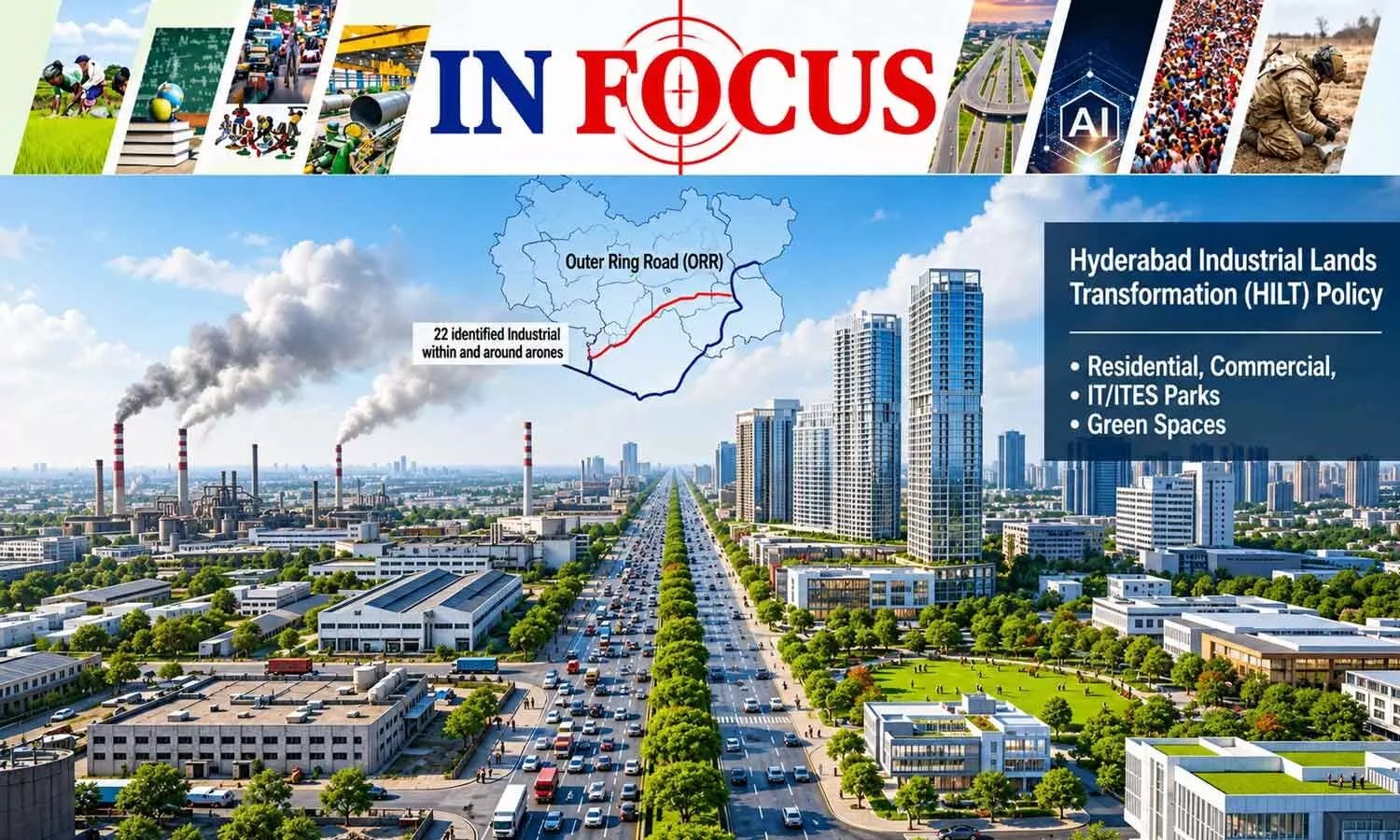
Take a sneak peek at HILT policy
Hyderabad: Although the main objective of the HILT Policy is to facilitate conversion of industrial lands within and near the Outer Ring Road to multi-use zones. The policy highlighted five other determining factors.
Firstly, the encroachment of the industrial zones into urban areas poses a threat to better living in Hyderabad. The industrial estates established 60 years ago at Balanagar, Kattedan, and Kukatpally --- once on the city’s periphery --- are now deeply embedded within Hyderabad’s densely populated urban core, creating acute socio-economic and environmental challenges.
Secondly, economic unviability of existing units is rife. It says that updated technology, disrupted supply chains, and escalating compliance costs have rendered many industrial units economically unviable, resulting in widespread closure and leaving prime urban land assets underutilised and unproductive.
Thirdly, pollution and public health concerns have been raised as polluting and hazardous industries are now operating in proximity to residential areas posing serious risks to public health, air quality, and the urban environment. All this has necessitated strategic relocation of the industries outside the ORR.
The mandated GO number 20 issued in 2013 explained the relocation of the polluting industries in the HILT Policy. The GO mandated the shifting of polluting industries (Red and Orange categories) outside the ORR. The TGIIC was directed to develop modern eco-friendly Industrial Parks at peripheral locations to facilitate the relocation.
Fifthly, there is immense, untapped urban and economic potential. According to the HILT Policy, vacated and underutilised industrial lands represent a significant urban asset. Repurposing them into dynamic multi-use zones can unlock substantial economic value, generate non-tax revenue, and support Hyderabad’s emergence as a global metropolis.
CBI begins probe into Kaleshwaram project?
Kishan urges ryots to lead 'White Revolution 2.0'
Cops register case over Janhvi Kapoor AI video
Decriminalising GST regime augurs well
Justice must not only be done but also remain beyond doubt
A tale of two cities: Unmasking the reality of Hyderabad’s urban boom


