




- Telangana CM accuses KCR of attempting to grab Rs 50,000 crore land
- IAF Chief Amar Preet Singh calls on President Murmu ahead of his retirement
- Helicopter returning from Badrinath Dham crashes near Joshimath; search operation underway
- Uttarakhand to observe Sardar Patel’s 151st birth anniversary as National Unity Day tomorrow
- Swami Dayanand Saraswati Death Anniversary 2026: Remembering The Founder Of Arya Samaj And His Reformist Legacy
- Kajal Aggarwal Celebrates Karwa Chauth With Husband Gautam, Shares Adorable Pics
- Tiger Shroff firing case: 12th accused arrested from Sonipat, money trail under scanner
- Manoj Tiwari Takes Dip In Yamuna, Claims River Is Cleaner; AAP Challenges BJP To Drink Water At Kalindi Kunj
Bangladesh lifts hilsa fishing ban, but declining catches cloud supply hopes
In Short
Around 42,000 fishermen in Chandpur resumed fishing in the Meghna and Padma rivers as the ban on catching, selling, and transporting hilsa officially ended at 11:59 p.m. Thursday, reported Bangladesh’s The Business Standard on Friday, adding their return was “after weeks of hardship”.

Share :
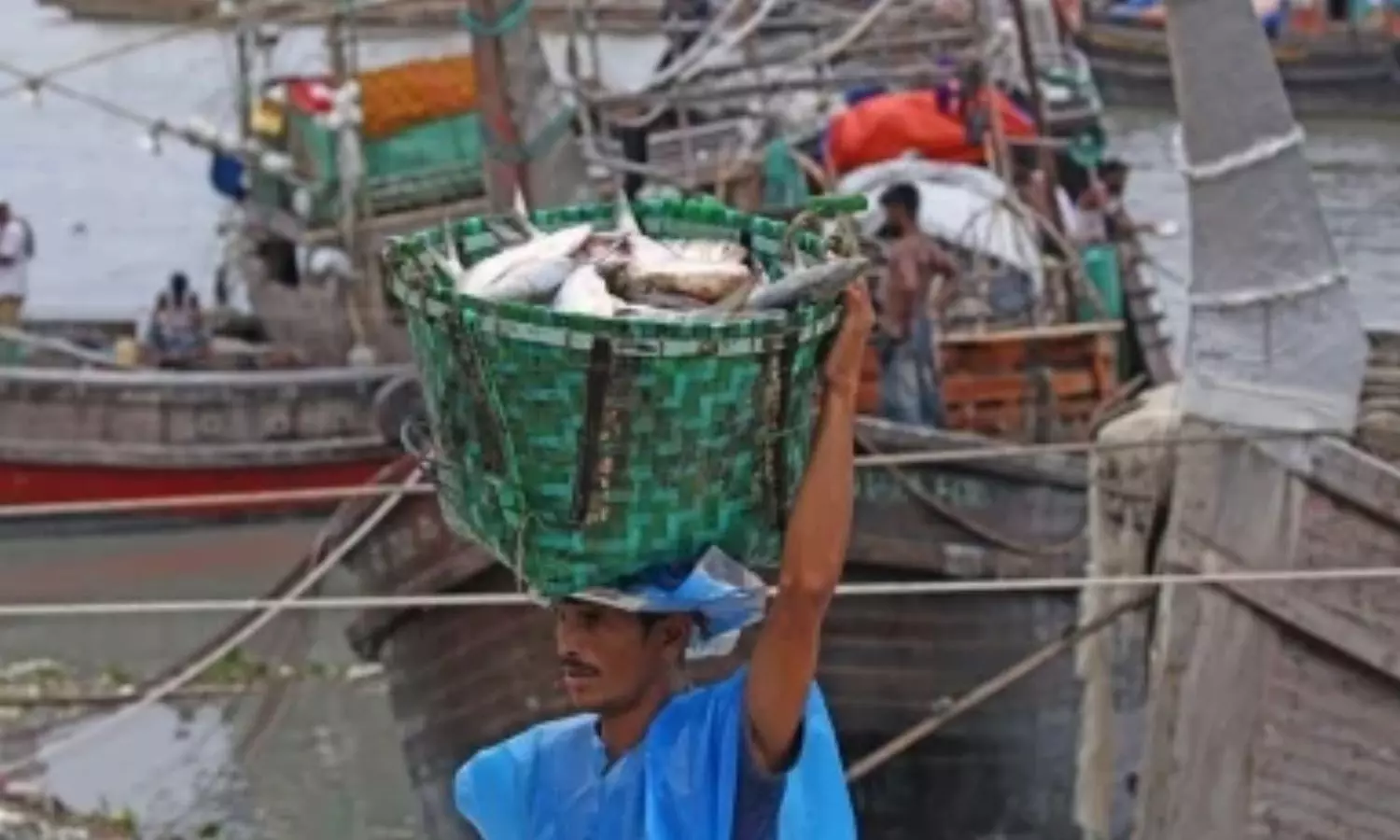
Fishermen in Bangladesh resumed their efforts early
New Delhi/Dhaka: Fishermen in Bangladesh resumed their efforts early Friday at landing what is largely the Bengali’s most treasured fish after a 22-day ban imposed by the government to protect spawning hilsa during the breeding season that ended a minute before midnight, according to reports.
Around 42,000 fishermen in Chandpur resumed fishing in the Meghna and Padma rivers as the ban on catching, selling, and transporting hilsa officially ended at 11:59 p.m. Thursday, reported Bangladesh’s The Business Standard on Friday, adding their return was “after weeks of hardship”.
Now the question is whether supply will be sufficient to satisfy the enormous Bengali appetite for hilsa.
Hilsa migrates from the sea to freshwater rivers for spawning, and breeds mainly during the monsoon and winter seasons, thus limiting availability.
Bangladesh ranks first in the world in hilsa production, being third in inland open-water capture fisheries, fourth in tilapia production and fifth in aquaculture overall, the report said further.
Overall, Bangladesh is among the world’s top fish producers, where in 2023-24, it produced 5.02 million metric tonnes of fish, worth about $20.44 billion, according to a separate report.
The fisheries sector accounts for 2.43-2.53 per cent of GDP and over 22 per cent of agricultural GDP, it said, adding that it provides nearly 60 per cent of the animal protein Bangladeshis consume each day and supports the livelihoods of 19 to 20 million people, directly and indirectly.
Around mid-September this year, Bangladesh’s ‘Prothom Alo’ probed the reasons behind the high price of hilsa and found that its production, or catch, has declined for the past two years.
The situation has raised concerns among researchers, the report stated.
Hilsa researcher Md Anisur Rahman sought an investigation into the reasons behind the decline, sharing that what he has been witnessing “for the past two years is alarming”, blaming “Both people and nature” for being responsible.
“Researchers currently believe that the spread of nets with extremely fine mesh in the sea, excessive fishing, pollution and underwater shoals are contributing to the decline in hilsa production,” concluded the report.
Few fish command the cultural devotion hilsa enjoys among Bengalis on either side of the Ganga-Padma, especially the fish from Bangladesh. It is deeply intertwined with festivals, family gatherings, weddings and seasonal rituals.
For many households, a meal featuring fresh hilsa is not simply food but an expression of identity and nostalgia.
Bengalis continue to prize it despite its notoriously complex bone structure, to savour its flavour. Hilsa is said to possess a rich oil content that produces a distinctive aroma and buttery texture unlike most freshwater or marine fish.
When steamed with mustard, cooked in a light broth or simply fried, the fish releases oils that create a layered taste combining sweetness, salinity and umami. Thus, the conservation measure has been based on the fact that hilsa needs a protected breeding window to reproduce successfully.
Administrations in hilsa-producing regions have been imposing seasonal bans, sanctuary protection, and enforcement drives to ensure mature fish can spawn before being harvested.
During this year's prohibition, authorities conducted extensive enforcement operations and seized large quantities of illegally caught hilsa and fishing nets, underscoring the scale of the challenge.
Such measures reportedly affected the livelihoods of many fishermen who were already complaining that hilsa availability had been below expectations and that earnings were insufficient to sustain themselves and repay debts.
The government’s attempt to ease the burden through food-assistance programmes -- like hundreds of thousands of fishing families reportedly having received rice allocations this year during the closure period – has been met with arguments that the support was insufficient.
As in many spheres, the conflict between ecology and livelihood sits at the heart of the hilsa debate.
Bolsonaro backs off Brazil poll challenge after Trump says 'I’m not running Brazil'
Telangana CM accuses KCR of attempting to grab Rs 50,000 crore land
PM-KISAN direct payments to farmers cross Rs 4.64 lakh crore mark
'Modi kahin nahi jaayega': Gujarat turns Kharge remark into a show of support for PM Modi
CEC ‘Public Impeachment’ Bid Put Off; Amit Shah Throws Down Challenge: Govt Ready for Special Session
FM Sitharaman slams Rahul Gandhi over remarks on IDBI Bank stake sale
Emotional Connect, Political Punch: 'Apna Narendra Bhai' in Gujarat
SIR deadline extended in AP and Telangana
‘Daya Karo, Soniaji!’ Delhi Chamber Makes an Emotional Appeal
Heavy rain alert issued to AP, Telangana amid expected low pressure


