Astronauts on the International Space Station return to scientific research activities.

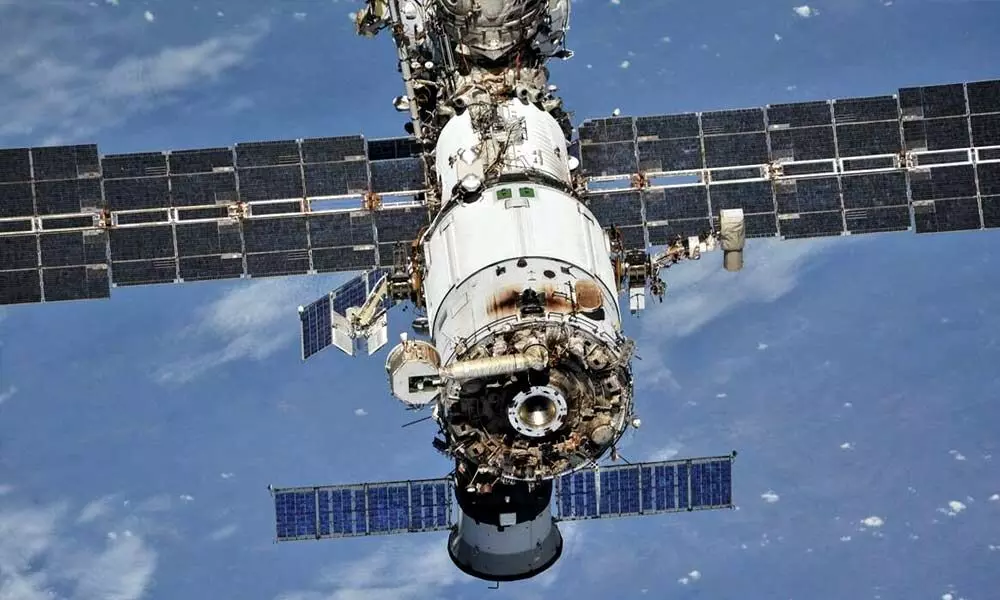
Astronauts on the International Space Station return to scientific research activities.
Doctors will examine data to better understand blood circulation in weightlessness. Ax-4 astronauts Peggy Whitson and Tibor Kapu studied how blood flow to the brain changes as part of their experiment.
On Tuesday, Expedition 73 crew members and Ax-4 astronauts resumed space science experiments aboard the International Space Station after a short break. NASA said that their research included brain circulation, cancer cell observation, and biotechnology among other areas.
Japanese Space Agency JAXA Station Commander Takuya Onishi donned chest and neck sensors to measure cerebral-to-cardiac blood flow patterns.
Doctors will examine the data to determine how blood circulation changes when weightlessness occurs. Changes in cerebral blood flow was one of several topics Peggy Whitson, Tibor Kapu and the Ax-4 crew studied on the mission.”Whitson helped Tibor Kapu, wearing a cap, to capture blood flow in his cerebral artery with a Doppler ultrasound machine, while his blood pressure was measured using a cuff.
The results will be used by doctors to protect the crews' visual perception and processing in microgravity. Under fluorescence microscopy, Whitson explored cancer cells, working toward learning how to identify and prevent the disease at an earlier stage.
Anne McClain, a NASA flight engineers, and Nichole Ayers, a NASA flight engineer from the Ax-4 team spent part of their Tuesday shift helping them. McClain helped the private crew perform experiments and operate specialized research equipment in the orbital laboratory. Ayers in the Destiny lab module installed a microscope Shubhanshu Shukla from the Ax-4 crew would use to study tardigrades, also known as water bears, in conditions that mimic the space environment. Slawosz Uznanski Wisniewski of Ax-4 investigated nanomaterial-based wearables for space-based astronaut health monitoring.
One of the most experienced Roscosmos flight engineers Jonny Kim began his shift with Onishi by drawing blood samples, performing centrifugation, and stowing the processed samples in a science freezer. Kim reorganized gear in the Harmony module's tools and supplies area and installed segments of the ventilation system in the Quest airlock.