




- US House Advances Russia Sanctions Bill With Provision For 100% Tariffs On India
- Engineering students told to focus on innovation
- Stone laid for curry leaf processing unit
- Preserve Tirumala traditions for future generations: CM Chandrababu Naidu
- CM Chandrababu Naidu invites IIT alumni, tech leaders to PanIIT AP Summit
- CM Chandrababu Naidu warns coaching centres against mobilising aspirants for protests
- APPSC notifies 892 vacancies
- CM Chandrababu Naidu sets March 2027 deadline for 5.52L houses
China’s Belt and Road Initiative shifts from infrastructure financing to debt collection: Bessent
In Short
Bessent made the assessment during a House Financial Services Committee hearing on the international financial system. He accused China of using opaque lending terms and hidden provisions that obstruct debt restructuring in developing economies.

Share :
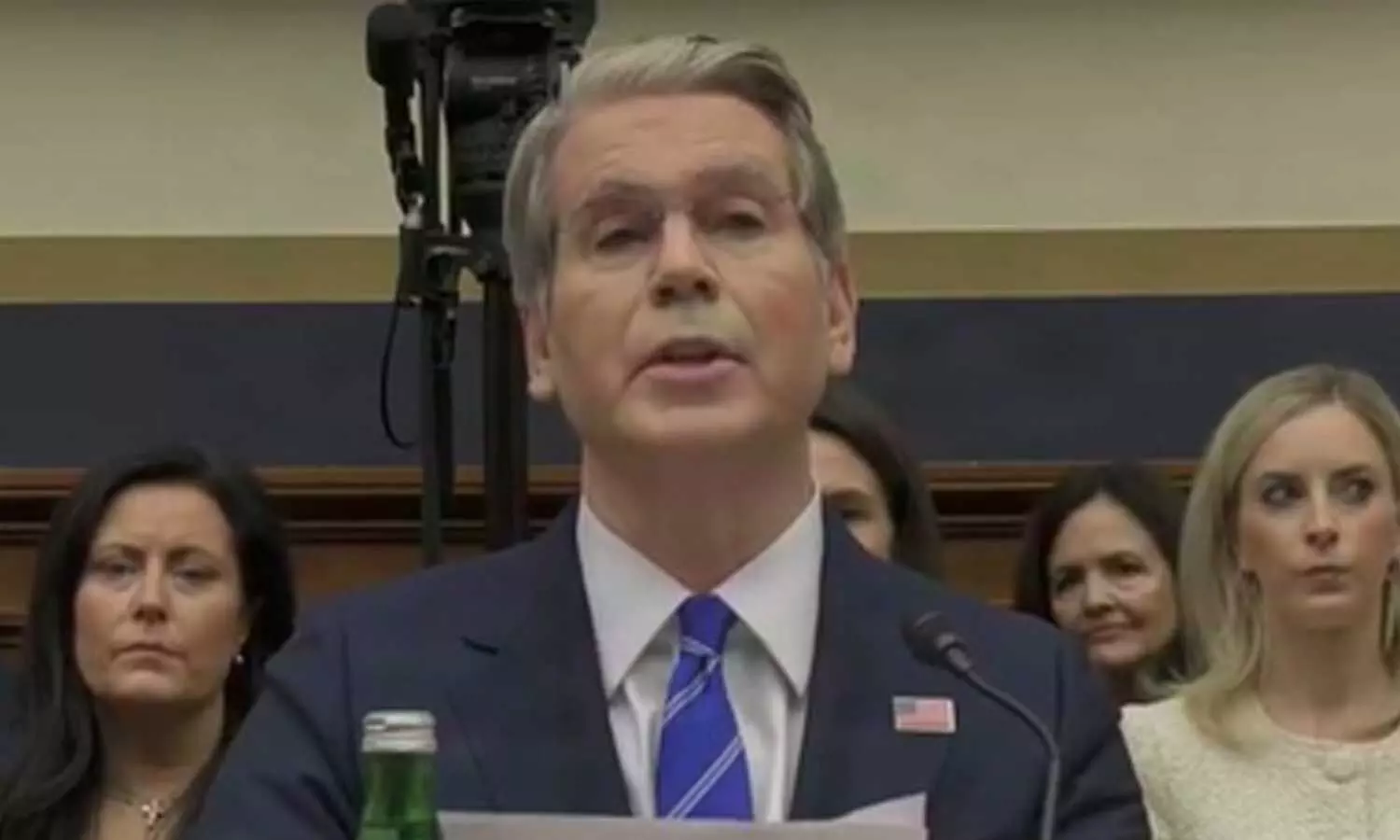
China’s Belt and Road Initiative shifts from infrastructure financing to debt collection: Bessent
Washington: China’s Belt and Road Initiative has shifted from financing infrastructure to collecting debts from countries struggling to repay Chinese loans, US Treasury Secretary Scott Bessent has told lawmakers.
Bessent made the assessment during a House Financial Services Committee hearing on the international financial system. He accused China of using opaque lending terms and hidden provisions that obstruct debt restructuring in developing economies.
“It is also my opinion that this widely talked about Belt and Road Initiative has gone from a lending operation to a collection operation, as they have bankrupted many or are bankrupting many of their borrowers,” Bessent said.
The Treasury secretary said the United States had raised Chinese lending practices during the recent Group of 20 meeting in Asheville, North Carolina.
He said transparency was essential for countries seeking to renegotiate unsustainable debt. The International Monetary Fund supported greater disclosure of lending terms, he added.
“The Chinese System of lending includes many tolling agreements, many the hidden provisions and transparency in debt restructuring is the ultimate feature for a successful debt restructuring,” Bessent said.
He was responding to Republican Representative Scott Fitzgerald, who said China was delaying debt restructuring and distorting the international financial system through opaque lending practices and management of its exchange rate.
Bessent said the first debt restructuring since the G20 discussions was expected to take place, but he did not identify the country involved or provide a timetable.
The hearing also examined China’s role at the IMF and World Bank.
Committee Chairman French Hill said the World Bank’s decision to phase out lending to China by 2031 was “an important step in the right direction”.
“China has enormous financial resources of their own,” Hill said. “It is a major global creditor and uses state-directed investment to advance its economic and geopolitical interests around the world.”
Hill argued that American taxpayers should not be supporting World Bank lending to the world’s second-largest economy.
He also questioned whether the IMF was doing enough to address China’s economic imbalances. Bessent said the fund was holding advanced discussions with Beijing about those imbalances and their possible impact on global financial stability.
Lawmakers also pressed Bessent over China’s status as a non-market economy and its resistance to criticism at the G20.
“At the G-20 in Asheville, we had a communique drafted that criticized non-market economies, and China would not sign on to that,” Bessent said.
“So 19-to-1. And if you could imagine getting all these countries from around the world to agree to that, China was the lone holdout,” he added.
Bessent said the US dollar continued to dominate international transactions despite efforts by China and Russia to reduce their dollar-denominated reserves. He said the dollar’s share of global transactions had increased during the year.
The Belt and Road Initiative was launched by Chinese President Xi Jinping in 2013 to finance ports, railways, roads and energy projects across Asia, Africa, Europe and Latin America. Several recipient countries have since sought to renegotiate debts after encountering repayment difficulties.
India has declined to join the initiative. New Delhi has objected particularly to the China-Pakistan Economic Corridor because projects under the corridor pass through Pakistan-occupied Kashmir. Beijing rejects allegations that the initiative creates debt traps and describes it as a platform for infrastructure development and international economic cooperation.
China’s Belt and Road Initiative shifts from infrastructure financing to debt collection: Bessent
Bilichodu police station marks Ganeshotsava with message of communal harmony
US House Advances Russia Sanctions Bill With Provision For 100% Tariffs On India
AP govt. releases notification for police recruitment
Govt opens doors to fee on large UPI payments
22-A controversy: CM Revanth to expose Dharani loopholes in Assembly
Local BRS leaders stalling re-entry of turncoat MLAs!
Vice-President to be chief guest at Hyd Liberation Day fete
Reading for pleasure is akin to unlocking a hidden treasure
Learn security lessons from Bolarum arms theft shocker


