




- Trump targets Canadian goods in US contracts amid trade deal row
- No deal unless Lebanese army strengthens control, says Israeli army chief
- Western troops in Ukraine would mean direct war: Russian FM
- BJP to launch 'Seva Sankalp Abhiyan' today to mark PM Modi's 25 years of public service
- PM Modi to inaugurate 5th edition of SEMICON India 2026 today
- Deepti Naval meets Ashwini Bhave at her California home during US tour, says ‘creating memories again’
- Vadnagar-Varanasi bike yatra to be held today to mark PM Modi's birthday; HM Shah to flag off rally
- Ponguleti questions Harish over registration of assigned lands
Democrats press Trump to raise Tibet, Uyghur human rights issue with Xi
In Short
At a Democratic-led hearing on Tuesday, lawmakers said commercial interests should not eclipse concerns over repression in China. They also criticised cuts to programmes supporting human rights groups and independent information for Chinese audiences.

Share :
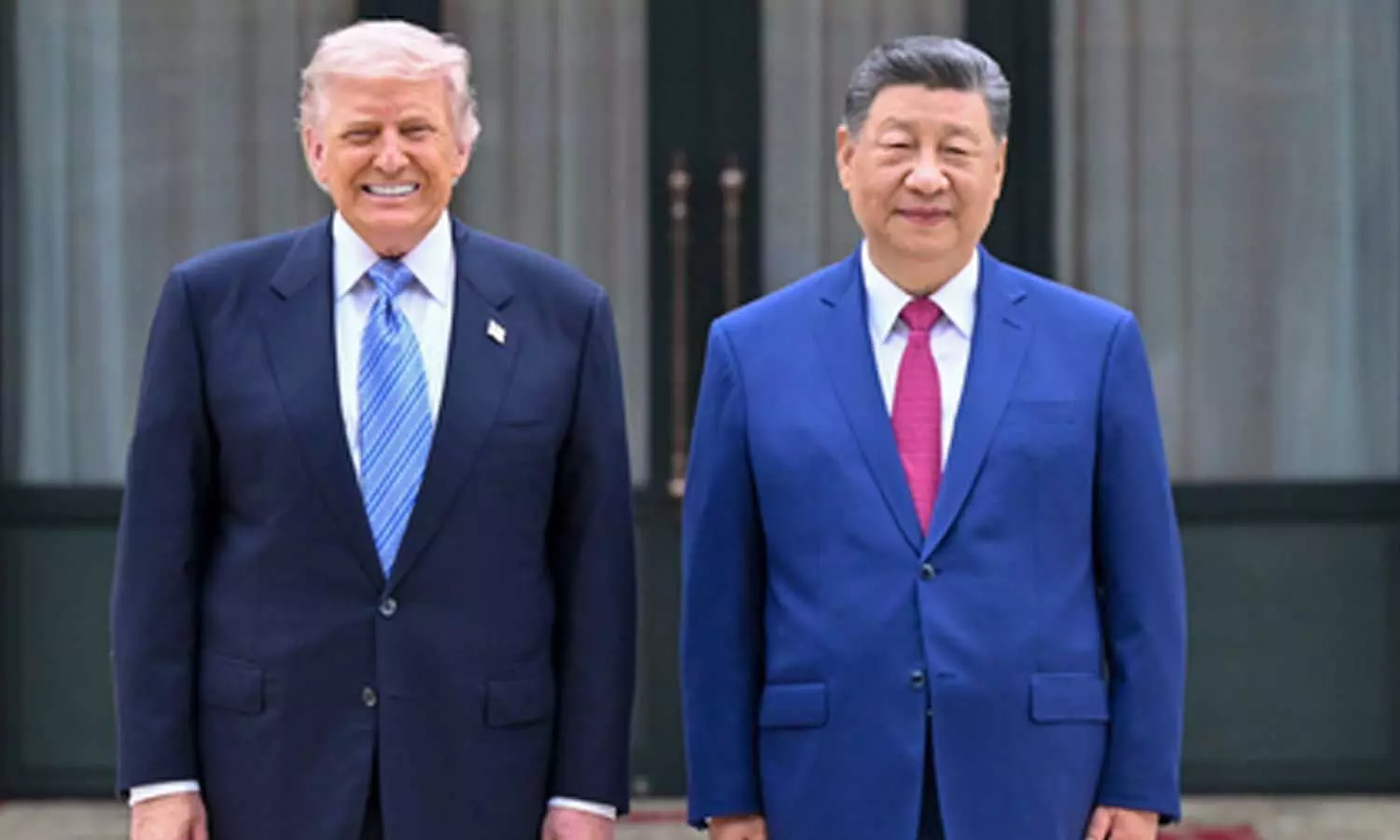
Democrats press Trump to raise Tibet, Uyghur human rights issue with Xi
Washington: Democratic lawmakers have urged President Donald Trump to raise human rights concerns, including China's treatment of Tibetans and Uyghurs, during Chinese President Xi Jinping's forthcoming White House visit, accusing his administration of sidelining the issue in relations with Beijing.
At a Democratic-led hearing on Tuesday, lawmakers said commercial interests should not eclipse concerns over repression in China. They also criticised cuts to programmes supporting human rights groups and independent information for Chinese audiences.
The hearing brought together Representatives Greg Stanton, Jim McGovern, Ro Khanna, Nancy Pelosi and Seth Moulton. Their opening statements were released on September 16 (local time).
Stanton said Trump would host Xi for a state dinner the following week. He urged Washington to confront Beijing over its treatment of ethnic and religious minorities.
"Standing up for the oppressed in the PRC, whether it be Uyghurs, Tibetans, Hong Kongers, Mongolians, or Han Chinese, has always been and must be a bipartisan issue."
Stanton alleged that 650,000 Tibetans were forced from their homes in 2024 under a programme involving the transfer of rural workers. He also cited an estimate that almost 3.5 million Tibetans had been forced from their homes since 2000.
He said persecution of Uyghurs continued, more than three years after the House select committee on China held a hearing focused on their treatment.
The supplied release contained no response from the White House or the Chinese government to the lawmakers' allegations.
McGovern, the top Democrat on the Congressional-Executive Commission on China, accused Trump of abandoning a longstanding approach that combined engagement with pressure over human rights.
"President Trump has removed human rights from US foreign policy in favour of a transactional approach."
He criticised Secretary of State Marco Rubio over cuts to the State Department's human rights work and grants to organisations focused on China. He also attacked administration efforts to eliminate Radio Free Asia and Voice of America.
McGovern said the current Congress had not sent a single China human rights bill to the president. He contrasted that record with several bipartisan measures passed between 2018 and 2024.
Khanna, the senior Democrat on the House select committee on China, questioned whether Trump's trade rhetoric was matched by action against goods produced through forced labour.
"We actually were enforcing the law," Khanna said, referring to the Biden administration.
He accused Trump of failing to follow through on the issue despite promises to protect American manufacturers and rebalance trade with China.
Pelosi warned against allowing business interests to determine Washington's response to abuses. She also stressed the importance of publicly naming prisoners and recognising their courage.
"We always want to mention, whether we're delivering letters, whether we're speaking on the floor, whatever it is, to make sure that people in prison know that they are not forgotten, that their courage is recognised, and we will not rest until there is some justice in all of this."
Moulton argued that competition with China extended beyond military and economic strength to international leadership and values. He said cuts to independent journalism and civil society programmes weakened America's ability to communicate with people in China.
The witnesses included Uyghur Post founder Tahir Imin, International Tibet Media Organization president Palden Gyal, China researcher Yaqiu Wang and Hong Kong freedom advocate Jonathan Stivers.
Congress has previously passed bipartisan legislation addressing Tibet, Uyghur rights and Hong Kong. These measures include the Reciprocal Access to Tibet Act, the Tibetan Policy and Support Act and the Uyghur Forced Labor Prevention Act.
The Dalai Lama received the Congressional Gold Medal in 2007 at a ceremony attended by President George W. Bush and congressional leaders from both parties. McGovern cited that event as an example of Washington's earlier bipartisan engagement on human rights in China.
Democrats press Trump to raise Tibet, Uyghur human rights issue with Xi
Stone pelting at mosque, madrasa during Ganesha immersion procession triggers tension
India denounces Pakistan over aiding 'worst of humanity' 9/11 al-Qaida terror leaders
CMs extend birthday wishes to PM Modi on his 76th birthday, hail his 25 years of public service
Will make Tirumala, Tirupati world-class spiritual centres
Naidu to join Seva Sankalp Abhiyan in Varanasi today
AP clears Rs 5,912-crore urban projects to be funded by ULBs
Modi gave wings to the great Indian dream
People to engage in a month-long intense cleanliness campaign
Ex-mayor’s brother held for plotting crime


