




- Jagan seeks appointment of amicus curiae to supervise local body polls in Andhra
- MP Congress questions Rs 575 Cr aircraft purchase by Mohan Yadav govt amid debt burden; seeks cost details
- YS Jagan addresses on local body elections, alleges YSRCP being obstructed
- India has recovered over 650 stolen ancient statues in 12 years: PM Modi
- Tirupati MP seeks removal of DIG, two SPs from Civic Poll duty
- Prabhas Birthday Special: Fauzi Poster Unveils His Mysterious Military Look
- Anupam Kher calls meeting Stevie Wonder backstage ‘surreal’, says his kindness touched him
- Bengaluru IED blast: Police verify footage from over 100 CCTVs, form 5 special teams
India offers Central Asian nations high-value partnership, sustainable development model
In Short
Central Asia’s expanding engagement with India is poised to create a collaborative growth framework rooted in historical ties and respect for national sovereignty, a report has stated.

Share :
Central Asia’s expanding engagement with India
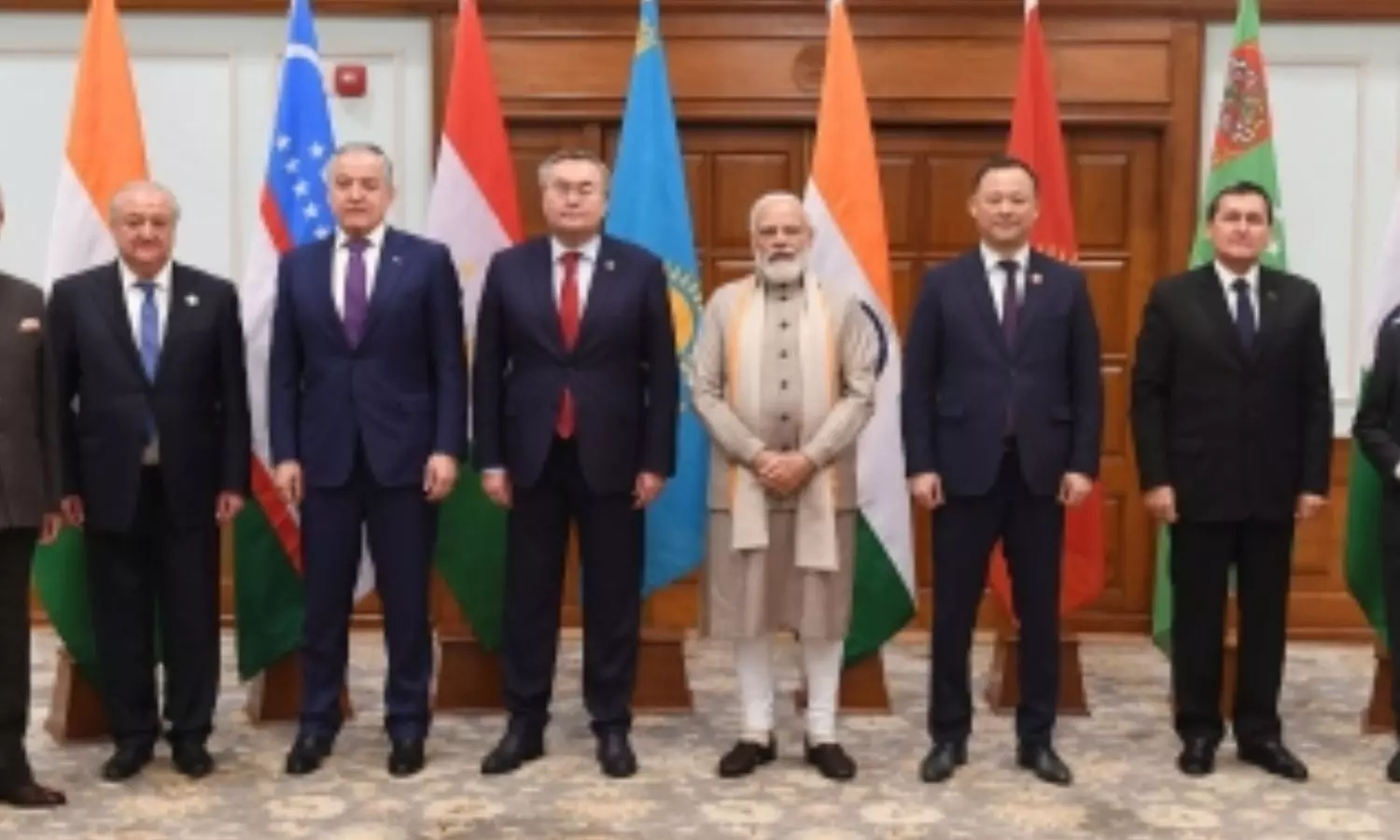
Naypyidaw: Central Asia’s expanding engagement with India is poised to create a collaborative growth framework rooted in historical ties and respect for national sovereignty, a report has stated.
India offers the Central Asian Republics (CARs) a high-value economic partnership focused on sustainable development, technology transfer and trade diversification, unlike China’s resource-extractive approach, which views the region largely as a supplier of raw materials and a market for cheap manufactured goods, a report in Myanmar's media outlet 'Mizzima News' highlighted.
By supplying world-class pharmaceuticals, technical expertise and digital infrastructure, including digital payment systems, alongside connectivity initiatives such as the International North-South Transport Corridor (INSTC) and Chabahar Port, India can help bridge critical developmental gaps and improve Central Asian economies, gaining greater access to global markets, the report mentioned.
The post-Moscow era, it stated, has seen Central Asian nations broaden their strategic partnerships with China and India amid Russia’s reduced influence in the region.
“China has been a seasoned regional player as an infrastructure supplier, leveraging infrastructural initiatives like the Belt and Road Initiative (BRI) for strategic ties, along with investments in transport, regional energy reserves, and digital infrastructure. On the other hand, India’s engagement has been driven by an issue-based development approach, often envisaged via the International North-South Transport Corridor (INSTC) and the Chabahar Port, which are crucial to its Connect Central Asia policy, along with promoting thematic partnerships on rare earth metals and digital partnerships,” it detailed.
Given the growing involvement of the two emerging powers in the region, the report said, CARs have several compelling reasons to favour New Delhi in trade and commerce while pursuing a multi-vector diplomatic approach.
“First, the geostrategic and security concerns with respect to China’s BRI have made the region especially fertile for Indian engagement. Post-2015, India has viewed CAR as a single geographical unit for facilitating cooperation. Since then, multiple deals have been signed between India and CARs on a variety of issues, including security, energy, trade, and culture. As mentioned earlier, this rejuvenation of ties is also determined by the historicity of traditional and socioeconomic ties between the two,” the report in 'Mizzima News' mentioned.
“Second, there exists anti-China sentiment and deep scepticism amongst the CARs for a variety of reasons. Central Asians are sceptical of Chinese investments, as these investments are considered risky and a threat to sovereignty. Besides, the Chinese treatment of ethnic minorities like the Uyghurs, Kazakhs and Kyrgyz has fuelled public angst. Chinese tendencies are often seen as expansionist, based on historical experiences. This is where the narrative of deep, friendly historical ties with India, and its influence as a soft cultural power, pitches in,” it added.
The report noted that India’s trade framework for the CARs prioritises sustainable infrastructure, concessional financing and transparency, helping address concerns about debt-trap diplomacy.
Against this backdrop, it said, closer economic ties with India could enable the Central Asian nations to strengthen their economic resilience while retaining sovereign autonomy and ensuring that development is guided by mutual respect.
Meghalaya’s Rs 151 crore Shillong Peak ropeway targets October 2028 completion
Kabir Bedi floored by Mysore Dussehra Parade; calls the experience an "incredible" one!
Gujarat farmers sell 3.2 crore quintals of produce worth Rs 12,740 crore through 'eNAM'
Vaikom Vijayalakshmi Once Again Stole The Hearts With ‘Bhaja Govindam’ Song


