Putin Slams Washington's 'Colonial-Era' Approach To India And China Sanctions

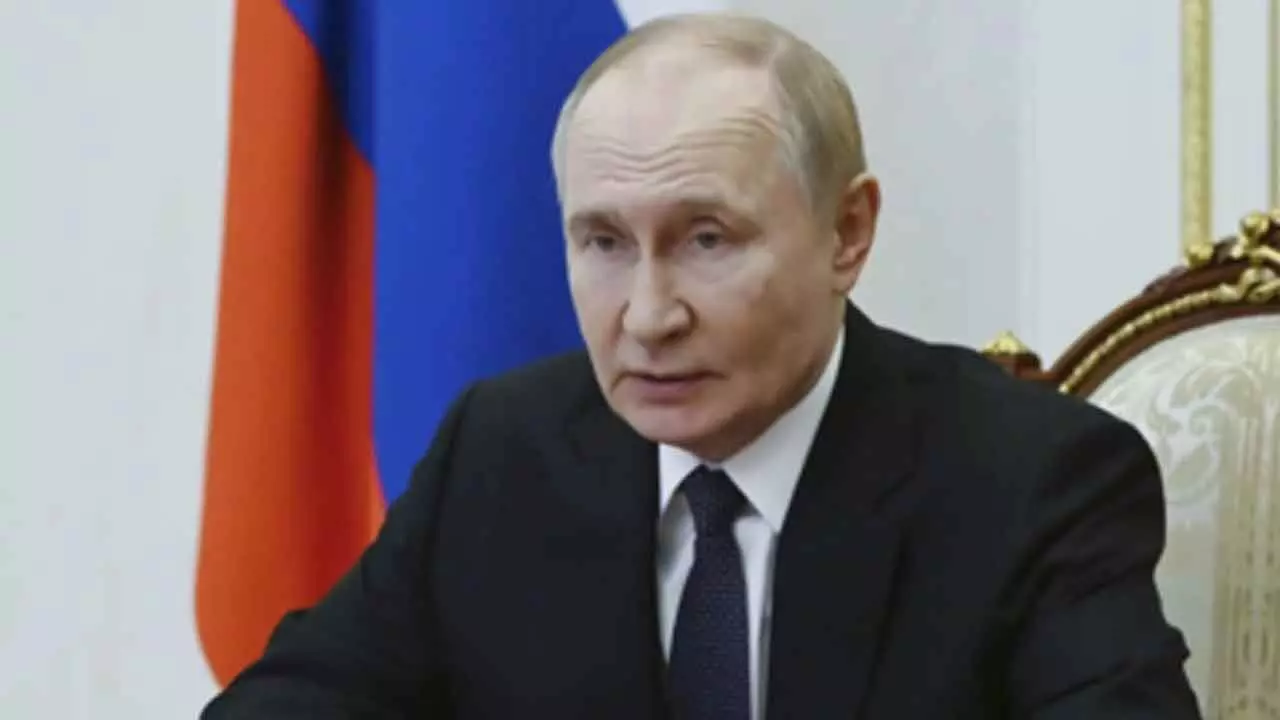
Russian President Putin criticizes US tariff policies against India and China as outdated colonial thinking, warning America cannot strong-arm major Asian powers with economic pressure.
Russian President Vladimir Putin delivered a sharp rebuke to the United States, condemning Washington's use of tariffs and sanctions against India and China as reminiscent of colonial-era tactics that have no place in modern international relations. Speaking to media following his participation in the Shanghai Cooperation Organisation Summit and a military parade in China, Putin warned America that it cannot intimidate major Asian powers through economic coercion.
The Russian leader's criticism centers on what he views as Washington's misguided attempt to pressure two of Asia's most significant economies through punitive trade measures. Putin characterized India and China as vital "partners" and argued that the Trump administration's tariff regime represents a deliberate strategy to "undermine the leadership of these nations" rather than engage in genuine diplomatic dialogue.
Putin emphasized the demographic and economic realities that make such pressure tactics ineffective and potentially counterproductive. He pointed to India's population of 1.5 billion people and highlighted that both nations possess robust domestic political systems and legal frameworks that cannot simply be bypassed through external economic threats. The Russian president questioned how American policymakers expect the leadership of such substantial countries to respond when confronted with ultimatums and punishment-based diplomacy.
The historical context of colonialism plays a crucial role in Putin's analysis of current tensions. He noted that both India and China endured prolonged periods of foreign domination that profoundly shaped their national consciousness and political reflexes. According to Putin, leaders in these nations understand that displaying weakness in the face of external pressure would likely end their political careers, making compromise under duress virtually impossible. This historical legacy, he argued, fundamentally influences how these governments respond to American economic threats.
Putin's most pointed criticism targeted what he characterized as Washington's outdated mindset. He declared that "the colonial era is now over" and insisted that American officials must recognize they cannot employ colonial-era language and tactics when dealing with sovereign partners. This represents a fundamental shift in global power dynamics that the United States has yet to fully acknowledge, according to the Russian leader.
Despite his harsh criticism of current American policies, Putin expressed optimism that tensions would eventually subside. He predicted that diplomatic relations would normalize once all parties recognize the new geopolitical realities and return to respectful political dialogue based on mutual recognition rather than coercion.
The timing of Putin's comments is particularly significant as India faces mounting pressure from Washington over its continued energy purchases from Russia. The Trump administration has imposed secondary sanctions on India specifically targeting these transactions, with American officials claiming the measures have already cost Moscow "hundreds of billions of dollars." Trump himself has warned that additional phases of sanctions remain under consideration, having previously told India that continued Russian oil purchases would result in "big problems" for New Delhi.
The escalating tensions reflect broader strategic competition in the region, with Washington attempting to isolate Russia through pressure on its trading partners while Moscow seeks to maintain crucial economic relationships. Putin's defense of India and China suggests Russia views these nations as essential allies in resisting what it perceives as American economic imperialism.
Adding another dimension to the complex diplomatic landscape, Putin also acknowledged the constructive role that India and other strategic partners are playing in seeking resolution to the Ukraine conflict. At the SCO Summit, he expressed appreciation for the "efforts and proposals of China, India, and our other strategic partners aimed at facilitating the settlement of the Ukrainian crisis." This recognition indicates that despite disagreements over energy trade, Russia values India's diplomatic contributions to conflict resolution efforts.
The Russian president's intervention in the US-India trade dispute highlights the interconnected nature of contemporary geopolitical challenges. What began as bilateral economic tensions between Washington and New Delhi has evolved into a broader debate about appropriate conduct in international relations and the limits of economic coercion as a diplomatic tool.
Putin's characterization of American tactics as colonial-era thinking resonates with broader criticisms of Western approaches to global governance. By framing US policies in historical terms, he appeals to anti-colonial sentiments that remain powerful in much of the developing world, potentially strengthening Russia's diplomatic position while undermining American influence.
The effectiveness of Putin's messaging likely depends on how Asian nations interpret his warnings about American intentions. If governments in the region view US trade policies as genuine threats to their sovereignty rather than legitimate economic negotiations, Washington may find its influence diminished across multiple relationships simultaneously.
The unfolding diplomatic drama illustrates the complex calculations facing major powers in an increasingly multipolar world. As traditional alliance structures evolve and new partnerships emerge, the language and methods of international engagement must adapt to reflect contemporary realities rather than historical precedents that may no longer apply to current circumstances.