UK PM Keir Starmer Unveils Sweeping Immigration Overhaul To Preserve Social Unity

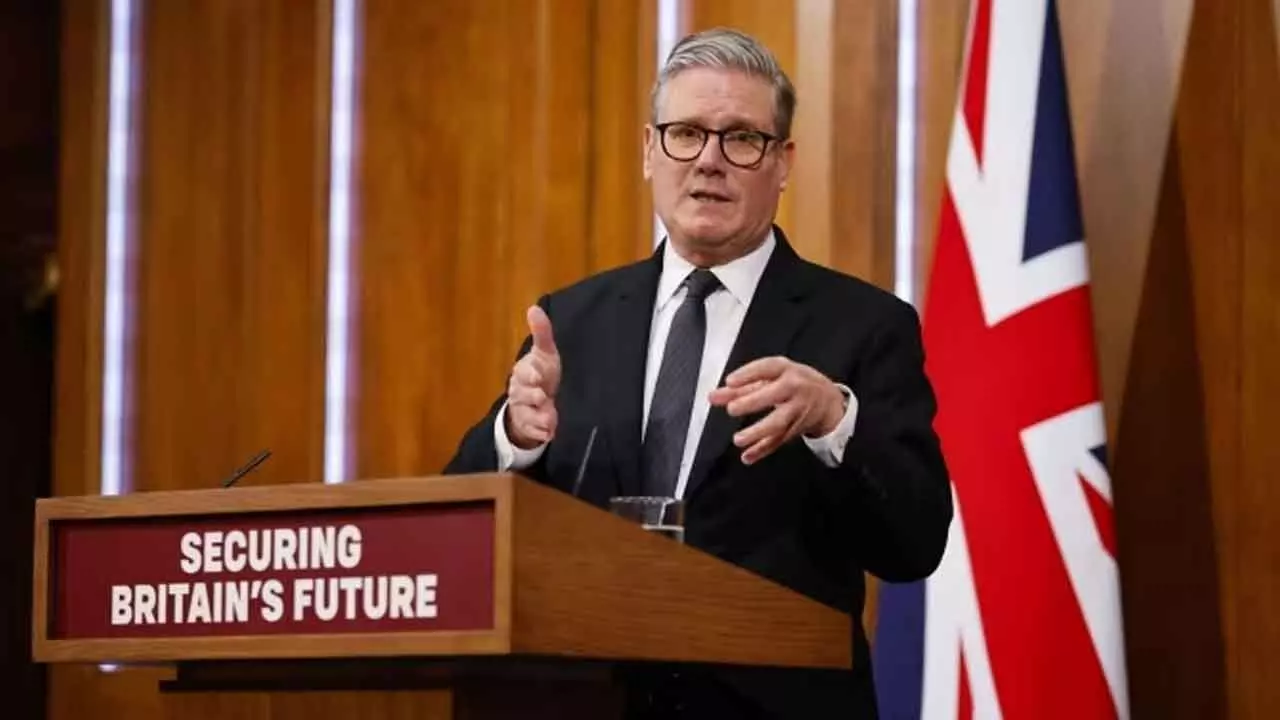
UK Prime Minister Keir Starmer announces major immigration reforms, including stricter visa rules and extended residency requirements, aiming to cut migration and strengthen social cohesion.
On Monday, British Prime Minister Keir Starmer revealed an ambitious plan to overhaul the country’s immigration policies, warning that unchecked migration threatens to turn the UK into “an island of strangers.” Emphasizing the importance of national unity, he outlined a series of stringent reforms aimed at reducing net migration and restoring public trust in the system.
The centerpiece of Starmer’s initiative is the extension of the residency requirement for permanent settlement and citizenship from five to ten years. Migrants must now also demonstrate a tangible contribution to the British economy and society to qualify. Additionally, English language proficiency standards will be raised, and for the first time, adult dependents will also be subject to language requirements.
Describing the reforms as the most significant since Brexit, Starmer pledged to bring down net migration “significantly” over the next four years. The announcement follows mounting political pressure, especially after the rise of Reform UK, led by Nigel Farage, which recently outperformed Labour in local elections.
“This plan will lead to lower migration — that’s a firm commitment,” Starmer declared at a Downing Street press conference ahead of the release of the government’s Immigration White Paper. He added that further measures would be considered if needed.
Starmer criticized previous Conservative governments for what he called an “open borders experiment,” promising instead a controlled and fair approach that selects migrants based on national needs. Key proposals include restricting care homes and other companies from recruiting under certain visa categories and limiting skilled worker routes to graduates. A fast-track entry will be available for professionals in critical sectors like healthcare, engineering, and AI.
Contrary to business leaders' claims that migration boosts economic growth, Starmer said recent years had disproven this belief. He argued that higher immigration has not necessarily translated into economic gains, rejecting calls for more lenient policies.
While he stopped short of setting a specific target for net migration reductions, Starmer reiterated his commitment to tackling what he called one of the UK's most pressing challenges. Net migration hit a record 906,000 in the year to June 2023 — nearly five times higher than in 2019, prior to Brexit.
The reforms also signal a shift in the UK’s approach to international humanitarian programs. While the country will stay within the European Convention on Human Rights (ECHR), Starmer suggested a review of how Article 8 — which protects family life — is interpreted, in an effort to tighten asylum rules without withdrawing from the treaty.
Nevertheless, industry leaders and the care sector have raised concerns about the impact of stricter immigration laws on labor availability, warning of worsened staff shortages in critical fields.
Starmer concluded by stressing the importance of rules in maintaining a cohesive society: “Without a clear framework of rights and responsibilities, we risk losing our national identity and becoming a divided nation of strangers.”