




- Study Projects 38% of Vehicles to be Electric by 2030
- Congress pays tributes to Indira Gandhi, calls her 'symbol of indomitable courage'
- 'Climb rung by rung': Indira Gandhi's advice to Punjab schoolgirl who aspired to become PM
- Boot camp held for management researchers
- Fox Sagar to get Mini-Tank Bund makeover
- Ponguleti vows to safeguard every inch of govt land
- Revanth warns KCR, says nature will punish him
- CM Revanth seeks speedy nod for three high-speed rail corridors
Ekta Divas: Remembering the Iron Man Who United India
In Short
October 31 is observed as National Unity Day, or Rashtriya Ekta Diwas, to mark the birth anniversary of Sardar Vallabhbhai Patel, fondly remembered as the Iron Man of India.

Share :
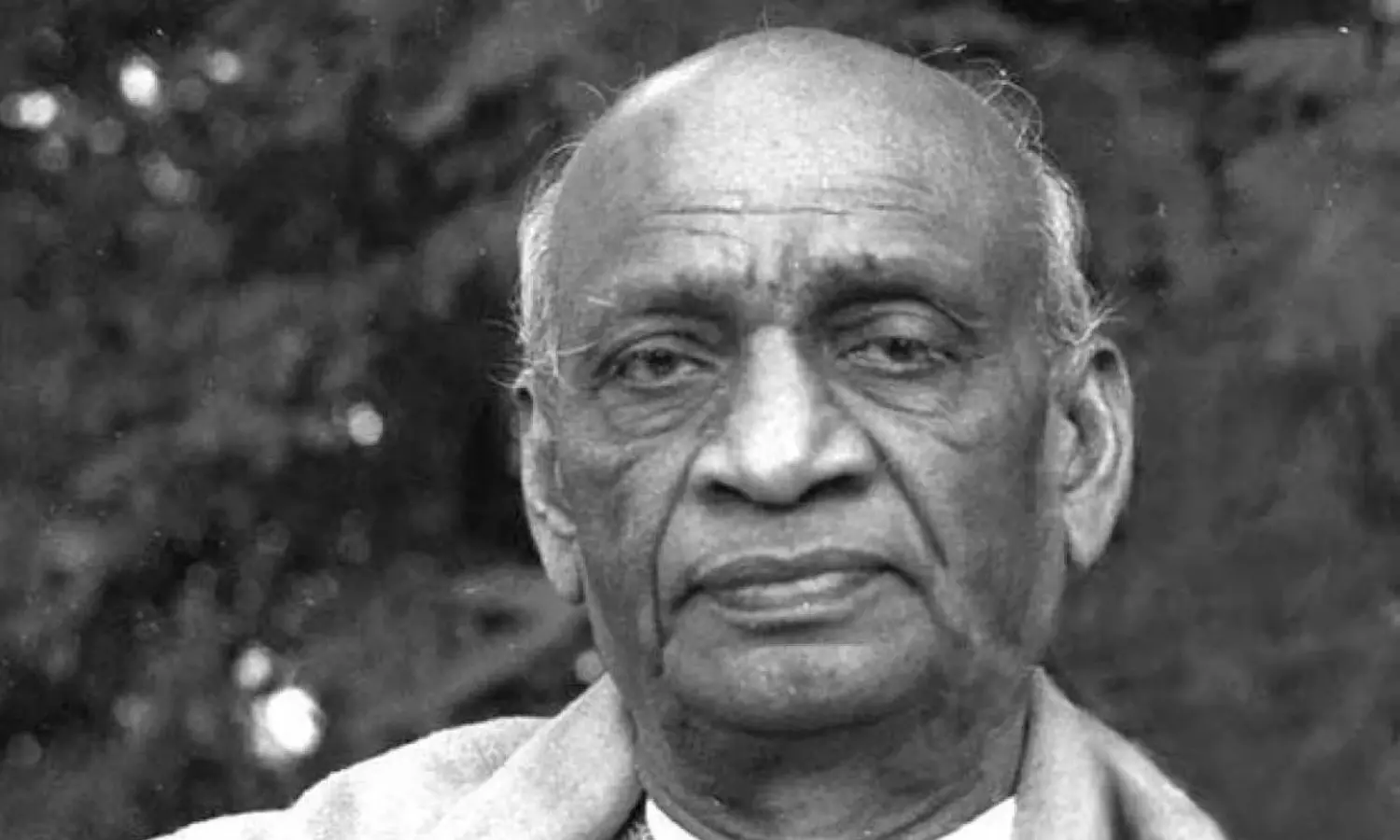
Sardar Vallabhbhai Patel
October 31 is observed as National Unity Day, or Rashtriya Ekta Diwas, to mark the birth anniversary of Sardar Vallabhbhai Patel, fondly remembered as the Iron Man of India. As the country's first Deputy Prime Minister and Home Minister, Patel played a defining role in shaping the political unity and territorial integrity of independent India.
When India attained Independence in 1947, one of the biggest challenges before the new leadership was the integration of more than 560 princely states into the Indian Union. It was Patel who took up this enormous responsibility and, with a combination of political wisdom, determination and diplomatic skill, persuaded the princely rulers to join the Union. His efforts prevented the country from being fragmented into smaller political entities and laid the foundations for a united India. His contribution to nation-building remains unparalleled in the country's history.
The Government of India instituted National Unity Day in 2014 to honour Patel's legacy and reinforce the importance of national integration. The occasion is marked by the National Unity pledge, the Run for Unity and several programmes across the country.
Patel's vision of a united India holds considerable relevance even today. The country is home to diverse languages, religions, cultures and traditions, yet its strength lies in the spirit of togetherness that binds its people. Unity, however, cannot be sustained through slogans or symbolic celebrations alone. It calls for mutual respect, social harmony, adherence to constitutional values and a collective commitment to national progress.
The 182-metre-tall Statue of Unity in Gujarat, the world's tallest statue, was built as a tribute to Patel and his monumental contribution to the country.
Remembering Sardar Patel should mean more than paying tributes once a year. His life offers a powerful message that national interests must always take precedence over narrow political, regional and personal considerations. National Unity Day provides an opportunity to reflect on this legacy and renew our resolve to build a stronger, more inclusive and united India.
Prime Minister Narendra Modi on Saturday paid floral tributes to Sardar Vallabhbhai Patel at the Statue of Unity in Gujarat’s Ekta Nagar, on the former Deputy PM’s 151st birth anniversary.
In his message, Modi lauded Patel’s contribution to national integration and nation-building, adding that he dedicated his life to the creation of a strong, prosperous, and capable India.
The prime minister also said that Patel's sacrifice and devotion in the service of the country serve as a great source of inspiration for building a developed and self-reliant India.
"Heartfelt tributes Sardar Vallabhbhai Patel, the pioneer of 'Akhand Bharat' and the Iron Man of the country, on his birth anniversary. He dedicated his life to the creation of a strong, prosperous, and capable India," he said.
Patel was born on October 31, 1875, in Nadiad, Gujarat. He passed away on December 15, 1950.
The Modi government has been observing October 31 as 'Rashtriya Ekta Diwas' or National Unity Day since 2014 to foster and reinforce its dedication to preserving and strengthening the unity, integrity, and security of the nation.
The celebrations are held on a grand scale, almost on the lines of the Republic Day parade held in Delhi on January 26.
KCR tried to grab Rs 50k-cr Miyapur land, alleges CM Revanth
Bhatti’s call at NAREDCO TG property show: Realty must become partner in TG’s growth
Shah to join Nov 2 Hyd ‘Maha Padayatra’
Kids' edu videos attract attention, not learning: ISB study
Institutional autonomy must be respected by everyone in the country
Much ado about one MLC seat: Million memes, noise and political theatre


