India Warms Up To Canada, Snubs Trump: Modi's Diplomatic Shift Signals New Alliances

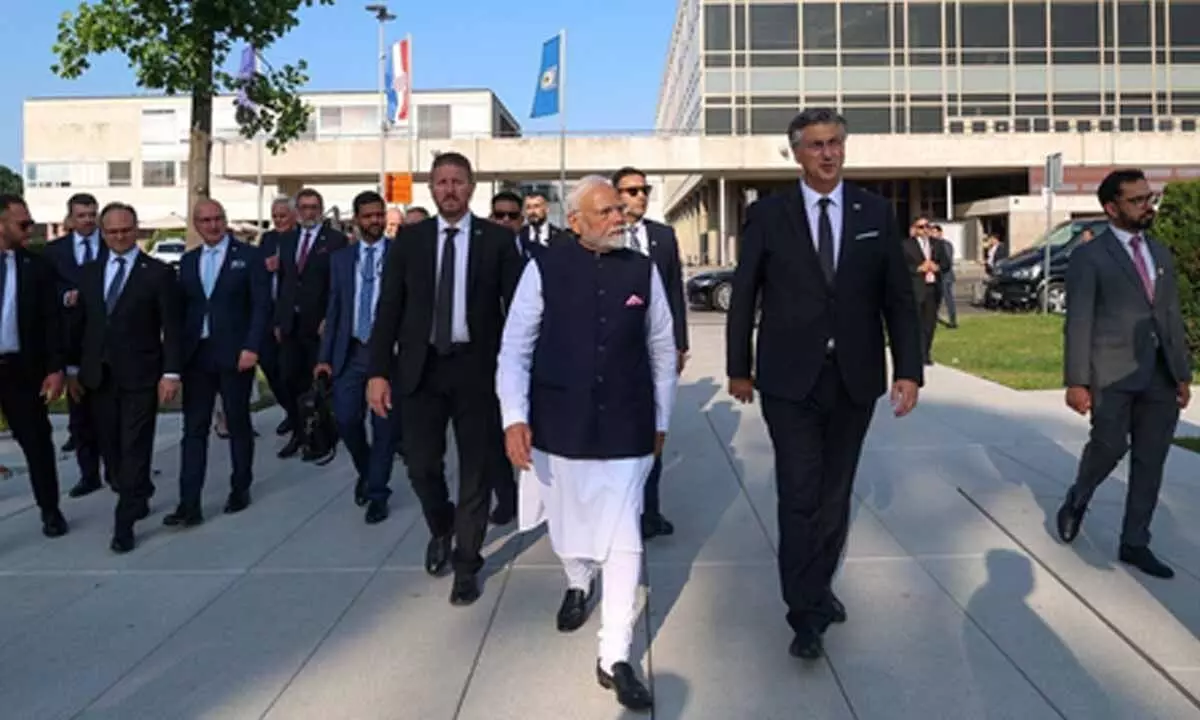
- PM Modi’s refusal to attend Donald Trump’s invite marks a strategic distancing from the US, even as India and Canada begin to reset their strained diplomatic relations.
- With Trudeau gone, Carney’s outreach contrasts starkly with rising India-US tensions.
India is reevaluating its diplomatic priorities, with recent moves suggesting that Canada now appears more favorable to New Delhi than the United States. Prime Minister Narendra Modi’s discreet rejection of Donald Trump’s invitation has underscored a growing rift with the U.S., while simultaneously hinting at a thaw in India-Canada relations after a two-year freeze.
At the G7 Summit hosted by Canada, PM Modi received a notably warm reception from Canadian PM Mark Carney. Despite opposition from pro-Khalistan groups, Carney extended the summit invite to Modi—a sign of his intent to mend ties. Since assuming office, Carney has deliberately distanced his administration from the pro-Khalistani rhetoric that dominated Trudeau’s tenure.
The meeting between Modi and Carney led to significant breakthroughs:
* The decision to reinstate High Commissioners in each other’s capitals
* Resumption of trade negotiations
* A visible diplomatic reset with no mention of the Hardeep Singh Nijjar case
Carney remained non-committal on Nijjar’s killing, only stating that judicial proceedings are ongoing. Meanwhile, Canada’s intelligence agency acknowledged that extremists on Canadian soil were inciting violence targeting India—a stance that aligns better with Indian concerns.
India’s relief is understandable, as it remains Canada’s top source of both foreign workers and international students.
Conversely, US-India ties have been strained under Trump’s second presidential term. Key points of friction include:
* Trump’s labeling of India as a “big abuser” of tariffs
* Imposition of steep import duties on Indian goods
* Repeated, controversial claims of mediating the India-Pakistan ceasefire
India rejected Trump’s assertion that he brokered a ceasefire after the Pahalgam attack in May, clarifying that no trade-related or mediation talks occurred during "Operation Sindoor." The final straw was Trump inviting Pakistan Army Chief Asim Munir to the White House—just hours after Modi’s declined invitation—essentially placing India and Pakistan on the same geopolitical platform.
This timing was especially provocative given speculation that Pakistan may be supporting Iran in its ongoing conflict with Israel.
Former Pentagon official Michael Rubin criticized the Trump-Munir meeting, calling it a “dangerous and historically blind” strategy. Meanwhile, General Michael Kurilla's praise for Pakistan as a "phenomenal partner" in counterterrorism has only deepened India's discomfort.
Modi’s snub was more than diplomatic coldness—it was a calculated move to preserve India’s independent strategic positioning. India is unwilling to be “hyphenated” with Pakistan on the global stage and is recalibrating its alliances accordingly.
While the U.S. relationship remains crucial, the strengthening of ties with Canada may provide India with a more stable and predictable partner in the West—at least for now.
Next Story