




Kharge’s Outburst Exposes Congress’s Frustration
In Short
Kharge accused the RSS and BJP of pursuing an ideology that deepened divisions in the country.

Share :
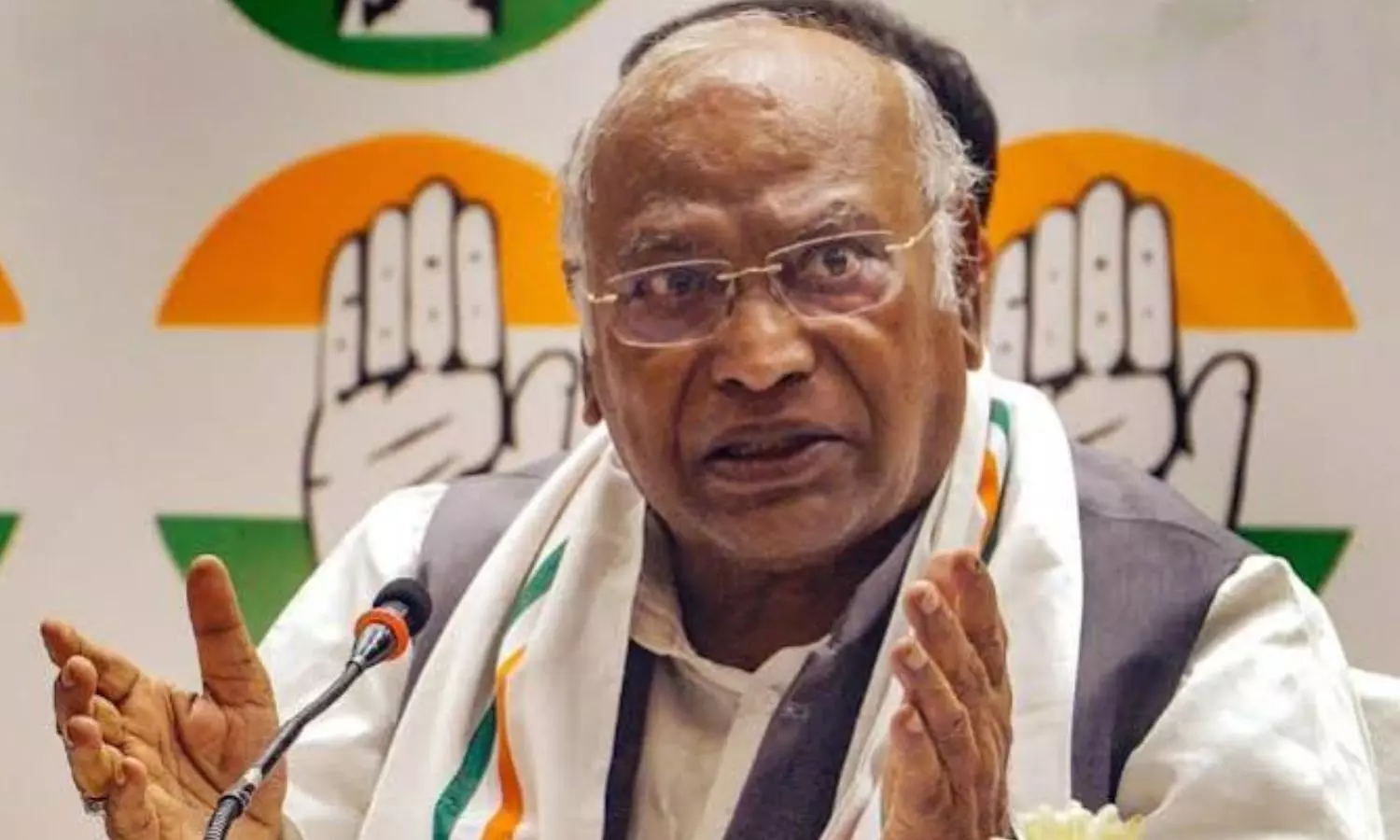
Kharge accused the RSS and BJP of pursuing an ideology that deepened divisions in the country.
A Congress event organised in Patna to mark the birth anniversary of Bihar’s first Chief Minister, Krishna Singh, popularly known as ‘Sri Babu’, descended into chaos after party president Mallikarjun Kharge made an objectionable remark about Prime Minister Narendra Modi.
Kharge accused the RSS and BJP of pursuing an ideology that deepened divisions in the country. Describing protests against the Special Intensive Revision (SIR) of electoral rolls as a “second war of independence”, he demanded an immediate halt to the exercise, the use of ballot papers in all future elections and the annulment of all Assembly elections held over the past two years.
However, the event took an unexpected turn when a party activist interrupted the Congress president, arguing that the party’s current anti-Modi strategy could not defeat Modi. He urged the Congress to change its narrative and adopt a different electoral strategy.
Kharge, an octogenarian, lost his cool and retorted, “Modi tho kya, uska baap bhi harega” (Not only Modi, but even his father will be defeated).
Mistaking the interrupter for a BJP worker, Kharge’s supporters reportedly pushed and assaulted him. It later emerged that the man was a Congress worker from Patna, seeking to draw attention to the problems within the party’s Bihar unit.
The incident drew a sharp reaction from the BJP, which described Kharge’s language as unacceptable. BJP leaders said the Leader of the Opposition in the Rajya Sabha had lost his composure and was increasingly resorting to derogatory remarks against the Prime Minister and the BJP.
BJP leader Sudhanshu Trivedi said the episode reflected the Congress’s frustrated mindset, pointing out that the party had lost numerous elections. Similar views were expressed by another BJP leader, C R Kesavan.
According to Congress leaders in Patna, the activist had wanted to convey that all was not well within the state unit. Since Kharge was scheduled to return to Delhi immediately after the event, the worker apparently saw the occasion as an opportunity to express his concerns directly to the party president and stress the need for a more effective strategy. However, his intervention was misunderstood by Kharge and others present at the meeting, leading to the confrontation.
The BJP, meanwhile, demanded an apology from Kharge, arguing that such language was particularly objectionable when directed at the Prime Minister, who holds a constitutional office. BJP leaders accused the Congress president and his party of repeatedly making disparaging remarks and then evading responsibility—a strategy they described as “shoot and scoot”.
They further alleged that the Congress was displaying an increasingly anarchic mindset and that its frustration was growing as it faced the prospect of another disappointing political mobilisation. They claimed that the party’s proposed November 1 meeting at Delhi’s Ramlila Maidan would also fail to make a significant impact.
The Patna episode has exposed more than an exchange of angry words. A party worker’s attempt to question the Congress’s electoral strategy ended in a public confrontation, raising questions about internal dissent and the leadership’s response to criticism. If the Congress is serious about challenging the BJP, it must be willing to listen to uncomfortable questions from within its own ranks rather than allowing frustration to overshadow political debate.
Kharge’s Outburst Exposes Congress’s Frustration
Kejriwal more concerned about bus mafia, alleges Punjab BJP chief
LS Speaker Birla, Russian State Duma Speaker Volodin discuss expanding parliamentary cooperation
BRS Reviews Graduate Voter Registration Drive
PM Modi witnesses IAF's 'Wings Over Ganges' air show in Varanasi
PM Modi inaugurates new garment manufacturing facility in Varanasi, interacts with workers


