LJP Leader Denounces Bihar's Caste Survey As Political Manipulation

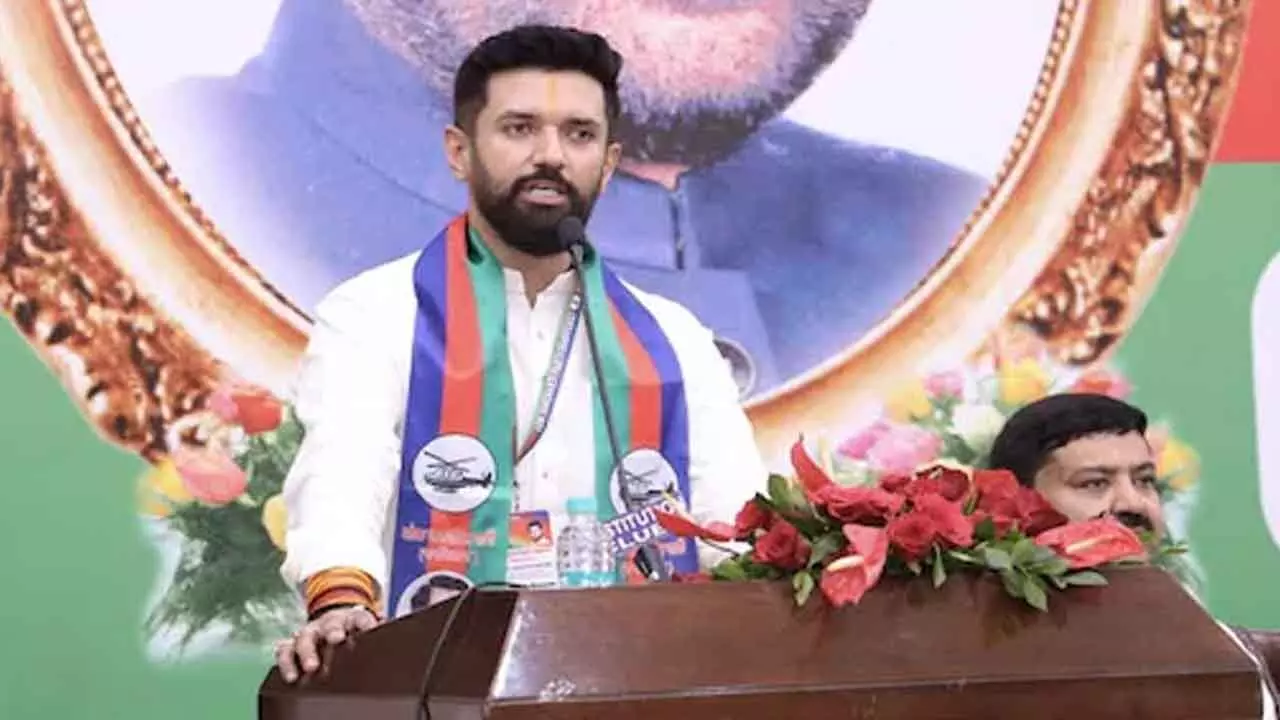
Lok Janshakti Party MP Arun Bharti condemns Bihar's 2023 caste survey as fraudulent political exercise designed to benefit RJD's vote bank while betraying marginalized communities including Dalits and tribals.
A prominent leader from Union Minister Chirag Paswan's political camp has launched a scathing attack on Bihar's caste survey conducted under the Mahagathbandhan government in 2023, characterizing it as a deliberate deception aimed at consolidating specific vote banks rather than achieving genuine social justice.
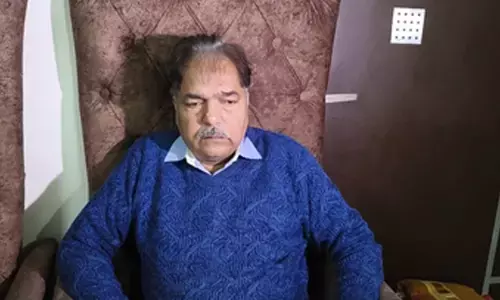
Arun Bharti, who serves as a Member of Parliament for the Lok Janshakti Party (Ram Vilas) and is Chirag Paswan's brother-in-law, has accused the previous state administration of orchestrating what he describes as a fraudulent exercise that ultimately betrayed the interests of marginalized communities, particularly Dalits and tribal populations.
According to Bharti's allegations, the caste survey represented a calculated political strategy designed to strengthen the Rashtriya Janata Dal's traditional support base among Muslim and Yadav communities, rather than serving as a comprehensive tool for social reform and empowerment of disadvantaged groups.
"The caste survey conducted under the Mahagathbandhan administration was nothing more than a fraud and a carefully orchestrated conspiracy to deprive the Bahujan community of their legitimate rights," Bharti declared during his critique of the exercise.
The LJP leader specifically targeted former Deputy Chief Minister Tejashwi Yadav, who had been a vocal advocate for the survey, accusing him of misleading the public about the initiative's true objectives. Bharti claimed that despite Yadav's promises of revolutionary social justice measures, the actual implementation fell far short of these commitments.
"Tejashwi Yadav was the most vocal proponent of the caste survey, promising it would be a transformative step toward social justice. However, what materialized was merely a superficial exercise wrapped in political cunning, lacking both genuine social justice and inclusive vision. Its sole purpose was to reinforce their claim to power by emphasizing their Muslim-Yadav vote bank numbers," Bharti stated.
The MP criticized the survey's methodology and scope, arguing that it failed to provide meaningful insights into the actual conditions faced by different communities. He contended that the exercise merely counted caste populations without delving into crucial socio-economic indicators that would be necessary for effective policy formulation.
Bharti emphasized that the survey neglected to examine critical aspects such as poverty levels within different castes, educational access disparities, representation in government services, and land and resource ownership patterns across various communities. This omission, he argued, rendered the entire exercise inadequate for addressing systemic inequalities.
"The survey was a deliberate conspiracy to maintain Muslim and Yadav dominance in governance and administration. It represented direct betrayal of Dalit, Mahadalit, and tribal communities. The real intention was to convert caste numbers into political capital and strengthen their power claims, not to provide genuine opportunities and rights to disadvantaged classes," he elaborated.
In contrast to his criticism of the state-level survey, Bharti praised the central government's recently announced plans for a comprehensive caste census, crediting Chirag Paswan with playing a pivotal role in securing approval for this national initiative.
The LJP leader highlighted that the proposed central census would adopt a more holistic approach, focusing not only on numerical data but also on detailed socio-economic profiling of different communities. This comprehensive methodology, according to Bharti, would provide the evidence base necessary for informed policy decisions and constitutional reforms.
"The upcoming national exercise will record complete social and economic details, not just population numbers. This will enable us to present the actual condition of the Bahujan community with concrete evidence before constitutional bodies, policy makers, and courts, facilitating equitable reservation policies. The collected data will serve as a robust foundation for expanding reservations and developing policies that genuinely favor the Bahujan community," Bharti explained.
This political controversy reflects deeper tensions within Bihar's complex caste politics, where different parties compete for influence among various social groups. The debate over the caste survey's legitimacy and effectiveness continues to shape political discourse in the state, with opposing camps presenting contrasting narratives about social justice and electoral motivations.
The criticism also underscores ongoing disputes about the most effective approaches to addressing historical inequalities and ensuring adequate representation for marginalized communities in India's democratic framework.