‘National Herald’ case: Congress hits back at ED over allegations

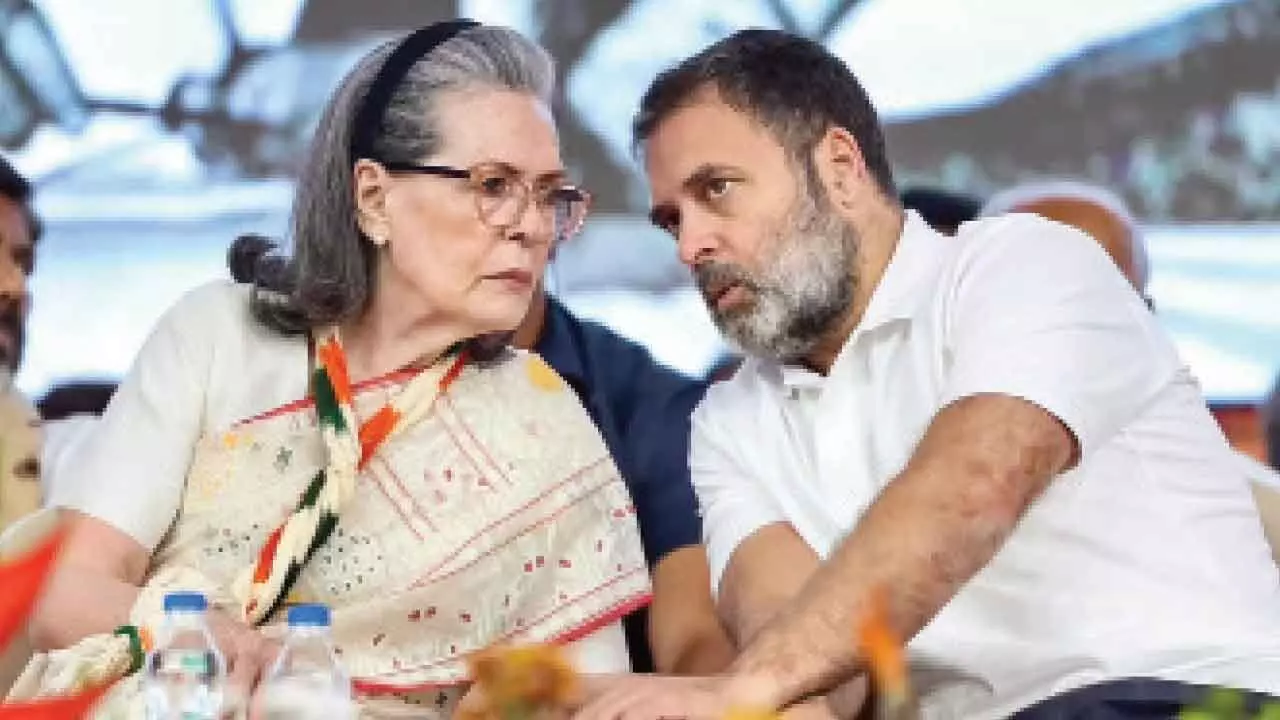
New Delhi: Senior advocate Abhishek Manu Singhvi, representing Congress leader Sonia Gandhi, raised serious questions over the Enforcement Directorate’s (ED) probe into the ‘National Herald’ case. Arguing before a Delhi court on Friday, Singhvi described the case as “really strange” and “unprecedented,” claiming that it involves allegations of money laundering without any tangible assets involved.
“This is an alleged case of money laundering without any property, without any use or projection of property. It is really strange—more than strange,” Singhvi told the court, criticizing the foundation of the ED's accusations.
His remarks followed arguments made by Additional Solicitor General SV Raju, who presented the charge-sheet on behalf of the ED. Raju had claimed that the Gandhi family were the "beneficial owners" of the company Young Indian and accused them of conspiracy and money laundering in connection with the alleged fraudulent acquisition of assets worth over ₹2,000 crore belonging to Associated Journals Limited (AJL).
The ED has named Sonia and Rahul Gandhi, the late Congress leaders Motilal Vora and Oscar Fernandes, as well as Suman Dubey, Sam Pitroda, and private companies Young Indian and Dotex Merchandise Pvt Ltd in the case. The charges are filed under Sections 3 and 4 of the Prevention of Money Laundering Act (PMLA), which deal with money laundering and its punishment.
According to the ED, the Gandhi family held 76% shares in Young Indian and used a ₹90 crore loan to fraudulently take control of AJL’s vast assets. However, Singhvi rebutted this, claiming the transaction was a legitimate move to make AJL debt-free. “Every company has the right under the law to clear its debts through various methods,” Singhvi argued. “You take a loan and transfer it to another entity, thereby making the original company debt-free.”
He also emphasized that Young Indian is a not-for-profit company, which, by law, cannot distribute dividends, salaries, bonuses, or any other financial benefits to its shareholders. “This is a key point that contradicts the ED's narrative of personal enrichment,” Singhvi noted.
Furthermore, Singhvi accused the ED of acting on political motivations. He alleged that the agency had remained inactive for years and only revived the probe based on a private complaint driven by political interests.
Earlier, on July 3, Raju argued that the Gandhi family had acquired full control of Young Indian after the passing of other shareholders, making them the ultimate beneficiaries.
The ED’s charge-sheet names multiple individuals and entities, including Sunil Bhandari and Dotex Merchandise Pvt Ltd, apart from the Gandhis and senior Congress figures. The case remains under judicial review, with the court yet to decide on the cognizance of the charge-sheet.