Why BJP’s Appointment Of Pankaj Chaudhary As Uttar Pradesh President Signals a Renewed Focus On Kurmi Voters

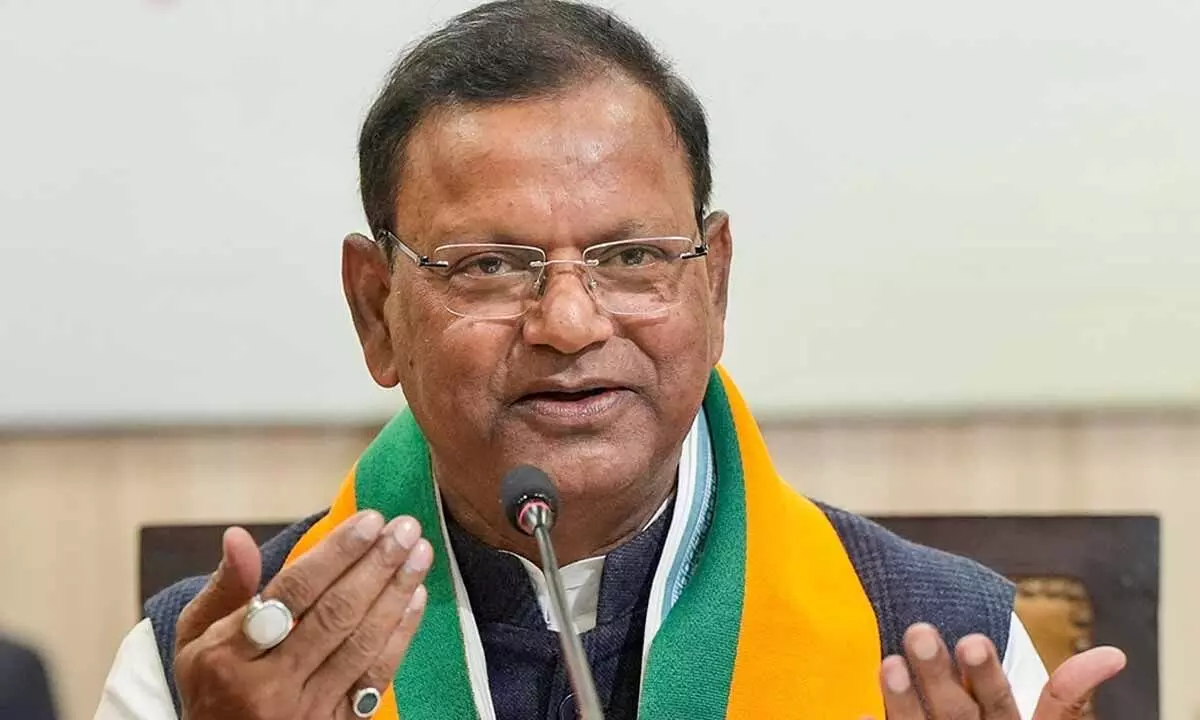
The BJP’s choice of veteran MP Pankaj Chaudhary as its Uttar Pradesh chief reflects a strategic effort to strengthen its outreach among Kurmi voters and recalibrate caste dynamics ahead of key elections.
The Bharatiya Janata Party’s decision to appoint Maharajganj MP Pankaj Chaudhary as the new Uttar Pradesh unit president is widely seen as a calculated move to realign caste equations in the state, with a particular emphasis on the Kurmi community. Among the Other Backward Classes, Kurmis form one of the largest and most politically influential groups after Yadavs, often playing a decisive role in tightly contested constituencies.
According to estimates drawn from the Hukum Singh Committee report of 2001, Kurmis and Patels together accounted for around 7.4 per cent of Uttar Pradesh’s population at the time, while OBCs as a whole made up over half the population. With the state’s population increasing significantly over the past decade, the Kurmi population is now believed to be between 1.75 crore and 2 crore, further enhancing their electoral relevance.
The community already has a strong presence in representative politics. Around 40 of the 403 MLAs in the Uttar Pradesh Assembly belong to the Kurmi or Patel community, with the BJP holding the largest share at 27 legislators. The Samajwadi Party follows with 12, while the Congress has one. Kurmis are also represented in the Legislative Council and account for 11 of the state’s 80 Lok Sabha MPs, spread across multiple parties. Their influence spans regions such as Purvanchal, Awadh, central Uttar Pradesh and Bundelkhand, making them significant in over 120 assembly segments and decisive in nearly 50.
Against this backdrop, Chaudhary’s elevation carries considerable political weight. A seven-time Lok Sabha MP and currently a Union minister of state for finance, he is among the BJP’s most senior non-Yadav OBC leaders from eastern Uttar Pradesh. Though he brings decades of parliamentary experience, he has had limited exposure to managing the party’s organisational machinery, making his new role both an opportunity and a challenge.
Speculation about his rise began in mid-2023 when Prime Minister Narendra Modi visited his residence during a trip to Gorakhpur. Nearly two years later, that expectation has materialised. Party insiders suggest that Chaudhary’s close ties with the central leadership, including Modi, Amit Shah and Rajnath Singh, played a key role in his appointment. At the same time, there is a perception that his rapport with Chief Minister Yogi Adityanath has not always been seamless, despite their shared regional roots.
The move has also sparked political reactions. Samajwadi Party chief Akhilesh Yadav criticised the BJP’s leadership choices, arguing that the party was sending mixed signals on the political advancement of leaders from backward communities. He claimed the decision reflected an attempt to cap the rise of leaders from the PDA bloc and warned that such a strategy could ultimately prove counterproductive.
Within the BJP, the appointment was not entirely free of dissent. Leaders from western Uttar Pradesh had reportedly lobbied for greater representation, pointing out that major power centres were already concentrated in eastern and central parts of the state. Chaudhary will now have to navigate these regional sensitivities while keeping the organisation cohesive.
The decision also affects the BJP’s relationship with its allies, particularly Apna Dal (S), which has built its base largely among Kurmi and Patel voters. By placing a Kurmi leader at the helm of the state unit, the BJP appears better positioned to negotiate alliance dynamics and potentially reduce the bargaining power of its partners.
Chaudhary’s immediate task will be to steer the party towards the 2027 assembly elections, while also managing the expectations of multiple NDA allies seeking a larger share of seats. The reshaped alliance landscape has added further complexity to these calculations.
More broadly, the appointment reflects the BJP’s reassessment after the 2024 Lok Sabha elections, where its performance in Uttar Pradesh fell short of earlier highs. The resurgence of the Samajwadi Party, driven by its PDA outreach and strong OBC representation, underscored the importance of caste arithmetic. Kurmi voters, who had backed the BJP in previous elections, emerged as a contested group in 2024.
By elevating Pankaj Chaudhary, the BJP is attempting to reclaim its influence among non-Yadav OBCs and counter the Samajwadi Party’s gains. Any significant shift in Kurmi support could have a major impact on future electoral outcomes, particularly in constituencies where margins are narrow and voter loyalties remain fluid.
Next Story