




- 'Climb rung by rung': Indira Gandhi's advice to Punjab schoolgirl who aspired to become PM
- Fox Sagar to get Mini-Tank Bund makeover
- Ponguleti vows to safeguard every inch of govt land
- Revanth warns KCR, says nature will punish him
- CM Revanth seeks speedy nod for three high-speed rail corridors
- EAGLE Force tracks drug links in HCU, NALSAR, GITAM
- Gangakatva modernisation: Keep farmers’ interests in mind, not contractors: Jagga Reddy to irrigation officials
- Ramky-GVPR JV to execute Godavari project’s package II
Flood sparks crocodile fear
In Short
The Ghodahada reservoir, spread over 4.15 sq km during the monsoon, is an important habitat of the mugger crocodile, also known as the marsh crocodile.

Share :
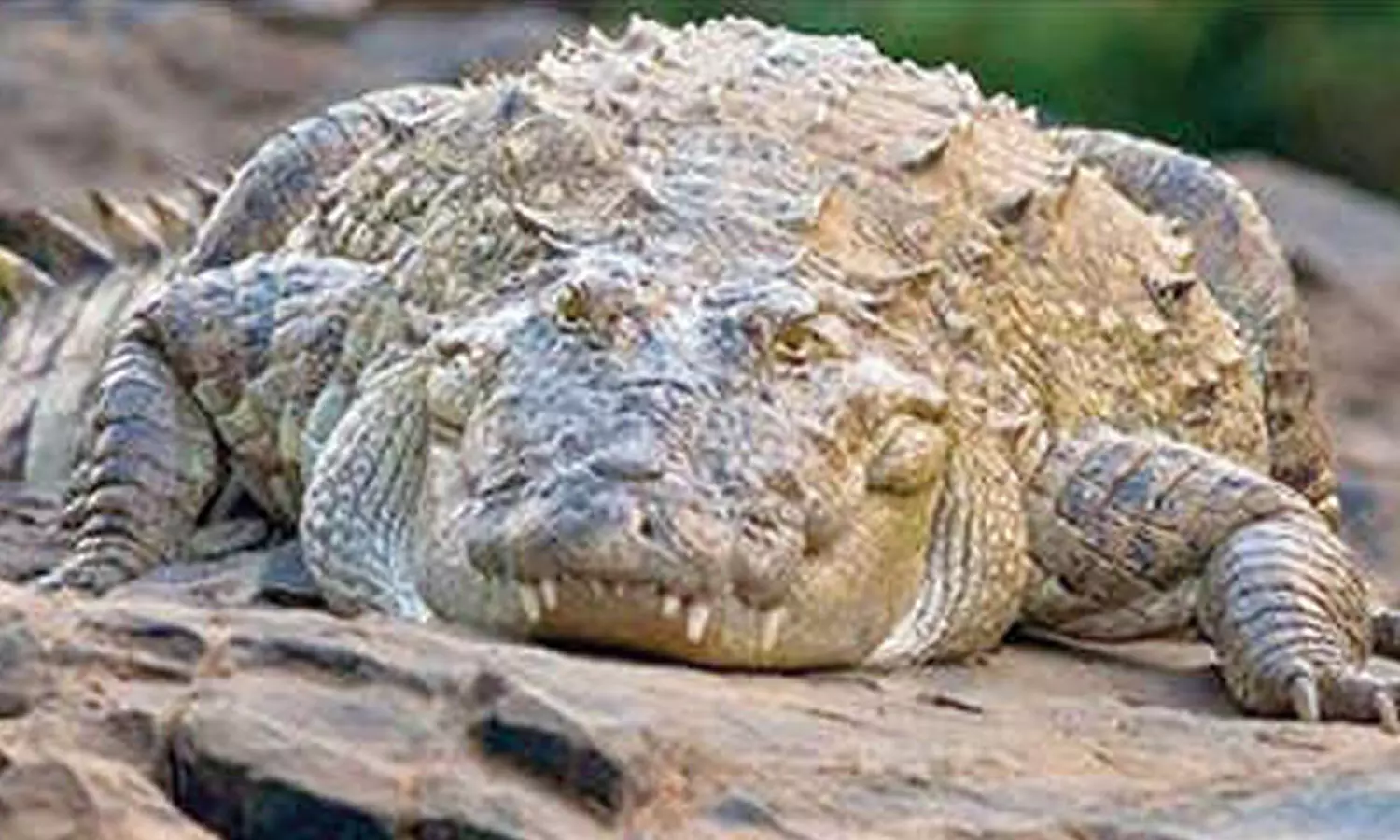
Flood sparks crocodile fear
Brahmapur: The release of excess floodwater from Ghodahada dam into the Ghodahada river has triggered a fresh concern among people living along its banks, as the reservoir is home to around 95 endangered mugger crocodiles. With five of the six main spillway gates opened in phases to discharge the massive inflow caused by cyclonic storm ‘Arnab’, authorities have acknowledged the possibility of crocodiles entering the river through the opened gates.
Although all five gates were closed at 12 noon on October 30, the movement of crocodiles into the river during the period of discharge cannot be ruled out. Public announcements were made through loudspeakers, specifically warning people about the flood water and possible presence of small and large crocodiles in the river.
The Ghodahada reservoir, spread over 4.15 sq km during the monsoon, is an important habitat of the mugger crocodile, also known as the marsh crocodile. According to available records, around 95 muggers inhabit the reservoir, making it one of the potential crocodile habitats in Odisha.
Interestingly, these crocodiles have coexisted peacefully with the fishermen of seven adjoining villages. Local fishermen catch around 150 kg of fish from the reservoir every day without fear of crocodile attacks. The villagers have traditionally protected and nurtured the reptiles, and no significant human-crocodile conflict has been reported in the reservoir area. The first mugger crocodile census in the reservoir was initiated in 2008. Before 2006, the reptiles were reportedly found in a large pond near the Ujaleswar Temple, where local Zamindar families had maintained a few crocodiles during the British era. They subsequently migrated to the reservoir.
Meanwhile, the massive inflow of floodwater from rivers, streams and tributaries in Gajapati district had forced the Water Resources department to open five out of six spillway gates during the last three days.The inflow, which had reached 400 cubic metres per second (cumecs), declined to 52 cumecs by noon on October 30.
The dam’s water storage level is 117.80 metres, while the water level stood at 117 metres at noon on Friday. Officials said the reservoir would retain water up to 116.80 metres, nearly 90 per cent of its storage capacity.
The heavy discharge had already aggravated flooding along the Ghodahada river, with water entering several villages following breaches in the embankments of ponds and other water bodies. Tileswar, Ambagaon, Patapur, Mahanala, Jayanagar, Usta Jagannathpur, Jalamara, Adapada, Khalingi, Kaithabeda, Kurula, Erendra and Patharapunji are among the affected villages.
While the closure of all five gates has brought relief, the possibility of crocodiles having entered the river during the discharge period has added a new dimension to the flood-related concerns.
KCR tried to grab Rs 50k-cr Miyapur land, alleges CM Revanth
Bhatti’s call at NAREDCO TG property show: Realty must become partner in TG’s growth
Shah to join Nov 2 Hyd ‘Maha Padayatra’
Kids' edu videos attract attention, not learning: ISB study
Institutional autonomy must be respected by everyone in the country
Much ado about one MLC seat: Million memes, noise and political theatre


