Financial inclusion key for growth


Financial inclusion will be an important element in ensuring access and equity, the necessary building blocks for sustainable growth of our country, the Reserve Bank of India (RBI) Governor Raghuram Rajan said on Monday.
Hyderabad: Financial inclusion will be an important element in ensuring access and equity, the necessary building blocks for sustainable growth of our country, the Reserve Bank of India (RBI) Governor Raghuram Rajan said on Monday. “In the foreseeable future, we will bring formal financial services to every Indian who wants them.
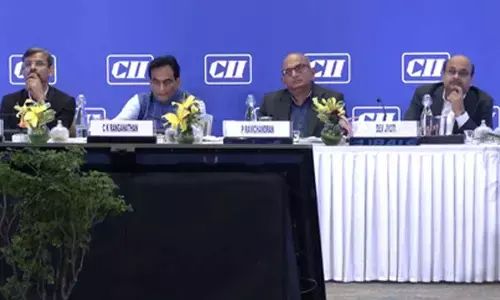
After all, should we not give everyone access to the services we all in this room enjoy? If everyone had the tools and resources to better themselves, it would increase output, growth, and economic prosperity,” he said, while speaking at a seminar on ‘Equity, access and inclusion’ organised by the National Institute of Rural Development and Panchayat Raj (NIRD&PR) and management consulting firm Crux in Hyderabad.
Emphasising on three elements of financial inclusion the broadening of financial services to those people and enterprises who do not have access to financial services sector,) the deepening of financial services for those who have minimal financial services and greater financial literacy and consumer protection so that those who are offered financial products can make appropriate choices, Rajan said information, incentives and transactions costs were the economic impediments to greater financial inclusion.
“The banker, especially if he is not from that region, will have difficulty in getting sufficient information to offer financial products to the excluded. As a lender, he may also not have the incentive to lend to the excluded as the legal system does not enforce repayment quickly or cheaply. Moreover, the borrower does not have any collateral to pledge, leading the lender to believe that he will find it difficult to get the loan repaid,” he said.
The third impediment, according to Rajan, was transaction costs. Since the size of the transactions by the poor or by micro farmers or enterprises is small, fixed costs in transacting are relatively high. If the time and cost involved in filling up a form and documentation for a client, for instance, is the same for a loan of say Rs 10,000 and Rs 10 lakh, a banker who is conscious of the bottom line would naturally focus on the large client, he added.
The RBI Chief said a moneylender does not suffer any of these impediments. Since there are few more readily-available alternatives than the moneylender in underserved areas, he has so many in his clutches. Stating that one of the primary motivations for the country to push financial inclusion is to free the excluded from the clutches of the moneylender, Rajan proposed three public policy approaches to overcome this problem – mandates and subventions, transforming institutions, and moving away from credit.
Stressing the need for transforming institutions, Rajan said that local financial institutions, with local control and staffed by knowledgeable local people, could be more effective at providing financial services to the excluded. “Further, digitisation of land records, accompanied by a guarantee of certificates of final ownership by the State government, formal recognition of share cropping agreements, as in the pattas registered by the Andhra Pradesh government and Trade-Receivables Discounting Systems (TReDS) which the RBI has licensed, could ease access to credit,” he added.