




- Venkatesh’s Aadarsha Kutumbam First Day Box Collection Report
- Woman Dies During Treatment at MGM Hospital; Husband Alleges Medical Negligence
- Interviews From November 4 To Fill 135 Anganwadi Posts In Mulugu
- Welfare hostels Central Purchase system should be cleaned up: SFI State Unit
- Four killed after massive fire breaks out at factory in Delhi's Mangolpuri
- Farmers' Day Celebrations and PM-KISAN Utsav Diwas Held at ICAR–IIRR, Rajendranagar
- Cyclone Arnab: Telecom restoration efforts underway in affected districts
- Study Projects 38% of Vehicles to be Electric by 2030
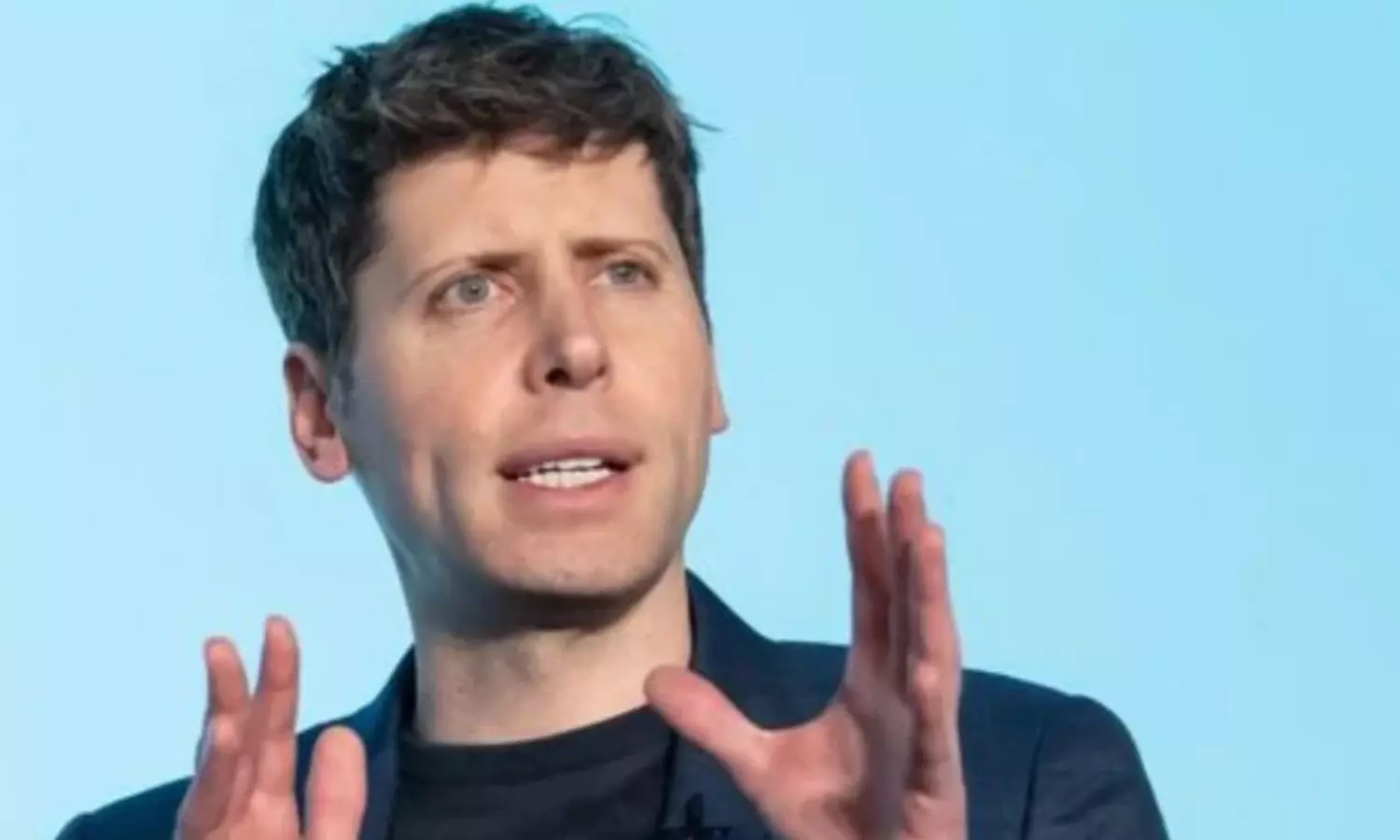
Sam Altman Questions AI Token-Based Pricing, Calls Tokens ‘Fake’ Business Units
In Short
Sam Altman questions whether AI tokens accurately reflect business value, highlighting customer preferences for transparent pricing and predictable costs.

Share :
Sam Altman Questions AI Token-Based Pricing, Calls Tokens ‘Fake’ Business Units
OpenAI CEO Sam Altman has expressed worries about how artificial intelligence companies charge customers for using their AI models saying that tokens may not be the way to measure the value of an AI service. His comments come at a time when there is talk about the role of AI tokens in the tech industry such as when Nvidia CEO Jensen Huang suggested giving engineers extra token allowances in addition, to their salaries.
Speaking with Stripe, co‑founder John Collison on the Cheeky Pint and Stripe podcast Altman said tokens are not a way to measure the real business value that AI models deliver. He explained that while tokens show how much of an AI model is used, they do not always show how useful work the model actually completes.
“Tokens are a kind of unit. I mean Tokens are real in some sense. Tokens are not a good unit. Tokens are fake, from a business value point of view,” Sam Altman said.
His comments show there is more talk, about how AI companies charge money. This is happening because more and more companies and people use AI tools every day. Altman thinks that people should pay for what they get done instead of paying based on something that is not real like how much they use it.
Why customers still prefer token-based pricing
Interestingly, Altman acknowledged that customers are not necessarily comfortable moving away from token-based pricing. Even though he questions its usefulness, he said users prefer having a clear unit to understand what they are paying for.
"I would rather not make up a fake unit,” Sam Altman said, explaining that customers often feel uncomfortable receiving bills without a clearly defined measurement.
“But the customer response on that is so negative. They're like, 'I need to know what I'm paying for somehow," he said.
Altman also shared an example of asking customers whether they would prefer paying more for identical AI output if the pricing was calculated using a consistent number of tokens. Surprisingly, customers preferred the familiar measurement, even if the token count was artificially increased.
"I asked a few people, 'Would you rather pay more for the same output, but have it priced in some number of consistent tokens?' Even if we inflated the tokens, they're like, 'Oh, I'd much rather you inflate the tokens and pay more, because I know there's a real thing there.”
He further explained that customers are concerned about unpredictable costs when there is no clear pricing structure.
"People don't just want us to give them a price, because they feel like over the long term they're going to get screwed somehow."
Jensen Huang has a different perspective
Altman's comments contrast with Nvidia CEO Jensen Huang's earlier proposal to provide engineers with AI tokens as an additional workplace benefit.
Huang suggested offering engineers token allowances worth around half their base salary, arguing that access to AI tools could significantly improve productivity.
“I’m going to give them probably half of that on top of [their base pay] as tokens ... because every engineer that has access to tokens will be more productive,” Huang said.
The contrasting views highlight how AI tokens are becoming an important part of conversations around pricing, employee productivity and the business value of artificial intelligence.

Bolsonaro backs off Brazil poll challenge after Trump says 'I’m not running Brazil'
Leylah Fernandez overcomes Rakhimova to reach Pan Pacific Open final; Shnaider also through
MP Dy CM pushes telemedicine to bridge rural healthcare gap
Sardar Patel was a Congressman, internal differences have nothing to do with BJP: CPI MP on HM Shah's remark
CM Revanth Reddy lauds ISRO over launch of GSLV-F18 rocket
Class 10 student attacked in Raptadu, CM Chandrababu calls for action
Kashi-Delhi Vande Bharat sleeper train marks historic day for rail passengers: PM Modi
Minister Seethakka announced funds for alternative drinking water facility amid El Nino
Google’s Project Suncatcher achieves first AI response from space
Khammam Police conduct massive crackdown in Tekulapalli, 286 personnel take part in community policing drive


