




- Venkatesh’s Aadarsha Kutumbam First Day Box Collection Report
- Woman Dies During Treatment at MGM Hospital; Husband Alleges Medical Negligence
- Interviews From November 4 To Fill 135 Anganwadi Posts In Mulugu
- Welfare hostels Central Purchase system should be cleaned up: SFI State Unit
- Four killed after massive fire breaks out at factory in Delhi's Mangolpuri
- Farmers' Day Celebrations and PM-KISAN Utsav Diwas Held at ICAR–IIRR, Rajendranagar
- Cyclone Arnab: Telecom restoration efforts underway in affected districts
- Study Projects 38% of Vehicles to be Electric by 2030
Paul Krugman says control of Starlink must be taken away from Elon Musk
In Short
Nobel laureate Paul Krugman says that Starlink’s expanding role in Ukraine’s defence means that government oversight is necessary to leave important decisions to Elon Musk.

Share :
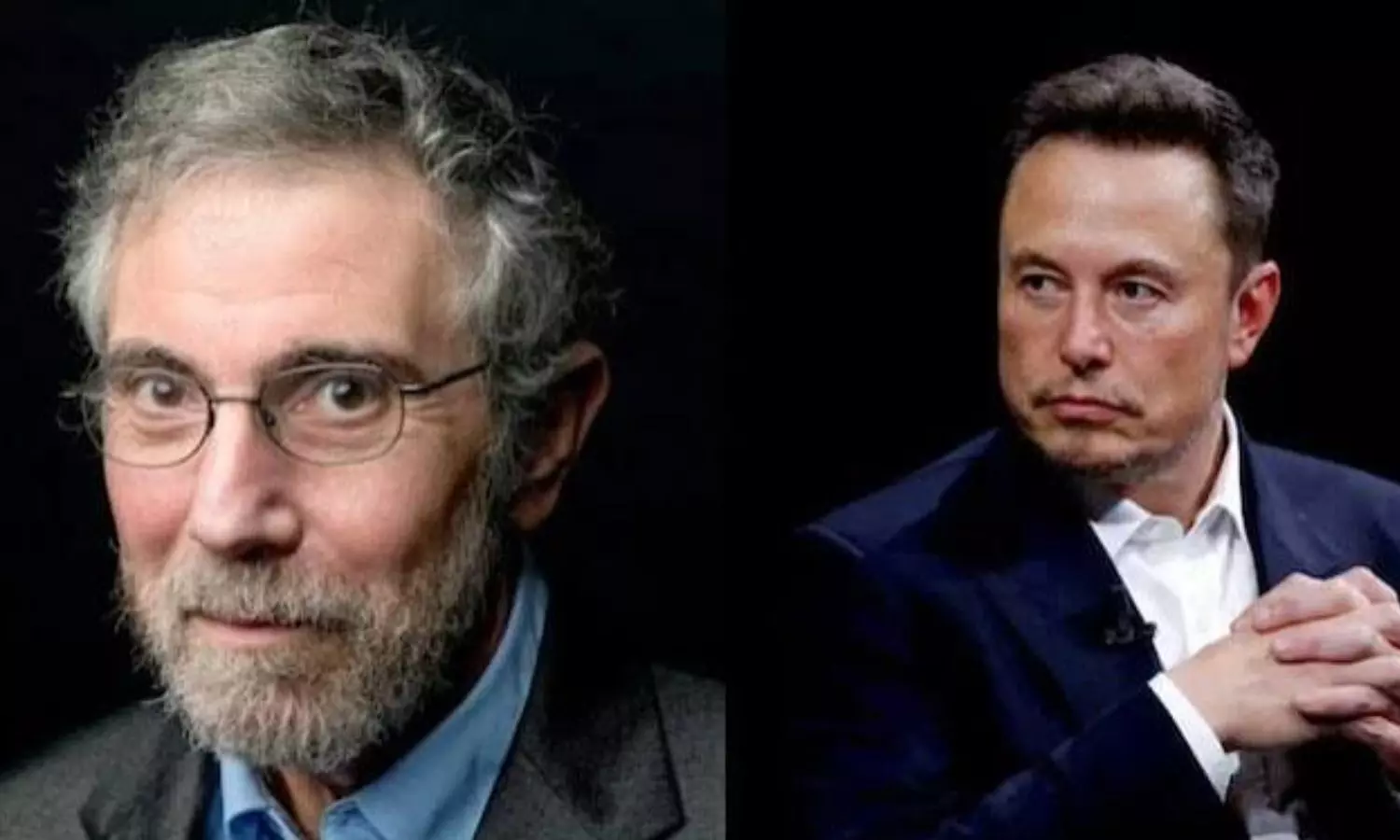
A Nobel Prize-winning economist named Paul Krugman
A Nobel Prize-winning economist named Paul Krugman is asking that Elon Musk no longer have control over Starlink. He says that one person from the sector should not be in a position to make choices that could affect a country’s national security. He feels that the satellite internet network has become a military tool. Because of that he thinks that who controls it should be a choice made by the government and not by a company.
Krugman's criticism comes after a Wall Street Journal report that said Musk might have played a role in disrupting Starlink services in Ukraine during the war with Russia. Musk admitted to limiting access. He said Ukraines military was using the service to launch offensive drone attacks. That according to Musk broke the terms of service. Ukraine says it only used the network for defensive purposes. It also says the service disruptions hurt its operations.
In a Substack post called "It’s Time to Take Starlink from Elon Musk " Krugman asked why one business person should have so much power over military choices. "No single person, from the sector should or even be able to decide on national security matters " he wrote.
Why Krugman wants Musk to lose control of Starlink
Krugman's main concern is that Starlink's importance to modern warfare has grown beyond that of an ordinary commercial internet service. He believes governments should have the final say over access to technology that directly affects military operations.
To support his argument, he compared Starlink with Lockheed Martin, the defence company that manufactures F-16 fighter jets used by Taiwan. He asked readers to imagine the company suddenly stopping the supply of spare parts, upgrades and technical support, perhaps as part of a business arrangement with China. Such a move would likely prompt immediate government intervention.
He believes Starlink deserves similar treatment because of its strategic importance. Krugman concluded: “Control of Starlink must, one way or another, be taken away from Elon Musk.” He added that it is a matter of “national security: we cannot let private individuals make foreign and defense policy, and it would be totally irresponsible to leave a crucial military asset in the hands of a racist, authoritarian conspiracy theorist”
What Musk says about Starlink's use in Ukraine
Musk has defended SpaceX's position, maintaining that Starlink is a civilian commercial service and was never intended to support offensive drone attacks.
In an October 25 post on X, he said, “Using Starlink, a civilian commercial service, for offensive drone strikes to kill people has never been allowed, nor should it be.”
He also clarified the difference between Starlink and Starshield, SpaceX's separate satellite service for military customers. According to Musk, Starshield is controlled by the US government, which decides how it is used.
However, Musk has also acknowledged Ukraine's dependence on Starlink, warning that “the Ukrainian front line would collapse immediately” if the service were switched off. He described the comment as a statement of fact rather than a threat.
How Starlink became important in the Russia-Ukraine war
Following Russia's invasion in 2022, attacks damaged Ukraine's communication infrastructure. Musk initially provided thousands of Starlink terminals to hospitals, government offices, power facilities and humanitarian organisations.
The Ukrainian military subsequently adopted the technology for battlefield communications and drone operations. Since Russian forces do not have access to Starlink, the network became an important advantage for Ukraine.
However, concerns about this dependence increased after a confidential October 11 memo reportedly warned Ukrainian military officers about the possibility of losing access. The Atlantic reported that disruptions began two days later, grounding drones and affecting military operations in some areas.
A senior US military officer summed up the network's importance by telling The Atlantic, “Without Starlink, the war would grind to a halt.”
For Krugman, these developments underline why Starlink's future cannot depend on the decisions of one businessman. He believes a technology with such significant military and national security implications must remain under appropriate government control.

Bolsonaro backs off Brazil poll challenge after Trump says 'I’m not running Brazil'
Sai Pallavi reveals portraying Sita Maa in ‘Ramayana’ taught her to handle stress with dignity, says the film will become history
Air Chief Marshal Singh bids farewell to IAF after 42 years
‘All of us were very excited': Shubhangi Kulkarni recalls India’s first women’s Test in 1976
CM Revanth Reddy lauds ISRO over launch of GSLV-F18 rocket
Class 10 student attacked in Raptadu, CM Chandrababu calls for action
Kashi-Delhi Vande Bharat sleeper train marks historic day for rail passengers: PM Modi
Minister Seethakka announced funds for alternative drinking water facility amid El Nino
Google’s Project Suncatcher achieves first AI response from space
Khammam Police conduct massive crackdown in Tekulapalli, 286 personnel take part in community policing drive


