OpenAI’s Secret AI Device: Sam Altman & Jony Ive Promise Something “Simpler Than the iPhone”

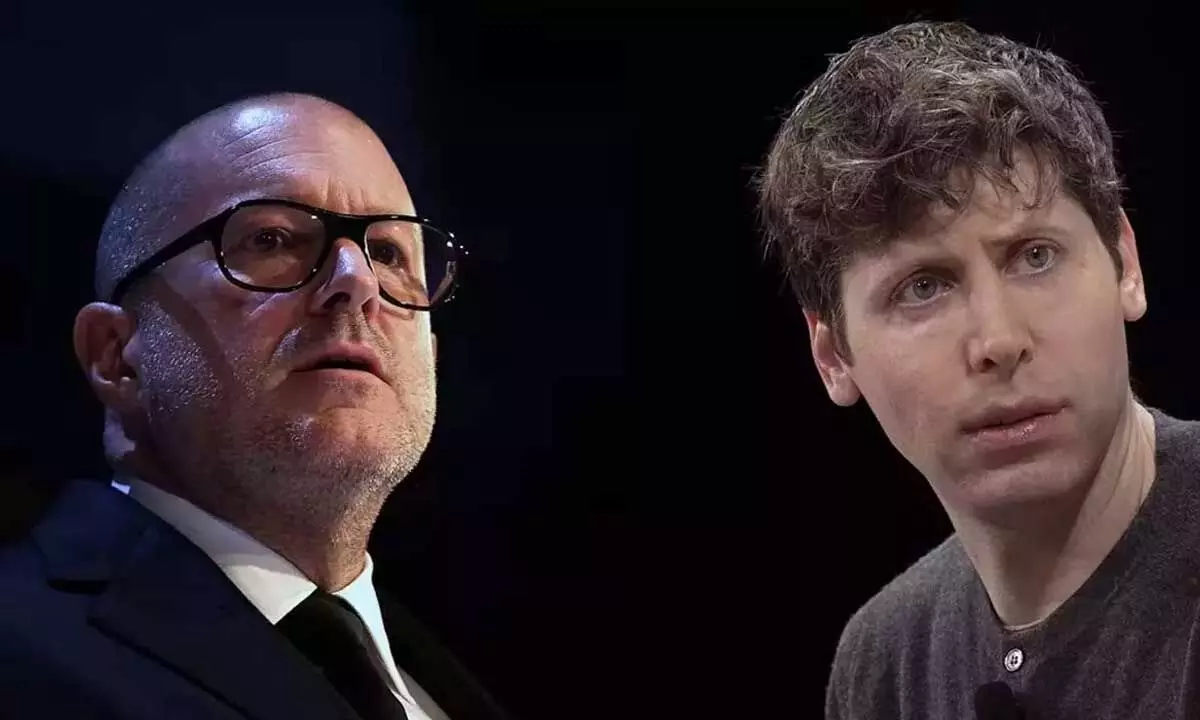
Sam Altman and Jony Ive tease an ultra-simple AI device that reduces digital clutter and understands users deeply, launching next year.
OpenAI’s long-rumoured hardware project is finally coming into focus, with CEO Sam Altman and iconic designer Jony Ive sharing their most candid insights yet. Speaking at the Emerson Collective’s Demo Day in San Francisco, the duo revealed that their upcoming AI-powered device aims to be radically simpler than modern smartphones—perhaps even more minimal than the iPhone itself.
This vision builds on OpenAI’s acquisition earlier this year of io, the design firm founded by Ive after his celebrated tenure at Apple. Valued at $6.5 billion, the deal brought Ive into the heart of OpenAI’s hardware ambitions, and he has been shaping the design philosophy of the mysterious device ever since.
Sam Altman praised the iPhone as the “crowning achievement of consumer products,” even calling it the device he uses and loves the most. But he argued that today’s smartphones have evolved into complex hubs overloaded with distractions. “It’s like walking through Times Square,” he said, referring to the constant flood of notifications and visual clutter that dominate modern technology. According to him, this overstimulation is neither peaceful nor helpful.
In stark contrast, Altman and Ive envision a device built around minimalism—not in a restrictive sense, but in a way that allows AI to quietly shoulder most tasks. “It is so simple, but then it just does, as we were talking about, AI can do just so much for you that so much can fall away," Altman explained. The idea is to eliminate nonessential elements from the hardware because the AI itself will handle the heavy lifting.
Jony Ive echoed this philosophy with his signature design ethos. “I love solutions that teeter on appearing almost naive in their simplicity,” he said, adding that the device should feel natural, intuitive, and almost effortless to use. The pair emphasized that the starting point for the device was imagining a tool where the AI knew “everything you've ever thought about, read, said?”
One of the more unconventional moments from the event came when Altman described how he evaluates early prototypes. He noted that a genuinely compelling design should inspire a kind of emotional, even instinctive attraction—something so appealing that one might “want to pick up that thing and take a bite out of it.” He humorously admitted that an earlier prototype failed this test, but the latest iteration finally gave him that visceral feeling.
Despite all the excitement, neither Altman nor Ive revealed specific details about the device’s appearance or features. OpenAI is expected to launch the hardware next year, and recent reports suggest the company has been hiring aggressively from Apple’s talent pool to accelerate development.
For now, the biggest clues point toward a device built around calmness, simplicity, and seamless intelligence—an antidote to the noise of modern tech. As anticipation builds, the world waits to see how far this collaboration between AI’s most influential leader and Apple’s most iconic designer will push the boundaries of consumer hardware.