CM Chandrababu Unveils Key Initiatives at Ministers and Secretaries Conference

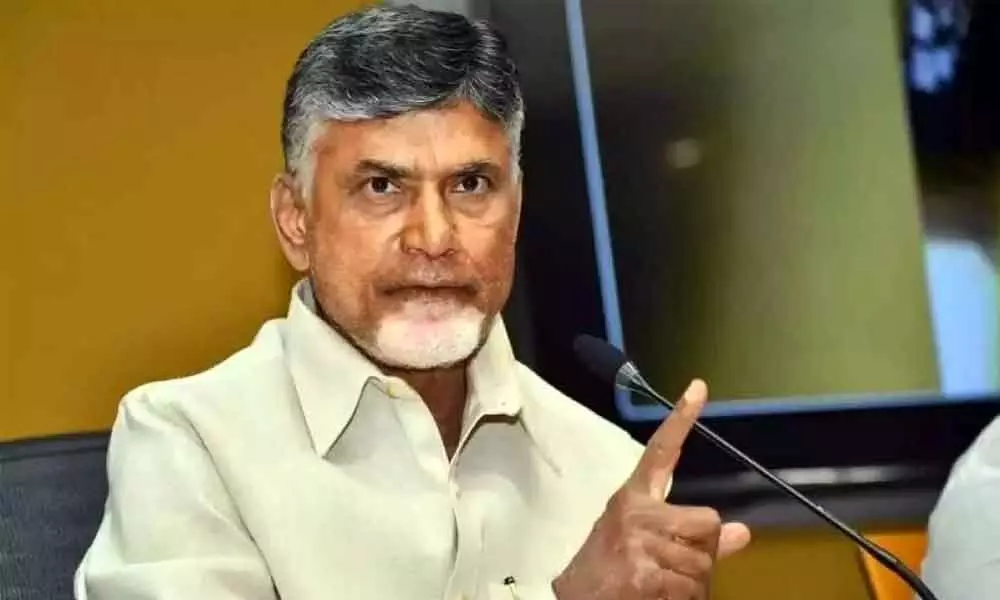
AP CM Chandrababu Naidu
Chief Minister presided over a pivotal Ministers and Secretaries Conference, outlining several critical initiatives aimed at enhancing government efficiency and economic growth.
Chief Minister presided over a pivotal Ministers and Secretaries Conference, outlining several critical initiatives aimed at enhancing government efficiency and economic growth.
1. E-Office Implementation
The Chief Minister directed that all departments must fully adopt the e-office system by the end of February. An assessment of its implementation will be conducted to ensure compliance. He emphasised the importance of expediting file processing, particularly financial files, which should not remain pending for extended periods. Officials were instructed to review bottlenecks, identify delays, and implement swift resolutions. Non-financial files should never be left pending, and budget-related matters must be addressed promptly. The CM expressed concern that some files have remained pending for six months to a year, which he deemed unacceptable. RTGS CEO K. Dinesh Kumar reported that while some departments clear files within an average of three days, others continue to experience significant delays.
2. Department-wise GSDP Targets
The Chief Minister highlighted an ₹87,000 crore shortfall in GSDP compared to Telangana and stressed that declining purchasing power must be addressed. He emphasized that a strategic approach is required to meet GSDP targets, as economic growth depends on achieving these goals. A Vision Monitoring Unit (VMU) will be established at the state level, and districts must prepare constituency-level plans. Additionally, districts should identify key projects contributing to GSDP growth, which will be tracked through a dedicated portal. Department mapping with GSDP will be conducted, and a 15.76% overall growth rate has been set as the target. The CM also announced that the next collectors' conference would feature zonal-wise presentations to further refine growth strategies.
3. Public Grievance Redressal System
The performance of the public grievance redressal system was analyzed based on SLA performance, heatmap insights, and low grievance reopen percentages. The Chief Minister identified Revenue, Home, Panchayat Raj, and Civil Supplies as the major areas of concern, emphasizing that district-level administration must be strengthened. He stated that merely transferring grievances is not a solution and that the quality of grievance disposal must be systematically reviewed. Other states have implemented grievance quality review mechanisms, and Andhra Pradesh must follow suit. The impact of the Revenue Act on grievance redressal also requires assessment to ensure its effectiveness.
4. Positive Public Perception
The Chief Minister highlighted key government-public touchpoints that influence perception, including pension distribution, Anna Canteens, paddy procurement, temple services, government hospitals, ration distribution, APSRTC services, and agriculture-related services such as fertilizer availability. Himanshu Shukla, MD I&PR, stressed the need for a flawless system to monitor these services effectively. Pension distribution will be reviewed monthly, while Anna Canteens will undergo weekly monitoring, with feedback collected. The CM urged officials to ensure quality service delivery, utilize technology touchpoints, and implement QR codes to measure public satisfaction. He emphasized that the public is the primary stakeholder and must be treated with patience and respect. He also noted concerns that some officials distribute pensions efficiently but mistreat beneficiaries, which must be rectified.
5. Mission Karmayogi (iGOT Karmayogi) – Employee Training Program
The CM outlined the Mission Karmayogi initiative, emphasizing the importance of continuous training for government employees. An MoU has been signed with CBC to align with the AP Knowledge Society. The Karma Point System will be linked to performance evaluation, and the Global Institute for Good Governance (GIGG) will serve as a knowledge exchange hub. The future roadmap includes the expansion of training programs and digital learning initiatives. The CM emphasized that a well-structured vision document and action plan have been developed, with the Government of India providing external resources for training. An online system for exam-based evaluations has been introduced, and a Global Leadership Center is being established in Amaravati. The CM reiterated that the goal is to make Telugu people among the wealthiest in India. IMD Switzerland is collaborating with AP for skill development, and training is considered mandatory. The program must be innovative rather than routine, and all departments must comply with its implementation.