VB-GRAMIN Bill raises fears among rural workers

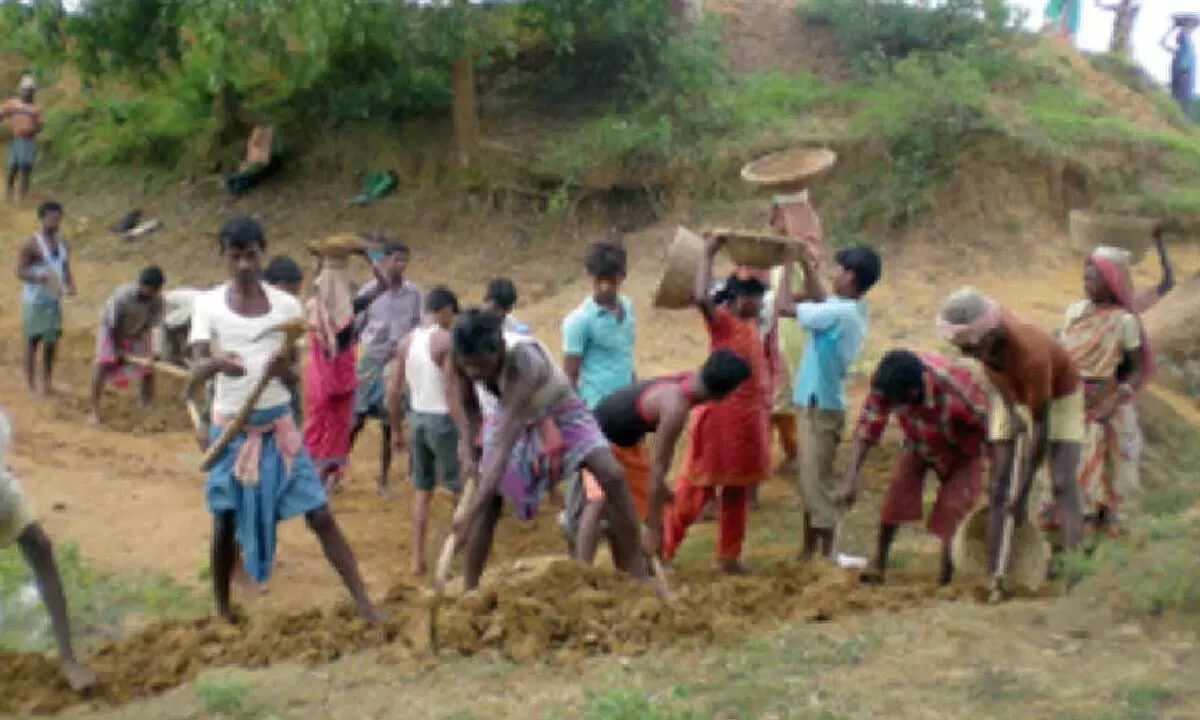
- Bill promises 125 workdays but replaces the legal right to employment with budget-based allocations, risking funding cuts of up to Rs 5,000 crore for states like Andhra Pradesh
- Cost burden shifts to states, which must fund 40% of expenses and bear any excess spending, while a clause allows suspension of work for 60 days during peak farm seasons.
Ongole: The Viksit Bharat-Guarantee for Rozgar and Ajeevika Mission (VK-GRAMIN) VB-G RAM G Bill which was introduced in Parliament on Monday to replace the two-decade-old Mahatma Gandhi National Rural Employment Guarantee Act (MGNREGA), promises increase in workdays from 100 to 125, but masks fundamental changes that could leave rural workers worse off. Experts estimate that states like Andhra Pradesh could lose up to Rs 5,000 crore in Central funding, likely forcing them to cap work even when villagers need it.
The most significant shift transforms employment from a legal right into a budget-controlled programme. Under MGNREGA, households could demand work and the government was legally bound to provide it within 15 days or pay unemployment allowance.
The new law replaces this with ‘normative allocation’ based on fixed budgets decided by the Central government for each state. Work will now depend on budget ceilings rather than worker demand.
Financial burden shifts dramatically to states, which must now contribute 40 per cent of costs (10 per cent for northeastern states).
Any spending beyond the allocated ceiling is borne entirely by state budgets. A controversial provision allows states to suspend all scheme work for 60 days during peak agricultural seasons.
For landless labourers who depend on the programme when farm work is scarce or exploitative, this legally closes a crucial safety net precisely when income is most needed.
Technology requirements compound access barriers. Mandatory biometric attendance, GPS tracking and app-based systems may exclude elderly workers, those with poor connectivity or worn fingerprints, and people lacking proper documentation.
All work must now come from pre-approved Viksit Gram Panchayat Plans integrated with national infrastructure systems. This removes MGNREGA’s flexibility for urgent, simple employment during distress, favouring large infrastructure projects requiring multi-scheme coordination.
Chakradhar Buddha, coordinator for LibTech India, an NGO, observed that many provisions of the VB-GRAMIN Act are unfair. He said that the employment system shifts from a demand-driven legal entitlement with relatively simple ground-level processes to a Centrally-controlled, technology-heavy scheme, where budget constraints and digital compliance may override workers’ survival needs. He said that Andhra Pradesh used to receive feedback and suggestions on best practices for the MGNREGA through APNA (Andhra Pradesh NGOs Alliance).
He advised the state, which played a key role in the design and implementation of the MGNREGA, to retake the lead and restart consultations with stakeholders and the NGOs network to propose actionable changes that help workers from all regions receive work when they really need it and wages on time.