Bengaluru: Orange Line Metro to Tackle Traffic

Bengaluru’s government is undertaking significant environmental conservation efforts, including the protection of green spaces and the establishment of a tree park. Additionally, the city is investing in infrastructure projects to ease traffic congestion and address human- wildlife conflicts, all aimed at modernizing the city while preserving its natural resources.
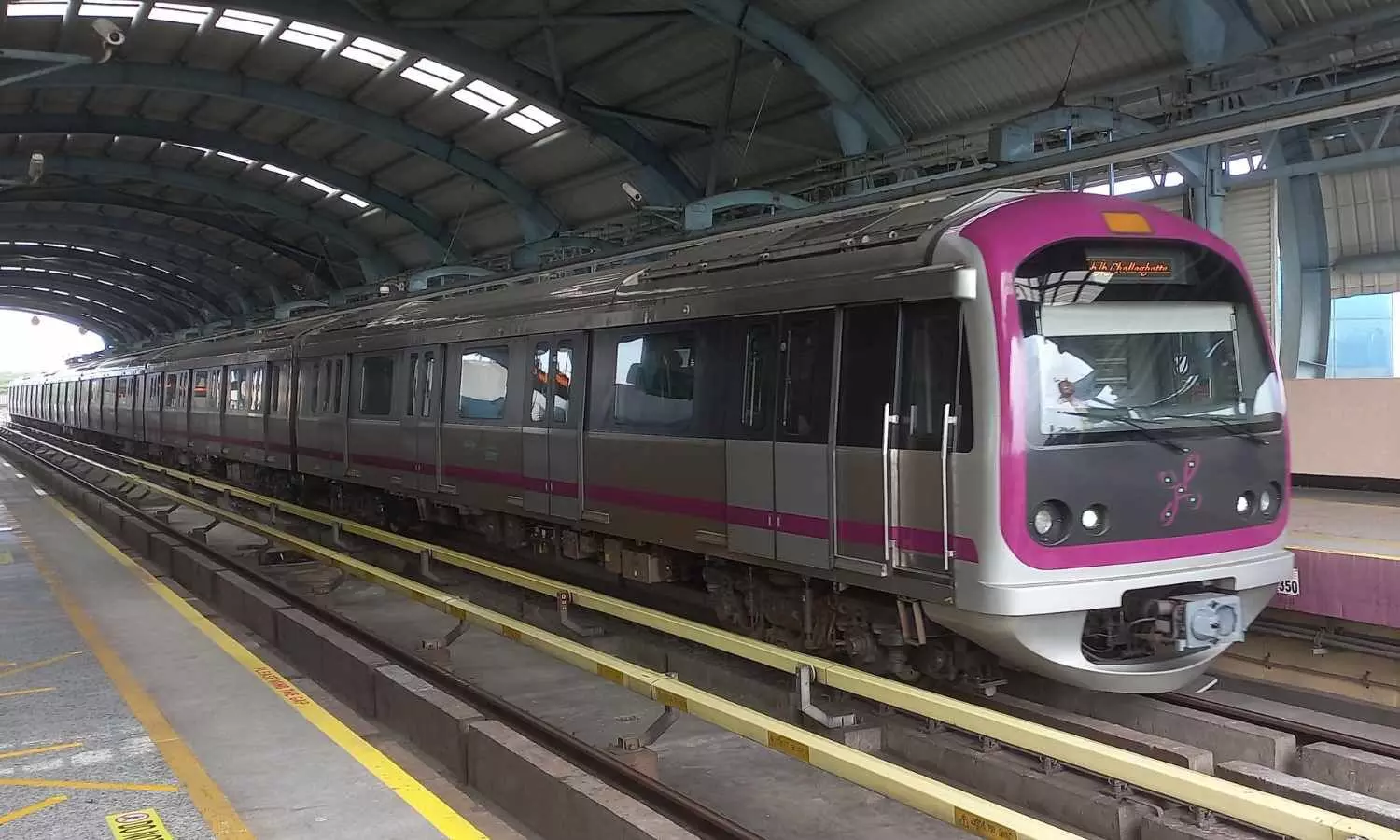
Bengaluru's metro expansion projects are on track with the much-awaited Orange Line and other metro corridors to be completed by December 2029. Governor Thaawarchand Gehlot provided an update on the progress of Phase-2A and Phase-2B of the Metro Rail Project.
Phase-2A will connect Central Silk Board to Krishnarajapura (19.75 km), while Phase-2B will link Krishnarajapura to Kempegowda International Airport (38.44 km). Together, these projects are expected to cost around Rs 14,788 crore.
Additionally, Phase-3 will include two significant corridors: Corridor 1 from Kempapura to JP Nagar (32.15 km) and Corridor 2 from Hosahalli to Kadabagere (12.50 km). The total estimated cost for this phase is Rs 15,611 crore. All these metro projects are likely to be completed by December 2029.
The state government is also addressing traffic congestion with the Bengaluru Suburban Railway Project, covering 148.17 km at an estimated cost of Rs 15,767 crore. This initiative is being developed in collaboration with the railways to improve connectivity.
In another major development, the Governor announced the creation of a Centre of Excellence in Wired and Wireless Technology in partnership with the Indian Institute of Science, Bengaluru. This project will have an investment of Rs 25 crore over five years.
The government has made considerable progress in clearing encroachments, having reclaimed approximately 5,000 acres of forest land across the state, including 117 acres in Bengaluru.
To further alleviate traffic within the BBMP limits, plans are in place to build a 40.50 km double-decker flyover, combining both metro rail and road infrastructure. The project will cost an estimated Rs 8,916 crore. Furthermore, the state government has secured a Rs 27,000 crore loan from HUDCO for the Bengaluru Peripheral Ring Road Part-1 project, which involves acquiring approximately 2,565 acres of land and constructing about 73 km of road.
The government is focusing on environmental conservation in Bengaluru. To preserve the city's green spaces and bird habitats, they have declared 5,678 acres of the Hesaraghatta Lake area protected grassland. Work has also begun on a 153-acre tree park in Madappanahalli, near Yelahanka. Legal action is being taken to reclaim Rs 14,300 crore worth of forest land from the defunct HMT in the Peenya Plantation.
To reduce human- wildlife conflicts, 78.9 km of railway barricades will be installed in 2024-25. A conference in Bandipur also led to the creation of the Bengaluru Charter to address human-elephant conflicts, involving officials from Tamil Nadu, Kerala, and Andhra Pradesh.
These efforts are part of Bengaluru’s goal to modernize the city, reduce traffic, and protect its natural resources.