The Biscoff Betrayal: When Global Brands Lose Their Soul in Translation

The Biscoff Betrayal explores how global brands risk losing authenticity when adapting to new markets, examining brand identity, localization pitfalls, and consumer trust.
As multinational companies rush to capture the Indian market with localized products, consumers are asking a pointed question: Are we being sold a diluted version of the real thing?
The Biscoff biscuit controversy unfolding across Indian social media is more than a story about caramelized cookies. It's a litmus test for how global brands navigate India's rapidly evolving consumer landscape, where affordability and authenticity are increasingly seen as incompatible.
The Cult of Biscoff
For nearly two decades, Biscoff existed in India's collective imagination as an aspirational import. The Belgian caramelized biscuits arrived through relatives returning from Europe, were distributed selectively at gatherings, and occupied premium shelf space in urban kitchens. They were conversation starters, gifts that signaled thoughtfulness, treats that justified their scarcity with exceptional taste.
This wasn't manufactured brand positioning. It was organic cultural capital built on genuine product distinction. Unlike domestic biscuits, Biscoff offered a deeply caramelized, almost burnt-sugar complexity that felt European in a way Indians recognized but couldn't replicate domestically.
When the brand officially entered India with local manufacturing and aggressive pricing (including a ₹10 entry-level SKU), it should have been celebrated as democratization. Instead, it triggered a wave of consumer disappointment that reveals deeper tensions in India's relationship with global capitalism.
A Creator Calls It Out
The reckoning came when Mumbai-based content creator Mumbaikar Nikhil published a comparison video that resonated across demographics. His assessment was unambiguous: "I feel betrayed whenever I eat it here in India."
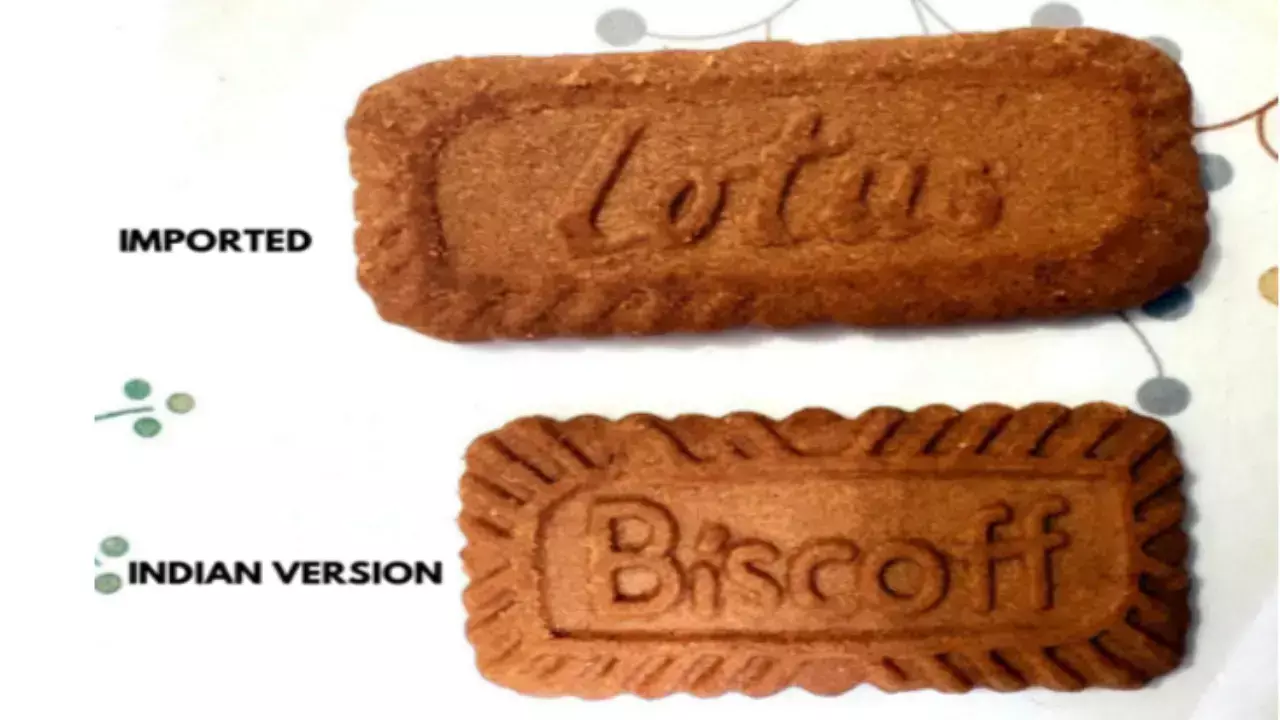
Nikhil's critique wasn't rooted in nostalgia or food snobbery. He presented empirical observations. The Indian variant, he demonstrated, was visibly smaller, texturally different, and notably less flavorful than its international counterpart. "The international version is noticeably bigger and richer," he noted, "while the Indian variant lacks the signature caramelised depth that built the brand's reputation."
His most pointed question struck at something larger than product quality: "As an Indian consumer, when you realise the product available globally is richer, tastier, and thicker... it doesn't feel good." He framed it as an issue of respect, asking whether global corporations view Indian consumers as willing to accept inferior products simply because they're more affordable.
The response was immediate and widespread. Food bloggers, home bakers, and everyday consumers began conducting their own comparisons. The verdict was remarkably consistent: the Indian Biscoff tastes different. Not subjectively, but measurably, observably different.
The Economics of Downgrading
Biscoff's strategy in India followed a familiar playbook: establish local manufacturing to reduce costs, introduce tiered pricing to capture market share, and leverage existing brand equity to justify premium positioning relative to domestic competitors while remaining accessible to mass consumers.
The ₹10 price point was strategic brilliance from a market penetration perspective. It positioned Biscoff competitively against Parle and Britannia while maintaining enough premium over those brands to signal quality. For a company entering a price-sensitive market, this made perfect sense.
But it also required cost optimization. Local sourcing of ingredients, adjusted formulations to accommodate regional supply chains, potential modifications to suit Indian palates, and manufacturing efficiencies that inevitably differ from European facilities.
None of this is inherently problematic. Adaptation is standard practice for multinational companies. What makes the Biscoff situation contentious is the absence of transparent communication about these adaptations.
The Packaging Paradox
The Indian Biscoff packaging maintains near-identical visual identity to its international counterpart. Same color palette, same typography, same brand markers. This creates an implicit promise of product consistency. When consumers encounter a noticeably different sensory experience, the perceived gap between promise and delivery becomes a trust issue.
Compare this to how other global brands handle localization. Cadbury clearly positions its Indian Dairy Milk differently from UK variants. McDonald's doesn't pretend its Indian menu mirrors American offerings. Coca-Cola adjusts sweetness levels regionally but maintains consistent brand communication about local taste preferences.
Biscoff's approach suggests equivalence while delivering difference. For consumers who know the original product, this feels less like adaptation and more like substitution.
The New Indian Consumer
What the Biscoff controversy illuminates is the evolution of the Indian consumer class. The narrative that Indians are primarily price-driven shoppers is increasingly outdated. Today's urban Indian middle class travels internationally, consumes global media, shops cross-border online, and has developed sophisticated product literacy.
They understand cost structures. They accept that a ₹10 biscuit can't be identical to a product retailing internationally at three times that price. What they resist is the implication that they won't notice the difference, or that noticing makes them unreasonable.
Mumbaikar Nikhil's audience, predominantly young, urban, and digitally native, represents this shift. They're willing to pay premium prices, but they demand corresponding value. When value appears compromised without explanation, they don't stay silent. They compare, document, and broadcast their findings to communities that amplify rapidly.
The Transparency Deficit
At its core, this isn't a product quality issue. It's a communication failure. Had Biscoff introduced its Indian variant with explicit acknowledgment of formulation differences, contextual explanation of local sourcing challenges, and transparent discussion of cost-quality trade-offs, consumer response might have been entirely different.
Instead, the silence created space for speculation. Is this cost-cutting? Deliberate downgrading? An assumption that Indian consumers lack discernment? Without official explanation, consumers construct their own narratives, and those narratives increasingly center on disrespect.
What This Means for Global Brands
The Biscoff situation offers a case study for multinational corporations navigating India's complex market. Several lessons emerge:
Consumer sophistication is underestimated. Indian shoppers are globally connected and information-rich. They have access to import channels, creator reviews, and comparative analysis tools that make product differences immediately visible.
Brand equity is fragile. Premium positioning built on product excellence erodes rapidly when quality perception shifts. The "premium" Indian consumers were willing to pay for Biscoff wasn't just for the brand name but for a specific sensory experience.
Transparency builds loyalty. Consumers accept trade-offs when they're explained. What they resist is being misled, even through omission. Explicit communication about local adaptations can strengthen rather than weaken brand relationships.
Digital amplification is permanent. Consumer observations no longer dissipate. They accumulate in searchable, shareable formats that shape brand perception for years. A handful of creator videos can undo expensive marketing campaigns.
The Path Forward
Biscoff faces a choice. It can continue with its current approach, hoping the controversy fades as the local product establishes its own identity distinct from the international version. This carries risk, as the comparison narrative is now entrenched and easily accessible to any new consumer.
Alternatively, it can engage directly: acknowledge formulation differences, explain the constraints and choices involved in local manufacturing, and potentially introduce a premium import line for consumers who want the original experience. This path requires humility but offers genuine resolution.
What seems untenable is the current silence. In an era of consumer-generated media and platform-amplified discourse, brands cannot outlast criticism simply by ignoring it.
Beyond Biscuits
The Biscoff story resonates because it represents something larger than one product's India journey. It's about how globalization actually functions at ground level, how quality standardization intersects with cost localization, and whether "global brands" can genuinely maintain consistent identity across vastly different economic contexts.
It's about whether Indian consumers, despite their growing purchasing power and market significance, are still seen as a tier-two market deserving of tier-two products. And it's about whether brands underestimate the emotional investment consumers make in products they love, and the betrayal they feel when those products change without acknowledgement.
For now, Biscoff remains available at every Indian grocery store, accessible and affordable. But for many consumers who once considered it special, something intangible has been lost. Not just a flavour profile, but the feeling that came with it: that moment of indulgence that tasted like elsewhere.
Whether that can be recovered depends less on reformulation than on recognition. That Indian consumers noticed. That their observations are valid. That they deserve both quality and honesty.
And that sometimes, the most expensive mistake isn't cutting costs. It's cutting trust.