




- ‘Fit Cop’ app to be launched for 90,000 personnel
- AP govt committed to holistic development
- Higher turnout recorded in Kotia region
- BRS launches grassroots drive for graduate MLC polls
- Vizagites excited over India–Sri Lanka ODI
- No code, no laptop: IT professionals build 57 AI agents in 35 minutes
- Nalgonda woman goes missing during morning walk in Boston
- Students told to stay away from drugs
UPI Charges Explained: No Fees Up To ₹2,000, But MDR Debate Continues
In Short
The Centre has barred charges on UPI payments up to ₹2,000, while the possibility of Merchant Discount Rate on higher-value transactions remains under discussion.

Share :
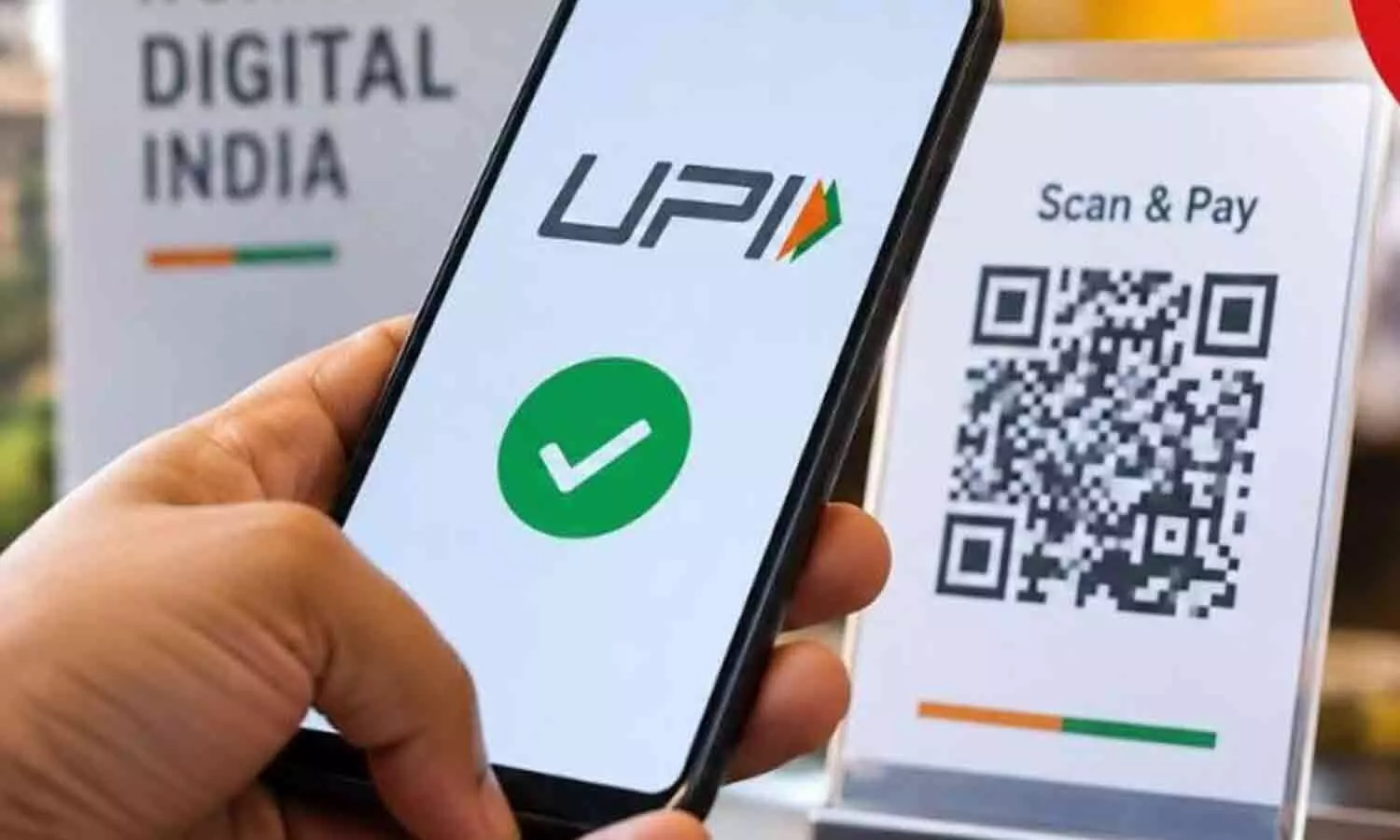
UPI Charges Explained: No Fees Up To ₹2,000, But MDR Debate Continues
The Centre has clarified that users will not be charged for UPI transactions of up to ₹2,000, even as questions continue over whether merchants could eventually face fees on higher-value digital payments.
A notification issued by the Ministry of Finance under Section 10A of the Payment and Settlement Systems Act covers two payment categories: RuPay debit card transactions and UPI payments up to ₹2,000. Banks and payment system providers have been barred from imposing charges, either directly or indirectly, on people making or receiving payments through these modes.
Will UPI Payments Above ₹2,000 Be Charged?
The government has not announced any consumer fee for UPI transactions above ₹2,000.
Finance Minister Nirmala Sitharaman had told the Rajya Sabha on August 11 that the legislative change was an “enabling provision” and did not itself introduce a tax or transaction charge on UPI users.
She also said small merchants, including street vendors, cab drivers and kirana shop owners, would not be affected by any direct charge on customers. If a Merchant Discount Rate (MDR) is eventually introduced in certain cases, the payment would be made by merchants rather than the person making the transaction.
However, the amendment removes the earlier legal restriction that prevented banks and payment service providers from imposing MDR on UPI transactions. This has kept open the possibility of merchant-level charges on selected transactions.
What Is Merchant Discount Rate?
MDR refers to the processing fee paid by a merchant to banks, payment companies or other payment service providers when a customer makes a digital payment.
UPI has operated under a zero-MDR framework since 2020, a policy intended to encourage wider adoption of digital payments and reduce dependence on cash.
In other forms of digital payments, merchants may have to bear processing charges. In some cases, particularly for higher-value card payments, businesses may seek to recover such costs from customers through pricing.
Why Has MDR Become An Issue Again?
UPI has grown into one of the world's largest real-time retail payment networks. According to data cited in the report, the platform processed 24.51 billion transactions worth ₹29.82 lakh crore in August.
Operating such a large payment ecosystem involves substantial expenditure on technology, cybersecurity, fraud prevention, infrastructure and customer support. These costs are currently shared by banks, payment applications and the National Payments Corporation of India (NPCI), while the government has also provided budgetary incentives to support the zero-MDR model.
Payment companies have argued that allowing MDR on some transactions could provide additional revenue for investment in the system. Brokerage firm Jefferies estimated in August that merchant fees on larger UPI transactions could potentially generate between ₹5,000 crore and ₹10,000 crore annually for the industry.
Who Will Decide On UPI Charges?
The amendment gives the government the legal ability to permit charges but does not itself impose them.
According to Sitharaman's explanation in Parliament, the UPI & Services Steering Committee, headed by NPCI and comprising 22 members, including major banks and leading UPI applications, will determine whether MDR should be introduced and, if so, how it would be structured.
No final decision on introducing such charges had been taken at the time of the government's clarification.
Congress Raises Political Objections
The issue has also triggered a political confrontation.
Leader of Opposition in the Lok Sabha Rahul Gandhi alleged that the government's move was influenced by pressure from American companies. He argued that transactions above ₹2,000 may constitute only around 5% of UPI transactions by volume but account for nearly 65% of their overall value.
Gandhi also questioned whether merchants would eventually pass any MDR-related costs on to consumers through higher prices, even if customers themselves were not directly charged.
The government, meanwhile, has maintained that everyday low-value UPI payments will remain protected. It has also argued that the enormous growth in digital transactions requires continued investment in cybersecurity, fraud prevention and technological infrastructure, making the long-term financial sustainability of the UPI ecosystem an important consideration.
For now, there is no announced consumer charge on UPI payments above ₹2,000, and no MDR has been formally introduced on such transactions. The legislative change creates the framework under which merchant-level charges could potentially be considered in the future.
Revenue officials closing in on KCR
Electors marked ASDD: ECI gives ‘one more opportunity’ to enrol
Firecracker stalls in Hyd flout safety norms
Social harmony can’t be achieved through political slogans
Punjab and UP elections: A litmus test for Congress: Beyond SIR, where is the development agenda?
Telangana Govt eyes revenue windfall through land auctions


