Paving way for India’s giant lift-offs in space

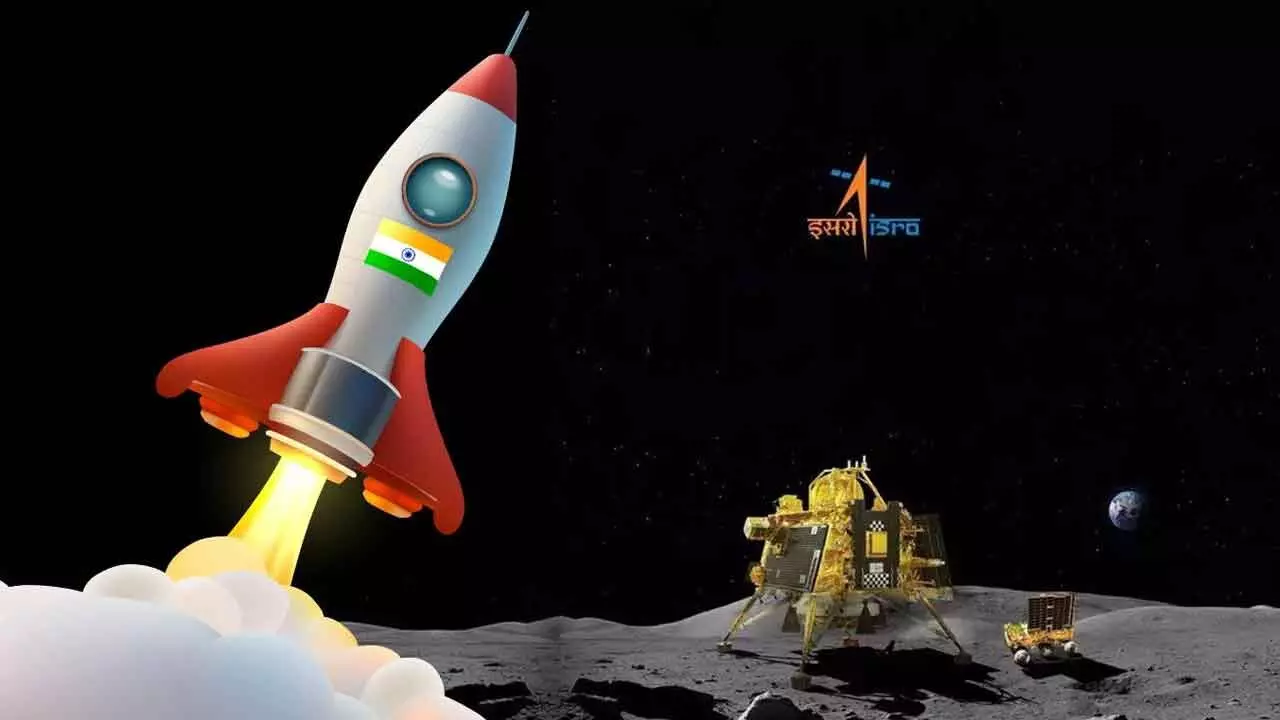
The world is marvelling at how ably Indian Space Research Organisation (Isro) is achieving groundbreaking missions. On Thursday, it witnessed ISRO pulling off a great mission so critical for its future space missions such as Chandrayaan, which need their majors parts separately launched, to be combined later in space so as to land on the moon. With this, ISRO promises to take India on space voyages to such altitudes as never seen before. The whole nation leapt in joy as ISRO catapulted the nation in just eight years into an elite group of US, Russia and China which have achieved the feat earlier. With SpaDex success, the world now reckons India as an advanced spacefaring nation.
The December 30, 2024 launch of the two satellites of 220 kg each (Target and Chaser) aboard PSLV-C60 at a 475-km orbit generated interest the world over whether India would be able to pull off the immaculate manoeuvre of docking the two satellites. The docking was initially scheduled for 7 January, but Isro delayed to conduct some more simulations to make the actual docking infallible. The nation was elated as our scientists commendably docked the two objects moving at a speed of approximately 28,800 kmph. Tremendous manoevuring went into bringing their relative velocity nearly to zero, using retrorockets and a sensor suite; at this point the satellites approached each other slowly and quite precisely. It was a high stakes adventure at a clock’s precision with total coordination.
It fills Indians with pride and wonderment at the admirable demonstration of bringing the satellites moving at so high speed to drift close slowly, before finally being joined together. At present, both the satellites joined as a single composite object. ISRO will now attempt to achieve sharing of electrical power between the two, upon completion of which another novel experiment of “undocking” would be taken up. The satellites will drift apart and carry out their assignments over a period of two years.
SpaDex success is unbelievable as the entire expertise as well as equipment are indigenous. It at once opened the door to a world of amazing possibilities in the cosmos. ISRO is currently working on its vision of setting up a space station by 2035 and sending humans to the Moon by 2040. The future ambitions of ISRO would would require docking capability as the Bharatiya Antariksh Station would comprise five modules that need to dock with one another. ISRO has just made the mission sound possible.
Meanwhile, adding to the exultations among general public and scientific community, the Union government gave its approval and sanctioned about Rs 4,000 crore for setting up a third launch pad at India’s only seaport, Sriharikota. This will greatly help ISRO to materialise its space ambitions such as India’s own space station, next generation heavier launch vehicles, and human mission to the Moon. Alongside, ISRO is trying to produce food in space. Another enthusing mission is the launch of a robotic arm which can grab a piece of space debris.
About two dozen NGO and private firms were involved in SpaDex. India needs more and space startups to innovate new technologies and solutions. Empowering the sector, the government set up Rs. 1,000 crore venture capital fund to foster self-reliance in high-tech industries. From the modest launch of a rocket in 1963, India came a long way to become a major spacefaring nation. Recently, Group Captains Prasanth Balakrishnan Nair, Ajit Krishnan and Angad Pratap, and Wing Commander Shubanshu Shukla, all from Indian Air Force, have been selected as the astronaut-candidates for the first human spaceflight mission. The nation wishes them all success in their training and later endeavours.