SC ruling can help restore credibility of NEET-PG exams

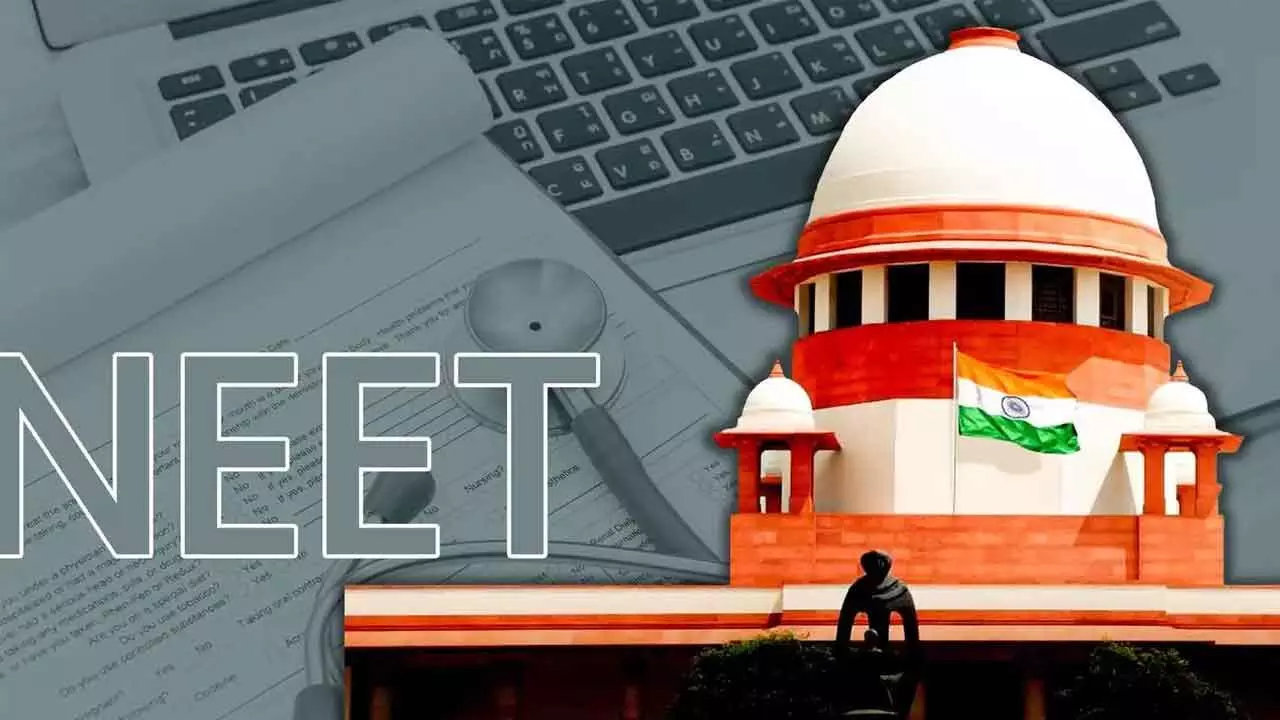
The rising popularity of a career in the highly lucrative IT sector notwithstanding, thousands of Indians dream of making a name in the world of medicine, across disciplines. Although many embark on a career soon after getting through MBBS or BDS, an umpteen number of them aspire to advance their prospects by opting for post-graduation courses like MD and MS.
The first step towards this goal is coming through the National Eligibility cum Entrance Test (Postgraduate) or more popularly known as NEET (PG) entrance examination, under the aegis of the National Board of Examinations in Medical Sciences (NBEMS) for both government and private medical colleges. On the face of it, this looks like a sound entry level eligibility criterion but when one looks at it from deep inside, the most glaring aspect, disgusting at that, is the manner this so-called transparent process is manipulated by vested interests, out to make a killing.
It goes without saying that like with many government departments, even the education system is highly corrupt, especially the admission process. Alas, this applies even to the high-profile NEET (PG), which has been ridden with controversies one too many.
It is a rather sorry state-of-affairs that every year hundreds of hopefuls stare at an uncertain future after appearing for the test and have to rest content with an MBBS or BDS having failed to make the PG cut. The villain of the piece is the dreaded word ‘seat-blocking’, which is a ‘facility’ that deprives several deserving students an admission, while those from the elite sections benefit from this counselling manipulation.
Simply put, this makes a mockery of ‘merit-based’ selection. Many candidates lose out as this ‘arrangement’ helps a student to block his seat during the earlier rounds, a privilege that not many from middle class families can afford to cash in on. In this rather sordid scenario, a glimmer of hope has come from the Supreme Court, which, on a ‘momentous’ Thursday, not only slammed the artificial scarcity that is created by ‘seat-blocking’ but also found fault with the practice that lacked transparency. In their bid to streamline the admission process and ridiculing the existing policy, a bench, comprising Justices J B Pardiwala and R Mahadevan, highlighted its detrimental impact on the fairness of the admissions process. “Seat blocking is not merely an isolated wrongdoing – it reflects deeper systemic flaws rooted in fragmented governance, lack of transparency, and weak policy enforcement,” chided the bench.
To forcefully drive home the point and underscoring the compelling need for structural reforms, the bench maintained that “Although regulatory bodies have introduced disincentives and technical controls, the core challenges of synchronisation, real-time visibility, and uniform enforcement remain largely unaddressed.”
The Supreme Court’s stringent measures to combat the malpractice of seat blocking include slapping severe penalties on errant institutions and officials like forfeiture of security deposits and disqualification from future exams. In a move that promises a welcome turnaround in the process, much to the delight of students and parents, the apex court has come up with a set of directives that include introduction of a national counselling calendar well in advance, pre-counselling fee structure, penalties for seat-blocking, the authorities’ accountability and uniform procedures across states for all aspects, including eligibility and withdrawals.
However, the notoriety of some dubious elements is such that they will still try to take advantage of any loophole they will find. There is a need to constitute a panel, comprising upright and proven officials from the education fraternity, to monitor adherence to the court order and the implementation process