Beyond Gulf migration: Charting a high-skill future for TG youth

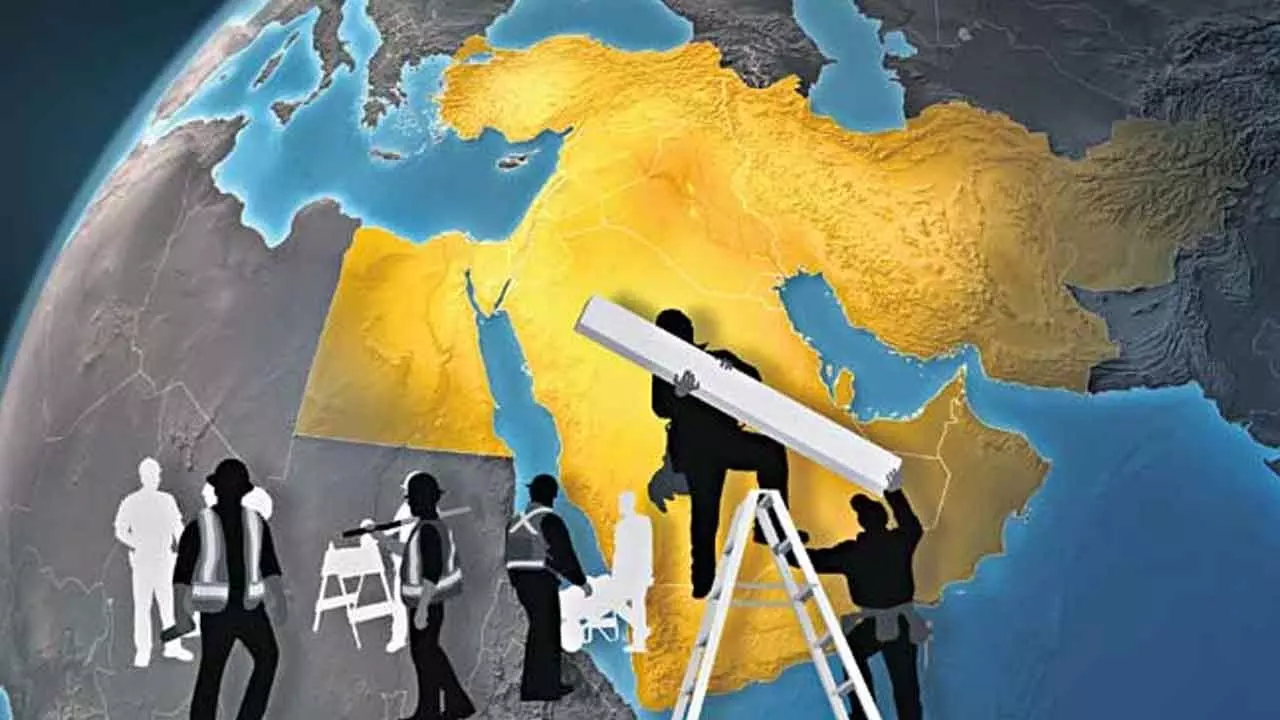
International migration takes place mostly for economic development, apart from reasons such as political asylum and displacement due to conflict. The story of Indian labour migration to Gulf countries has been a mixture of development and distress. Migration to Gulf countries started with labourers in oil industries and at a later stage as construction workers, domestic workers and in other service occupations. Approximately 1.5 million people from Telangana are presently working in Gulf countries, primarily in low-skilled, unorganised sectors like construction, sanitation, and domestic work (drivers, maids).
Driven by economic necessity since the 1960s, migration is concentrated in northern Telangana districts, specifically Karimnagar, Nizamabad, Siricilla, Jagtial, Siddipet, Kamareddy, Nirmal, and Adilabad, often involving risky routes via agents. The State’s rural economy has been closely tied to the Gulf since the 1960s through remittances. Our youth have migrated to Dubai, Saudi Arabia, Kuwait, Qatar, Bahrain and Oman, working at construction sites and other service sectors. They send back money as remittances that help build homes, children’s education and support local economies. This migration has been crucial for many people.
However, it is time there is a rethink on this approach. The old way of moving to the Gulf countries is becoming less effective. Its appeal is fading for a straightforward economic reason: the costs now outweigh the benefits for migrants. Salaries in the Gulf have mostly remained the same, while expenses, including high recruitment fees, travel costs, and initial settling expenses, have soared.
Many workers return home after years of hard work with savings that do not match their efforts. As they undergo social, economic, and psychological stress due to loss of job and burden of debt, re-integration and resettlement of returned migrants in India is a challenge. Most migrants had taken personal loans at high interest rates. The amount earned in the Gulf was so meagre that all their savings and remittances were used in paying off the interest amount of the loan and capital amount remains to be cleared.
In recognition of the role played by Indian migrants in Gulf countries that boosted growth of the nation, the Central and State governments should provide them all assistance in terms of livelihood opportunities and bail them out of the debt-trap. Telangana has a great chance to guide its youth towards a more promising and secure future in developed countries like Germany, Japan, South Korea, Singapore, and Greece.
Systemic vulnerabilities-The rights deficit:
They often endure tough conditions with no rights and no clear route to permanent residency or citizenship. This situation is no longer sustainable for a country that values progress and innovation. The “Kafala” system is undergoing reforms in some places, but the sponsorship system still makes workers highly dependent on their employers. Job mobility is limited, and there is a constant fear of losing their jobs. Unlike developed countries, Gulf nations lack a path to permanent residency or citizenship. This means workers can never really settle, create a lasting legacy, or access full social benefits.
Tech powerhouses:
Instead of looking to the Gulf, we should look to the east and west and the tech powerhouses in Germany, South Korea and Japan. These countries are facing serious demographic shortages and are actively searching for skilled, young workers to support their economies. They not only provide better wages but also improved working conditions, strong legal protection, and opportunities for long-term residence. This is the future we need to prepare our youth for.
The key to unlocking this future lies with Telangana Overseas Manpower Company Limited (TOMCOM). Although TOMCOM is currently engaged in such initiatives, much more work remains to be done to meet global demand. This institution must change from a general migration facilitator to a dedicated springboard for high-skilled placement. TOMCOM should partner with the state’s well-known industrial training institutes and National Academy of Construction (NAC) to create targeted, intensive up-skilling programs. The focus should be on teaching technical skills that are in high global demand, such as advanced manufacturing, artificial intelligence, healthcare, and sustainable energy. These skills should match the job markets of Germany, Japan, and South Korea.
Global pathways and visa frameworks:
Many developed countries have created formal programs to attract skilled international workers. These programs offer alternatives to traditional migration routes. Japan’s Specified Skilled Worker (SSW) program, in partnership with the Indian government, helps people find jobs in areas like nursing, hospitality, and agriculture. Germany has a significant shortage of skilled labor. It particularly seeks professionals in engineering, IT, and healthcare.
The other options include the EU Blue Card for highly qualified individuals and a job seeker visa for those looking for work. The United Kingdom’s immigration system, which changed after Brexit, focuses on a point-based skilled worker visa. This system prioritizes jobs in technology and healthcare and provides a clear path to permanent residency.
Additionally, countries like Greece and Singapore are actively accepting applications from qualified skilled workers. But technical skills alone are not enough. As the content points out, ‘native language’ is the bridge that turns a job into a career and an immigrant into a member of society. A concerted effort to teach German, Japanese, and Korean must be a key part of this new migration strategy. By arriving with both a certified skill and conversational fluency, our young boys and girls will not just be workers; they will be valued professionals, ready for quick success.
Dignity and growth:
This change is more than just an economic policy; it is an investment in people. It fits well with Telangana’s reputation as a centre for technology and ambition.
By guiding our youth to developed countries, we ensure they build satisfying careers, gain exposure to global best practices, and become part of a valuable international community that can, in turn, invest back in the State’s growth. The time has come to move from low-wage, high-cost migration to the Gulf towards a new era of high-skill, high-reward careers in developed countries. The state government, TOMCOM, and educational institutions must come together to support this vision.
As part of its new NRI policy, the Telangana government has established a two-year NRI Advisory Committee. While migrant worker welfare remains a focus, the committee should prioritize programs for non-Gulf migration. Its key mandate will be to develop and recommend new initiatives that facilitate migration to developed countries like Germany, Japan, and South Korea, shifting focus toward high-skilled employment opportunities. We should prepare our youth not only to find jobs overseas but also to create their own futures.
It is time for Telangana to find a new direction on the world map. There is an urgent need for governmental interventions such as financial assistance to start livelihoods and pay debts to reduce the distress of returned migrants.
(The writer is a Post-Doctoral Fellow at Department of Sociology, University of Hyderabad)