




- Our democracy is endangered
- Vijay’s TVK faces its first electoral test in October
- MyVoice: Views of our readers 8th September 2026
- State Assembly, Council to function for one week: BAC
- If needed will move no-trust motion against Speaker: KTR
- Govt signs MoU for clean energy through electric cooking
- Minister Ramprasad slams YSRCP over Mega DSC slur
- Telugu YouTuber Nandana held at Hyd airport
Our democracy is endangered
In Short
Deliberation and dissent remain the constitutional soul

Share :
Our democracy is endangered
One of the main estates in Indian democracy - the Legislature cannot keep the doors closed to debate. By doing so, executive oversight is nullified. The fact is that whenever political parties fail to do enough, the vital energy of constitutional defence shifts outward.
Recently, there were widespread public protests by the country’s youth. They demonstrated precisely how constitutional values are defended. They should be encouraged to have dialogue, filing which it hits the streets. The youngsters demonstrated what a healthy democracy actually looks like. They proved that democratic consciousness is not dead.
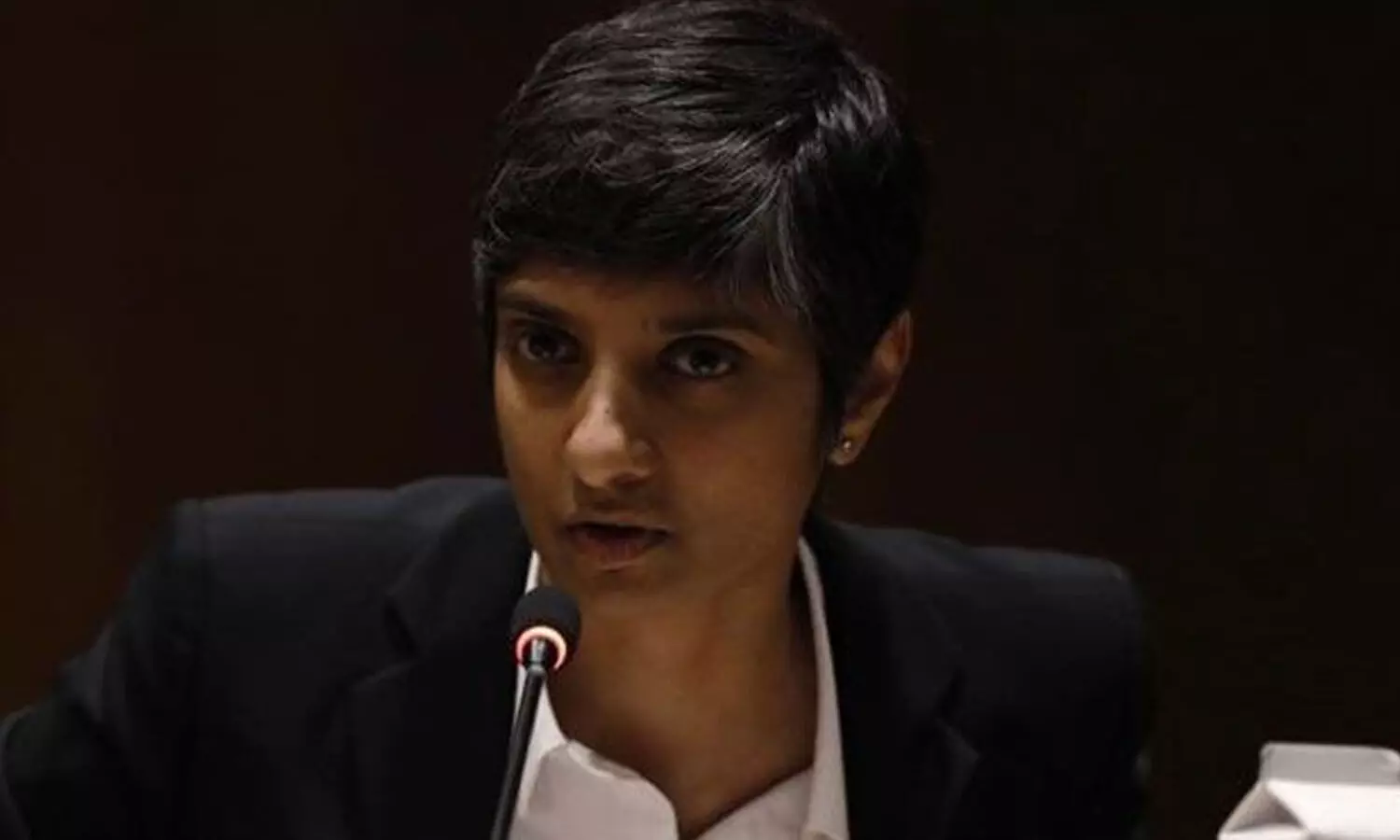
If they do not have jobs, and are devoid of quality education, examination transparency, safety, and dignified livelihoods, then where does life in a democracy go? They do not question, no discussion, no deliberation, and no civic courage- where is the real governance, wondered senior advocate and Rajya Sabha member Menaka Guruswamy.
Constitution does not collapse overnight:
The government should know that a constitution does not collapse overnight. It erodes when the essential practices that sustain it are systematically disintegrated. A constitution is in peril, where parliamentary traditions of rigorous deliberation are bypassed; independent institutions, including courts, face acute politicisation; when we lose the civic capacity to sit across a table, disagree openly, and yet sustain a productive dialogue. It will collapse. It is a danger. If the government allows ‘fraternity’ to be sidelined, our constitutional ideals suffer. Lawyers, law students, and citizens face danger. Without fraternity, the constitutional promises of equality, dignity, and liberty become impossible to sustain- values manifested by the preamble of our Constitution.
Political engagement and the Opposition:
Guruswamy explained: “When engaging with the state of our republic, one is often confronted with the critique of partisan alignment, particularly my association with the Trinamool Congress. How can one justify standing with a regional party amidst charges that parliamentary and political overreach occur across the political spectrum. To this, we must be clear: you are entirely entitled to your opinion, and I will defend your right to hold it. But there is a profound, non-negotiable difference between those who uphold secularism and those who do not; between those who speak for a single community alone and those who speak for all Indians; between political formations that actively stifle an independent press and those that do not”.
The opposition is an essential requirement. We call it electoral democracy. State politics matter. If they resort to all kinds of measures to silence the political opposition, how will the states survive? Assertions that grassroots resistance or political opposition made no difference in states like West Bengal are detached from reality. The problems are:
There is no perfect political party in existence.
What does exist, however, are citizens and leaders willing to stand up and oppose when authoritarian tendencies govern.
If you genuinely believe that secularism is a constitutional imperative, that substantive equality, human dignity, and fraternity must be protected, you have no choice today but to align yourself with the opposition in India.
Guruswamy suggested that students must read books. For instance, “when young advocates look for a foundation, I suggest Jawaharlal Nehru’s The Discovery of India. Written from a prison cell, where the narrative famously ends because the jailers rationed his paper and ink, it concludes with a visionary commitment to substantive equality”.
One should have a constitutional vision. That should be transformative. Textbooks are useful, but you must read beyond them to form a vision.
Historically, we have drifted perilously far from using the Constitution to transform lives; instead, citizens are forced to wield it merely as a shield for daily survival. Fear is pervasive.
Transformative constitutionalism is not solely about civil and political rights. While civil liberties are vital, the actual engine of constitutional transformation lies in socio-economic rights. The Government and civil society should ensure such transformation. Public education should be a fundamental right. Unfortunately, it is steadily dismantled and starved of support; completely surrendered to aggressive privatisation.
Institutional mechanics that safeguard our rights face structural scrutiny. The judicial collegium system, where judges appoint judges, is entirely a product of judicial precedent through three landmark cases rather than explicit constitutional text. It remains a mechanism unique to India. Yet, constitutional health requires judicial independence to be matched by institutional diversity and accountability, ensuring the bench mirrors the republic it serves.
Academic freedom:
For law students navigating state action, FIRs, and the chilling of academic freedom, whether at Osmania University or anywhere else in India, the courtroom remains a critical battleground. Guruswamy gave an example stemming from her experience:
“My own transition from corporate practice in the United States to Indian litigation was simple: courtrooms are the most thrilling, vital spaces one can inhabit. If the law excites you, enter the courtroom. The personal and intellectual returns of living an engaged life at the bar are unparalleled. However, the courtroom must become far more representative. It must welcome and elevate women, religious minorities, Dalit and OBC advocates, and members of the LGBTQ+ community to Senior Advocate designations and the judicial bench. The judiciary must reflect the demographic reality of the country it serves, not the privileges of an insular few”.
Erasure of parliament and power of the street:
An alarming institutional decay is visible. India is an established parliamentary democracy structured around political parties. The functioning of Parliament itself has experienced an alarming institutional crisis. The judicial tradition witnesses fierce adversarial litigation. One should ensure that every party is fully heard before an impartial judge. The reality of the Lok Sabha and Rajya Sabha today is jarring. Only executive fiat only works. There is no deliberation. Wait for the order of the Government.
Suppression of committee dissent:
High numbers will decide what law should be, not the rule of law. In parliamentary standing committees, opposition members are overwhelmingly outnumbered. Even on technical matters, fighting over procedure. After corporate and commercial law amendment bills are introduced, they go over to parliamentary standing committees. Now, the right to submit a formal dissent note to ensure it is recorded in the legislative report requires a hostile battle against members of the Committee.
Expunction of factual scrutiny:
Interventions within committees or Parliament are silenced and purged from the official record. When raising empirical data on judicial diversity, the tendency is to highlight that Scheduled Castes comprise roughly 2.3 per cent, women around 10 per cent and OBCs roughly 10 per cent of appointments, leaving three-quarters dominated by traditional demographics. When pointed out that the ruling party seeks to appoint judges who subscribe to its own political ideology, that analysis is erased from the minutes.
Executive Impunity:
All ministers routinely evade accountability. When the opposition raises urgent questions concerning state overreach and the suppression of civil protests, the Union Home Minister can be absent. He will not be available to answer for two consecutive weeks without consequence. Where then is legislative scrutiny? They have been made unacceptable, frequently accompanied by the tacit threat of enforcement agency raids. When the ruling party operates as the only permitted voice in Parliament, and constitutional processes are actively curtailed, the democratic conversation inevitably shifts outside legislative walls.
What about civic space that must be reclaimed? The youth of India have shown that the ruling party and the opposition alike are not getting any space. The people have to take to the streets with slogans, poetry, incisive wit, and raw courage; young citizens have reminded the republic of what truly matters. They have shifted the discourse away from manufactured, sectarian distractions- what you eat, what you wear, what you sing, or whom you choose to love - and anchored it back in the non-negotiable fundamentals: jobs, education, examination integrity, livelihood, and common security, explained Guruswamy.
When institutional doors are shuttered against democratic debate, the courage of citizens speaking the truth remains the Constitution’s ultimate defence.
(The writer is a former CIC, and presently Professor, School of Law, Mahindra University, Hyderabad)


