The moral compass: Value-driven youth are India’s eventual guardians

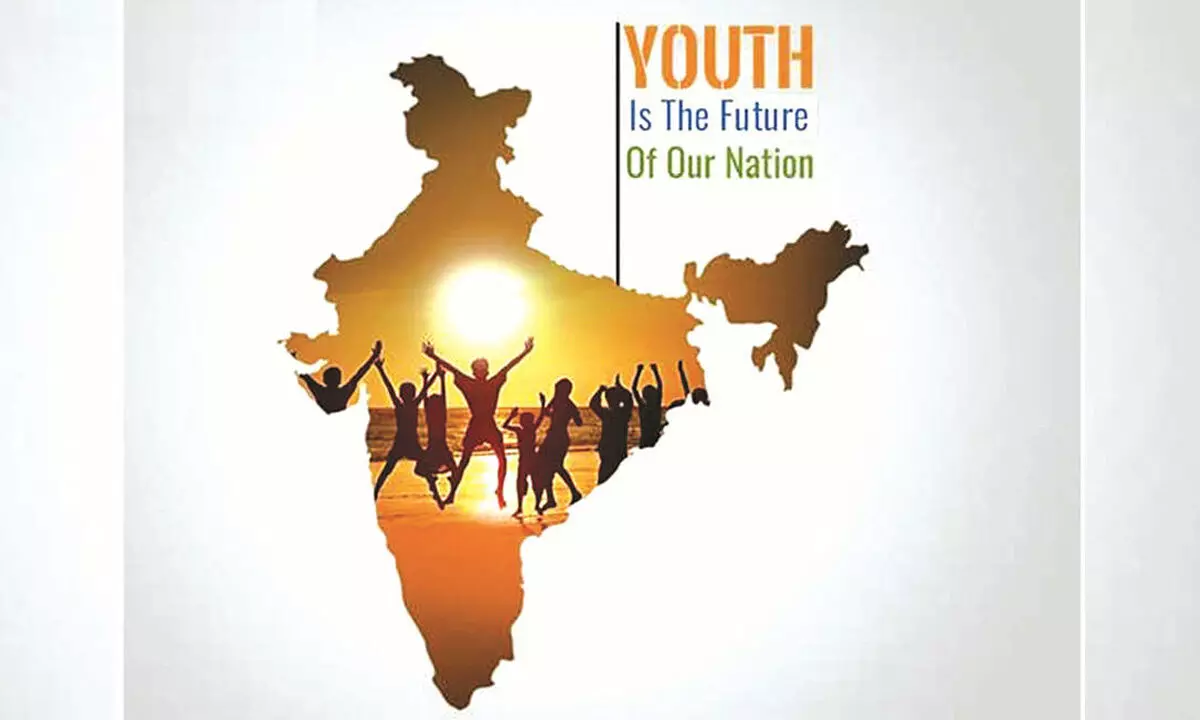
India stands at a historic crossroads, illuminated by the vibrant energy of the world’s largest youth population. Today, the phrase ‘demographic dividend’ is no longer just an economic buzzword; it is the very heartbeat of our national identity.
With over 600 million people under the age of 25 and a median age of approximately 28.8 years, India possesses a reservoir of human capital that is the envy of aging global economies. However, the sheer numerical strength of our youth is a double-edged sword. While it offers the potential to add over $1 trillion to our GDP by 2030, this promise remains hollow if the hands driving the machinery of progress lack a moral compass.
The true ‘savers’ will not be those defined merely by their technical degrees or digital fluency, but those who anchor their ambitions in the bedrock of human values.
The current status of our youth presents a complex landscape of unprecedented opportunity clashing with profound systemic challenges. According to recent projections from the Technical Group on Population Projections, nearly 27 per cent of the population falls within the 15–29 age bracket. Yet, the 2025 India Skills Report highlights a sobering reality: only about 54.8 per cent of these young individuals are considered employable. Beyond the ‘skills gap,’ a more silent crisis is brewing, a ‘values gap.’
In a hyper-competitive era where success is often measured by viral metrics and immediate material gain, traditional ethics are being sidelined. Reports on the state of education frequently lament the rise of academic dishonesty and a decline in civic responsibility. When the pressure to survive outweighs the will to be ethical, the demographic dividend risks will become a demographic disaster, characterized by social unrest and a leadership vacuum.
In this context, the teachings of Swami Vivekananda serve as the ultimate blueprint for navigating modern complexities. Vivekananda believed that the youth were the ‘muscles of iron and nerves of steel’ who could transform the nation through ‘man-making’ education. He emphasised that true education is the manifestation of the perfection already in man, rooted in the values of self-confidence, fearlessness and selfless service.
In honour of his visionary contribution, India celebrates his birth anniversary, January 12, as the National Youth Day. This day serves as an annual reminder for the younger generation to awaken their latent potential and dedicate their energy to the service of the motherland. For Vivekananda, character was the only true foundation of a great nation; he famously urged the youth to ‘Arise, awake, and stop not till the goal is reached’, a clarion call that remains more relevant today than ever as we strive to build a value-based society.
Human values – Truth (satya), Right conduct (dharma), Peace (shanti), Love (prema) and Non-violence (ahimsa) taught by Sri Satya Sai Baba are the essential stabilizers for this youthful energy. Without them, intelligence becomes predatory and innovation becomes exploitative. For a young entrepreneur, values translate into ethical business practices that prioritize sustainability over short-term profit. For a young bureaucrat, values are the shield against corruption.
In the absence of empathy, the digital revolution currently sweeping through our rural and urban landscapes could further widen the chasm of inequality. Values serve as the ‘operating system’ of the mind; they determine whether a young person uses their skills to build inclusive technology or to facilitate digital fraud. As we move toward the vision of Viksit Bharat by 2047, the character of the citizen is becoming as important as the competence of the professional.
The impact of a value-driven youth on the all-round growth of the nation is transformative. When young leaders prioritise integrity, they rebuild the public trust necessary for a healthy democracy. We see this in the surge of youth-led social enterprises that tackle climate change, waste management, and rural education not for fame, but from a sense of ‘dharma’ or duty toward the community. This value-based approach fosters social harmony in a diverse nation, as empathy allows the youth to look past the divisive lines of caste, creed and religion.
A generation that values ‘Sewa’ (service) ensures that the benefits of India’s eight per cent GDP growth reach the last person in the queue. This holistic development where economic wealth is balanced by social well-be ing is the only way to ensure that India’s rise is both sustainable and peaceful.
To ensure that our youth indeed become the ‘savers’ of the nation, we must pivot our national focus. Our education system must transcend the obsession with rote learning and high-stakes testing, integrating ‘Value Education’ not as a separate subject, but as a lived experience. Parents, educators and the media must stop glorifying wealth in isolation from character.
We need to create platforms where ethical leadership is recognized and rewarded as much as technical innovation. Suggesting a way forward requires a collective realization: a nation is not a collection of buildings and balance sheets but a community of consciences.
In conclusion, India’s destiny is being written in the classrooms and startup hubs of today. If the youth of 2026 can marry their technological prowess with the ancient Indian wisdom of Vasudhaiva Kutumbakam (the world is one family), they will do more than just grow the economy and they will save the soul of the nation. The true power of India lies not in the number of its citizens, but in the strength of their character.
By nurturing youth who are as compassionate as they are competitive, India will not just survive the challenges of the 21st century; it will lead the world by example.
(The writer is a college principal and founder of Supporting Shoulders)