




- The small marks that define writing
- Survey finds strong interest in overseas nursing careers among students
- Sai University holds third convocation
- Beyond B. Com: Why commerce students need global finance skills to stay employable
- Water shortage delays Ganesh immersion
- Constructive geopolitical backdrop spurs rebound
- Hyderabad drives MF AUM growth among Telugu states
- Subhash Chandra challenges NCLT asset freeze order
The small marks that define writing
In Short
Consider the difference between “Let’s eat, Grandma” and “Let’s eat Grandma.”

Share :
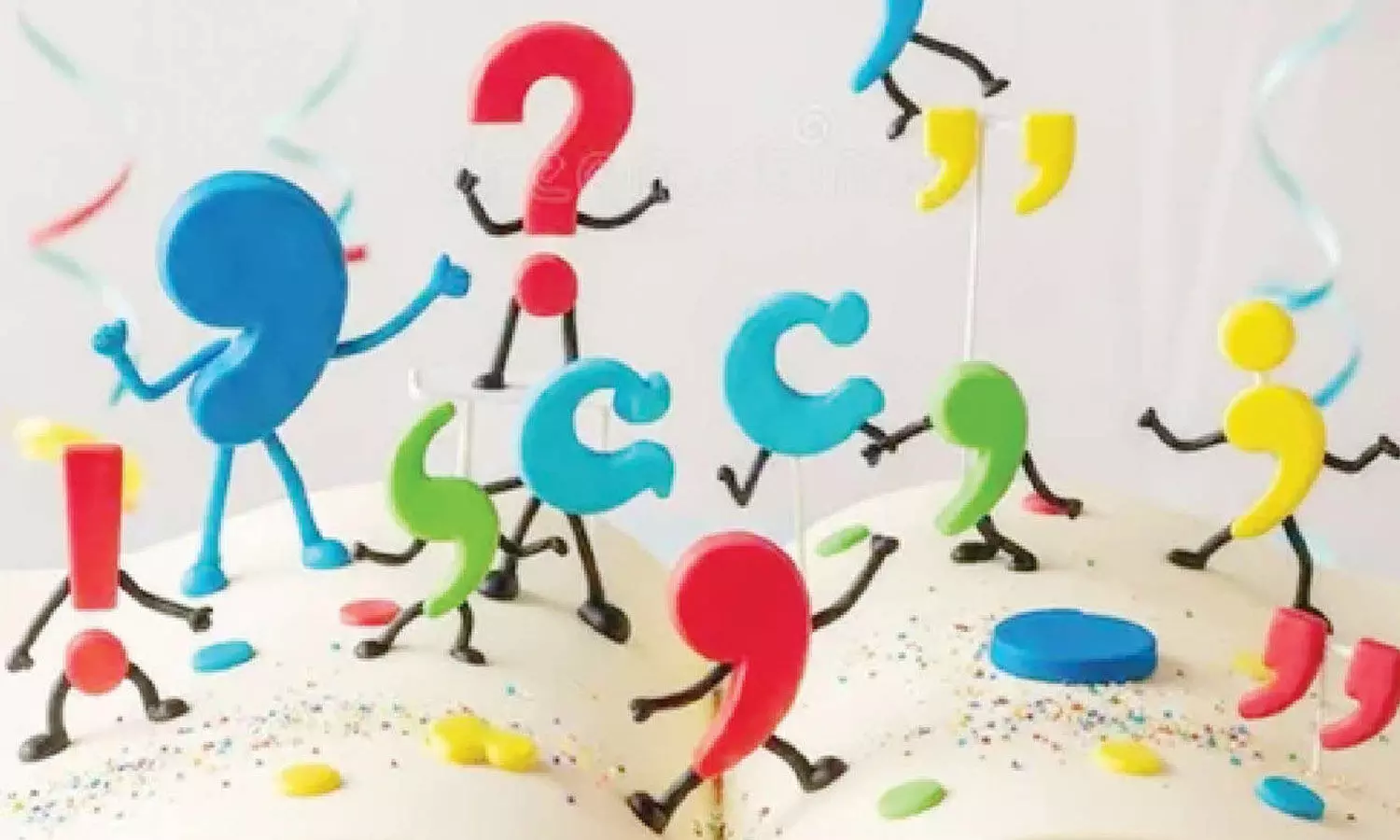
The small marks that define writing
Punctuation may seem like a small part of writing, but it plays an important role in making communication clear and meaningful. Commas, full stops, question marks, quotation marks and other punctuation marks help readers understand how sentences are structured and what the writer intends to say.
Consider the difference between “Let’s eat, Grandma” and “Let’s eat Grandma.” The comma changes the meaning completely. While the first sentence is an invitation, the second creates an unintended and humorous meaning. This simple example shows why punctuation is more than a set of grammatical rules.
Correct punctuation helps readers follow ideas without confusion. A full stop signals the end of a thought, while a comma can separate ideas or items in a sentence. A question mark indicates that a question is being asked, and quotation marks help identify someone’s exact words. Using these marks appropriately gives writing rhythm and makes longer passages easier to read.
For students, developing good punctuation habits can improve essays, assignments, examinations and everyday communication. It also helps them express ideas more precisely and present their work in a structured way.
In professional life, punctuation remains equally important. Emails, reports, applications and other documents need to communicate information accurately. A misplaced comma or missing full stop may sometimes change the intended meaning or make a message difficult to understand.
Learning punctuation does not require memorising every rule at once. Reading regularly, paying attention to sentence structure and reviewing one’s writing can gradually build confidence.
Cabinet nod for Rs 22,178-cr new investment proposals
As Deep Depression Nears Coast…North Andhra put on high alert
4 students killed after being hit by train in AP
No patient should buy medicines from outside: Minister Pankaj
First day of PM Modi-chaired Chintan Shivir concludes with ministers’ presentations
UP Poll Heat: Yogi Hits Back at SP


