




- South Hyderabad set to emerge as city’s next major growth corridor
- Assembly seeks Central aid over rainfall deficit
- Residents cry foul over mounds of garbage in the vicinity of JBS
- HYDRAA chief inspects IDL lake to ensure hassle-free immersion
- Trade body urges Centre to roll back UPI charges
- Mamata backs Cong in Nandigram after her candidate withdraws
- Football vs Envelope: Mamata, rebels get new names, symbols
- Modi to open environment meet today
Today is International Astronomy Day: Learning through astronomy and space science
In Short
Explore how astronomy combines observation, mathematics, and technology to foster critical thinking, scientific investigation, and interdisciplinary learning in students.

Share :
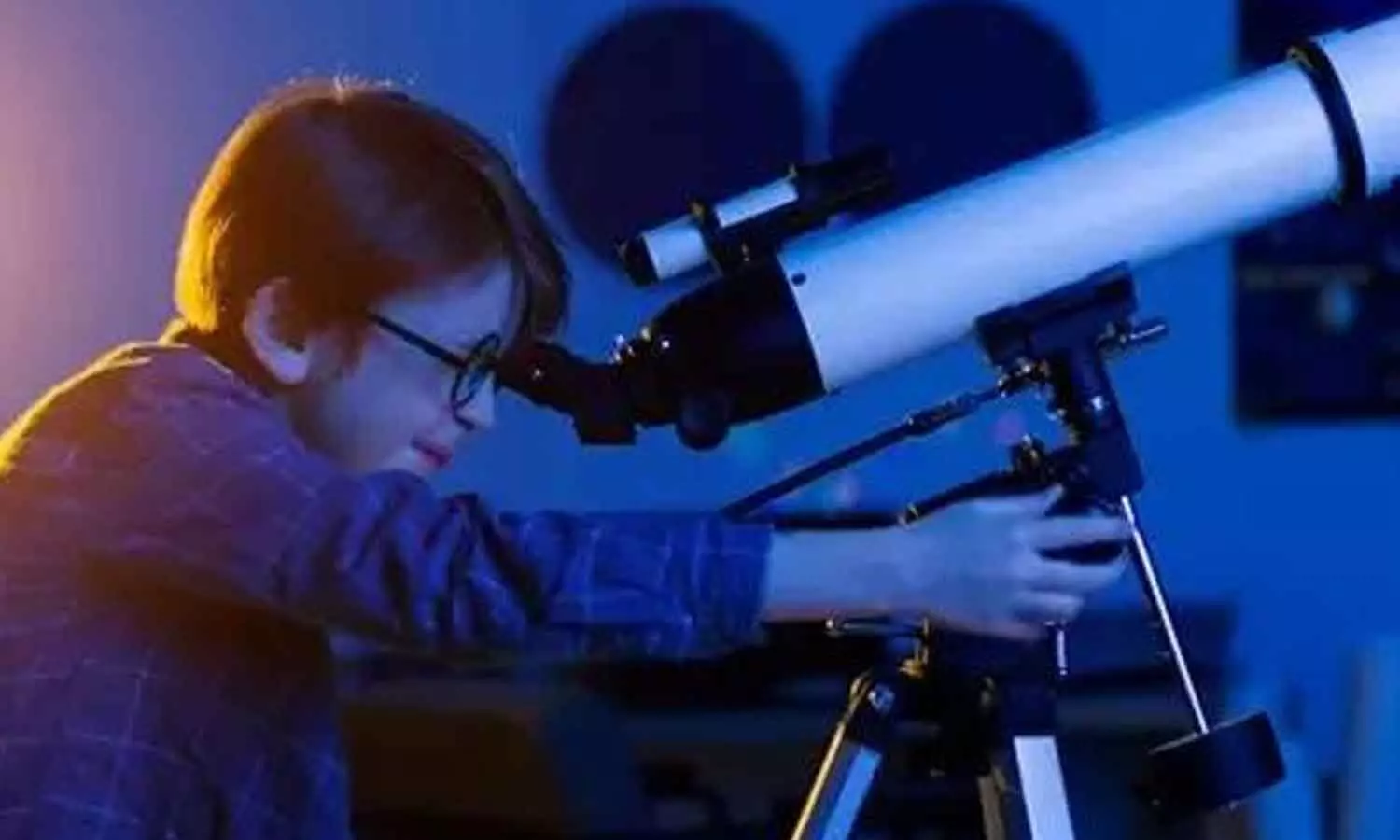
Learning through astronomy and space science
Astronomy offers students a way to understand the universe by combining observation, mathematics, physics and technology. From studying planets and stars to examining distant galaxies, the field encourages learners to ask questions about how celestial objects form, change and interact.
Telescopes are among the most important tools used in astronomical research. By collecting and analysing light from objects far beyond Earth, telescopes allow scientists to study stars, planets, nebulae and galaxies that cannot be observed clearly with the unaided eye. Different telescopes are designed to detect different forms of electromagnetic radiation, including visible light, radio waves, infrared and X-rays.
Modern astronomy increasingly relies on digital instruments and large datasets. Students learning about space science can therefore encounter concepts from computer science, data analysis, engineering and artificial intelligence alongside traditional physics. Processing images, identifying patterns and interpreting measurements are now important parts of astronomical research.
Space science also extends beyond observing distant objects. Researchers study Earth’s atmosphere, the Sun, planetary environments and the conditions that may support life elsewhere in the universe. These areas connect astronomy with Earth science, chemistry and biology. For students, astronomy can provide an introduction to scientific investigation. Observing the night sky, using a small telescope or participating in an astronomy club can help develop skills in measurement, documentation and critical thinking. More advanced learners can explore topics such as orbital motion, stellar evolution, cosmology and astrophysics.
As telescopes and space missions continue to generate new observations, astronomy remains a field where unanswered questions are central to learning. Its educational value lies not only in discovering what exists beyond Earth, but also in understanding how scientists gather evidence, test ideas and refine their explanations of the universe.
Danam disqualified: HC 'punishes' Khairatabad BRS MLA for joining Cong
Danam: Ready to contest Khairatabad bypoll
KTR welcomes High Court verdict
CM Revanth seeks Centre's help to tackle El Nino effect
Ties with US: India must stay focused on national interest
Land Chori returns to haunt Telangana politics - Will 2028 throw up a hung Assembly?


