




- Assam seeks to reverse youth migration through investment, industrial growth: Himanta Sarma
- Telangana CM accuses KCR of attempting to grab Rs 50,000 crore land
- IAF Chief Amar Preet Singh calls on President Murmu ahead of his retirement
- Helicopter returning from Badrinath Dham crashes near Joshimath; search operation underway
- Uttarakhand to observe Sardar Patel’s 151st birth anniversary as National Unity Day tomorrow
- Swami Dayanand Saraswati Death Anniversary 2026: Remembering The Founder Of Arya Samaj And His Reformist Legacy
- Kajal Aggarwal Celebrates Karwa Chauth With Husband Gautam, Shares Adorable Pics
- Tiger Shroff firing case: 12th accused arrested from Sonipat, money trail under scanner
Air Chief Marshal Amar Preet Singh: The ‘fighter’ who led IAF through Operation Sindoor
In Short
The Indian Air Force (IAF) demonstrated the phrase "infallible, impervious and precise", which became the theme for the 94th anniversary of Air Force Day this year, celebrated on October 8.

Share :
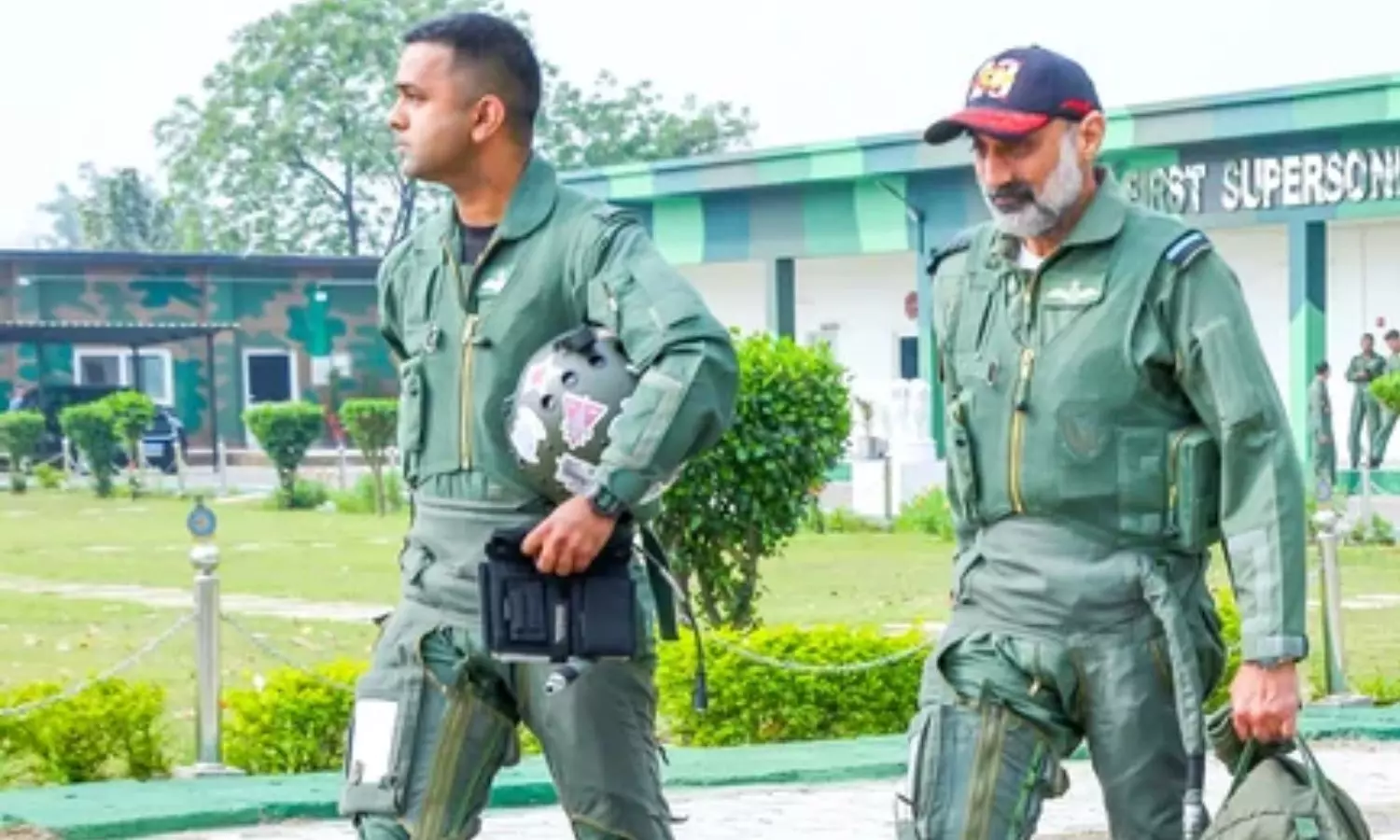
Air Chief Marshal Amar Preet Singh
New Delhi: A qualified flying instructor and an experimental test pilot with over 5,000 flying hours on a variety of fixed- and rotary-wing aircraft, outgoing IAF chief, Air Chief Marshal Amar Preet Singh, would perhaps be best remembered for his leadership during Operation Sindoor that reflected India’s air power superiority and modernisation, or, in his own words, showcased the force's "destructive power" to the world.
The Indian Air Force (IAF) demonstrated the phrase "infallible, impervious and precise", which became the theme for the 94th anniversary of Air Force Day this year, celebrated on October 8.
And as he hangs up his uniform on Saturday, after a glorious over-four-decade service with the IAF, Air Chief Marshal Singh leaves behind a legacy defined by operational professionalism, technological vision, and leadership even under pressure.
Born in Delhi on October 27, 1964, his military journey began with the National Defence Academy before proceeding to the Air Force Academy. Commissioned as a fighter pilot on December 21, 1984, he built a reputation as an exceptional aviator and was counted among the few officers equally comfortable in the cockpit, planning, training, and the operations room.
Throughout his career, he combined operational expertise with technological acumen.
He commanded 22 Squadron, led the MiG-29 Upgrade Project in Russia, and played a significant role in the testing and development of India's indigenous Light Combat Aircraft, Tejas. His association with Tejas made him a strong advocate of self-reliance in military aviation long before it became a national policy priority.
The disarming smile and dreamy eyes hide the grit, determination, courage and plain-speaking that make a true soldier and an officer.
When he assumed office as Chief of the Air Staff on September 30, 2024, the IAF was grappling with modernisation challenges, procurement delays, and the need to integrate emerging technologies into its force structure.
Air Chief Marshal Singh quickly gained attention for his candid assessments of capability gaps and his insistence that timelines promised to the armed forces be met. He was often praised for speaking plainly about the service requirements while maintaining a constructive approach to reform.
Yet Operation Sindoor would define his tenure. Launched in response to the Pahalgam terror attack of April 2025 by Pakistan-aided terrorists, the operation represented one of India's most significant military actions in recent decades.
Under his leadership, the IAF conducted precision strikes on terrorist infrastructure while coordinating closely with the Army and Navy in a joint campaign designed to deliver strategic effects without uncontrolled escalation.
According to the IAF chief, the operation showcased the reach and flexibility of Indian air power, with strikes carried out across a front spanning approximately 1,200 km in width and 200 km in depth.
Recently, the air chief inspired young cadets with a powerful message, stressing that many people who achieved great heights in life were not necessarily excellent performers in examinations. He encouraged the young officers to focus on perseverance, discipline, character, leadership, and continuous self-improvement.
It is an aim he followed himself – determination, hard work, and the ability to learn from challenges.
Beyond military operations, he earned admiration for remaining approachable despite holding one of the country's highest military offices. Colleagues often described him as grounded, authentic, and deeply connected to the flying profession. Even as the IAF chief, he sought opportunities to get back into aircraft cockpits, reflecting a lifelong passion for aviation.
His public interactions during and after Operation Sindoor revealed a leader capable of explaining complex military issues in language accessible to ordinary citizens.
His career can perhaps be described in three themes: modernisation, self-reliance, and operational effectiveness. He championed indigenous capabilities, pushed for realistic procurement practices, and guided the IAF through a major military operation. Most importantly, he demonstrated how technology, training, and leadership must work together in modern warfare.
Bolsonaro backs off Brazil poll challenge after Trump says 'I’m not running Brazil'
Assam seeks to reverse youth migration through investment, industrial growth: Himanta Sarma
Why Brand Names Matter in the Digital Marketplace: Perspectives from the BRICS+ Fashion Summit
'India, ASEAN can jointly emerge as Indo-Pacific production hub'
CEC ‘Public Impeachment’ Bid Put Off; Amit Shah Throws Down Challenge: Govt Ready for Special Session
FM Sitharaman slams Rahul Gandhi over remarks on IDBI Bank stake sale
Emotional Connect, Political Punch: 'Apna Narendra Bhai' in Gujarat
SIR deadline extended in AP and Telangana
‘Daya Karo, Soniaji!’ Delhi Chamber Makes an Emotional Appeal
Heavy rain alert issued to AP, Telangana amid expected low pressure


