




- “Naraz Fufa” Miffed Over Absence of Non-Veg Food at BRICS Dinner
- PM Modi forged BRICS consensus despite doomsayers: Assam CM Sarma hails PM's leadership
- Rain to reduce in south Bengal, north to receive more heavy showers
- “Will Not Leave Congress… We Will Win Warangal East Again”: Konda Surekha
- 3-day World Circular Economy Forum 2026 to begin in Gandhinagar from Sep 15
- Coal Ministry rejects inadequate coal supply as cause of Punjab power crisis
- PM Modi, Kazakhstan President Tokayev hold talks in New Delhi
- NDA leaders hail BRICS declaration as diplomatic victory for India, say Global South gaining strength
“Naraz Fufa” Miffed Over Absence of Non-Veg Food at BRICS Dinner
In Short
The issue has led to a war of words between the Congress and the BJP. With no other issue to criticise the BRICS Summit, where India emerged as a global consensus builder, the grand old party appears to have decided to play the role of a “naraz fufa”.

Share :
“Naraz Fufa” Miffed Over Absence of Non-Veg Food at BRICS Dinner
New Delhi: The buzz in political circles is: why did the Congress Chief Ministers not attend the gala dinner hosted by Prime Minister Narendra Modi on Sunday? The government had invited about 14 Chief Ministers for the dinner. Was it because there was no non-vegetarian cuisine?
The issue has led to a war of words between the Congress and the BJP. With no other issue to criticise the BRICS Summit, where India emerged as a global consensus builder, the grand old party appears to have decided to play the role of a “naraz fufa”.
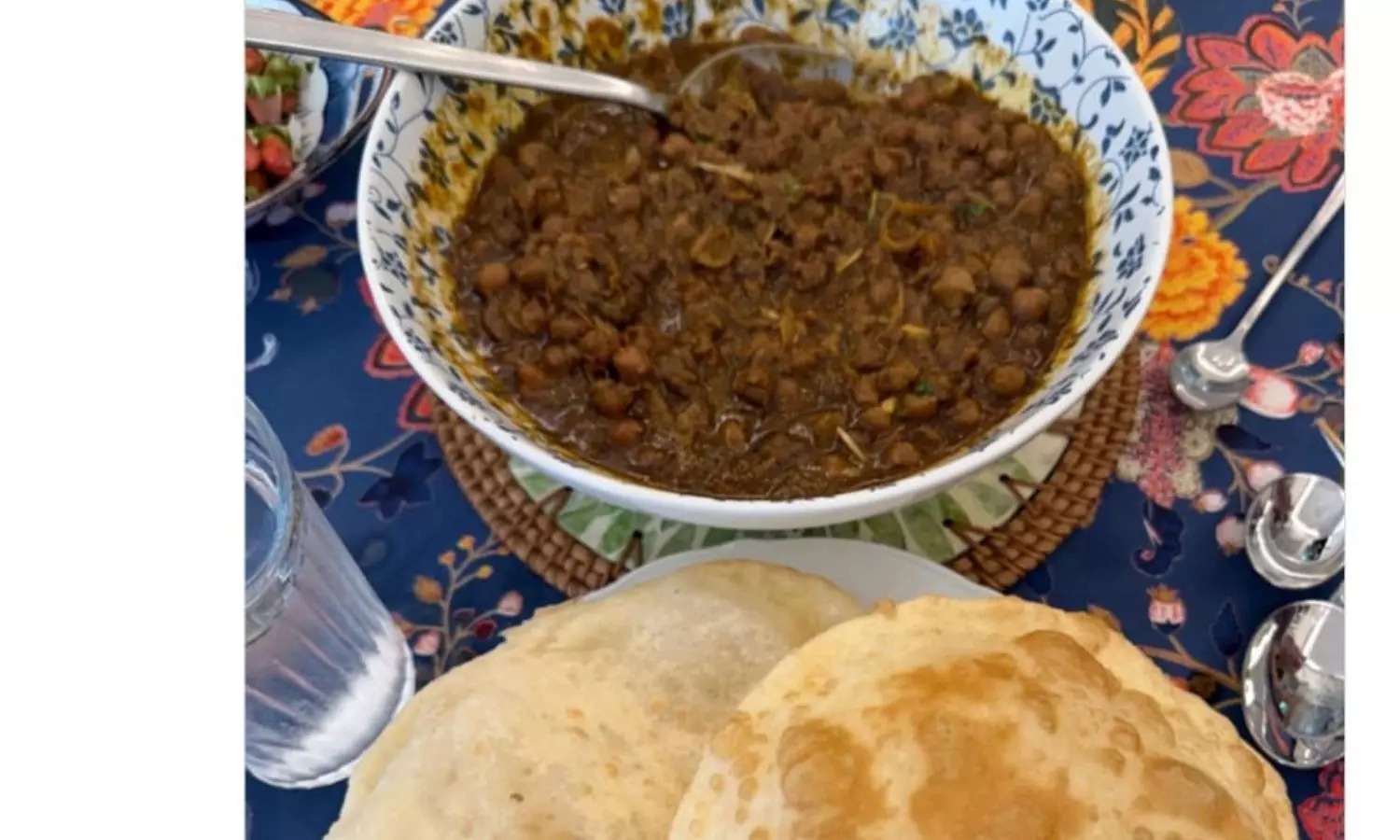
Rahul Gandhi, in posts on social media platforms X, Facebook and Instagram, said that 80 per cent of Indians are non-vegetarians and that Indian non-vegetarian food is as delicious as his sister's chole bhatura. He also posted a picture of chole bhatura on a dining table, but made no direct reference to the BRICS dinner.
The BJP reacted sharply, saying that when the Opposition has nothing to criticise, it has chosen the food menu. This, it said, speaks volumes about how successful the BRICS Summit has been. “Congress is sulking to see India emerge as a global consensus builder,” BJP national spokesperson Pradeep Bhandari wrote on X.
Another BJP national spokesperson, Tuhin Sinha, said expecting Rahul Gandhi to offer congratulations would be too much. He accused Gandhi of making “the same frivolous remarks, the same petty comments for which he has always been known” and said he was now taking the mentality of a “naraz fufa” (disgruntled uncle) to the global stage.
Taking a swipe at Gandhi, Sinha questioned whether the Congress Chief Ministers had skipped the gala dinner because they did not get food of their choice. “Did Chinese President Xi Jinping WhatsApp you to say that he did not like the food?” he asked.
He added that any responsible or sensible Leader of the Opposition in the country would have congratulated Prime Minister Narendra Modi and India. What India had achieved through the New Delhi Resolution was historic, he said. For the first time, all BRICS nations were seen standing united with one voice on serious global issues. This had not happened before. “Is it not a tangible outcome?” he asked.
“When India is achieving such major successes and India's respect and prestige are growing across the world, the kind of petty and frivolous remarks Rahul Gandhi is making reflect his mentality as well as that of the Congress party,” Sinha said.
The gala dinner was served to the accompaniment of a performance by an ensemble of more than 100 artistes drawn largely from India, as well as other BRICS member countries.
Congress media and publicity department head Pawan Khera said, “The BJP's habit of imposing its dietary preferences on fellow Indians is already deeply problematic. Now, they have taken it a step further by imposing their own choices on dignitaries from across the world.”
India is a rich, diverse, multi-cuisine country and is home to some of the finest non-vegetarian delicacies that people across the world relish and enjoy, he added.
However, a fact-check indicates that it would not be accurate to state categorically that 80 per cent of Indians are non-vegetarians.
According to the Pew Research Center, a US-based nonprofit and nonpartisan research organisation, 39 per cent of Indian adults identified themselves as vegetarian in its 2019-20 survey. However, dietary practices are more complex, with many people who do not identify as vegetarian still restricting their consumption of meat on certain days or avoiding particular types of meat.
Pew Research Center is not a government agency or a political organisation. It conducts research and public opinion surveys on a wide range of social, demographic and political issues.
According to the National Family Health Survey-5 (NFHS-5), conducted in 2019-21 and covering more than 600,000 households across India, 83.4 per cent of men and 70.6 per cent of women aged 15-49 reported consuming fish, chicken or meat either daily, weekly or occasionally.
These figures establish that a large majority of Indians in this age group consume some form of non-vegetarian food. However, they do not establish that exactly 80 per cent of Indians are non-vegetarians.
The political debate over the BRICS dinner may therefore be more about political messaging than about the actual food served.
“Will CURE Bill cure civic woes of Hyderabad?”
Damodar Rajanarasimha launches state-level robotic surgery workshop at TIMS
Modi Warns of Rising Geopolitical Tensions, Technology Weaponisation
BRICS outcome an eye-opener for Opposition
AP minister takes action to contain infectious diseases, proposes dry day on Friday
PM Modi, Egyptian President El-Sisi discuss bilateral ties and regional issues


