AP is in tprocess of formulating a recycling policy

Visakhapatnam: AndhraPradesh is in the process of formulating a state-level recycling policy, backed by incentives, to promote entrepreneurship, said chairman of Andhra Pradesh Pollution Control Board P Krishnaiah.
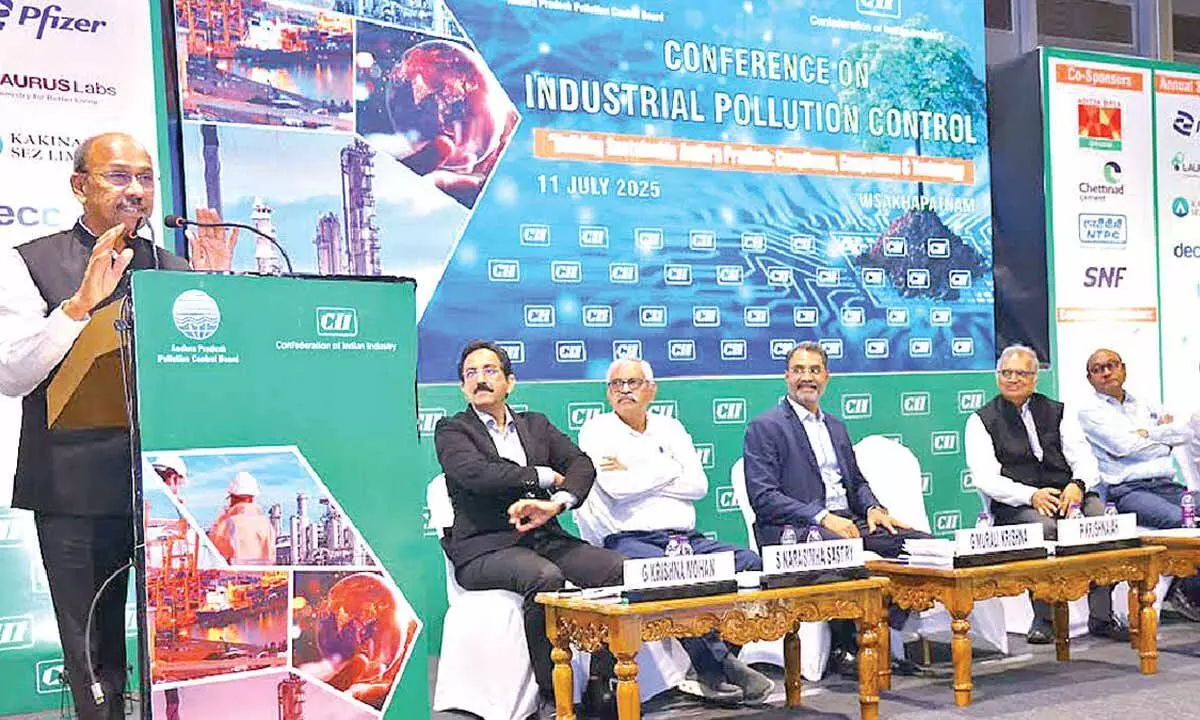
Speaking at a conference on ‘industrial pollution control’ organised by CII Andhra Pradesh in collaboration with Andhra Pradesh Pollution Control Board in Visakhapatnam on Friday, Krishnaiah recalled his experience at the recent expo observing that recyclable industrial waste in South India has been under-utilised compared to the western states. He highlighted the need to embrace a circular economy in minimising waste and recycling.
Drawing real-world examples, Dr Krishnaiah emphasised the role of standard operating procedures, daily safety drills, and visible leadership commitment in preventing industrial accidents. “Safety and environment should come first or second in your progress reviews, not last. Green technologies are no longer optional but essential. Industries have to invest in research, upskill their workforce, and adopt the latest clean technologies to enhance efficiency and reduce emissions as technology is the only long-term solution to mitigate pollution,” he asserted.
The conference brought key stakeholders from industry, academia and regulatory bodies to deliberate on sustainable industrial practices, environmental compliance, and policy collaboration.
Further, Krishnaiah called on industries to view waste as a resource, citing examples like a textile plant in Ongole that recycles even salt residues. He emphasised the need to reduce plastic use and promote affordable bio-plastic alternatives.
In order to drive innovation and environmental excellence, Krishnaiah proposed forming a CII-led Industrial Technology Forum supported by seed funding from the AP Pollution Control Board to drive innovation and environmental excellence.
Highlighting the increased sensitivity of global investors towards ESG compliance, chairman of CII AP G Murali Krishna emphasised that future industrial growth hinges on adopting zero liquid discharge systems, real-time environmental monitoring, and robust safety protocols. He called for integrating green standards into core business strategies to align with global expectations on pollution control and clean energy.
President and unit head, Grasim Industries Ltd BB Puram S Narasimha Sastry underscored the need to minimise, mitigate, and move forward to achieve global competence in pollution control.
Head of the department of environmental science engineering and management, Andhra University Prof S Bala Prasad spoke about the evolving landscape of wastewater management.