Pakistan Army Chief Rejects Indian Regional Dominance, Calls Water Treaty Suspension Unacceptable

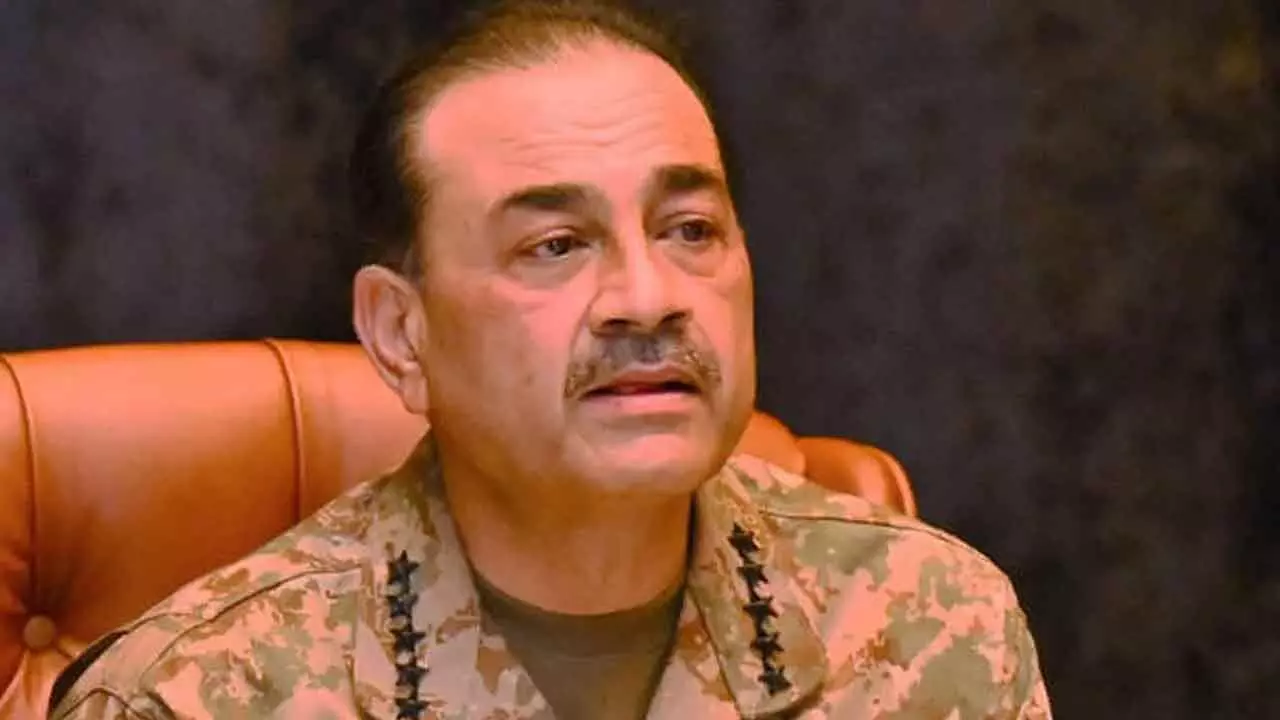
Pakistan Army Chief Asim Munir declares rejection of Indian hegemony in South Asia, terms Indus Water Treaty suspension a "red line," and accuses India of supporting Baloch insurgents following recent ceasefire agreement.
Pakistan Army Chief Field Marshal Asim Munir has declared that his country will never accept Indian dominance in South Asia, while strongly condemning India's decision to suspend the Indus Water Treaty as crossing a fundamental boundary for Pakistan.
Speaking to university officials and educators, Munir emphasized Pakistan's unwavering stance against what he characterized as Indian regional hegemony. His remarks came just weeks after both nations agreed to a ceasefire following several days of military confrontation that had escalated tensions across the subcontinent.
The Pakistani military leader expressed particular concern over India's suspension of the Indus Water Treaty, describing water rights as an inviolable principle that directly impacts the lives of Pakistan's 240 million citizens. According to statements released by Pakistan's Inter-Services Public Relations, Munir categorized any compromise on water-related issues as completely unacceptable to his nation.
India's decision to suspend the decades-old water-sharing agreement marked the first time such action had been taken since the treaty's establishment in 1960. The suspension followed a terrorist attack in Kashmir's Pahalgam region that claimed 26 tourist lives, prompting India's Cabinet Committee on Security, under Prime Minister Narendra Modi's leadership, to take this unprecedented step.
The Indus Water Treaty governs the distribution and management of six major rivers flowing between India and Pakistan, including the Indus, Jhelum, Chenab, Ravi, Beas, and Sutlej. Under this agreement, India has not only shared water resources but also provided financial assistance to help Pakistan develop its water infrastructure systems over the decades.
Anticipating Pakistan's reaction to the treaty suspension, India launched a comprehensive diplomatic initiative, deploying seven teams of parliamentarians from various political parties to different regions worldwide. This post-Operation Sindoor diplomatic campaign aimed to explain and justify India's position on the water treaty suspension to the international community.
Beyond water disputes, Munir also addressed the escalating insurgency in Pakistan's Balochistan province, where rebel attacks have intensified against Pakistani security forces. The Army Chief alleged that Indian intelligence agencies were providing support to Baloch separatists, claiming that these insurgent groups were acting as proxies for foreign interests, particularly India.
The situation in Balochistan has become increasingly volatile, with the provincial capital Quetta experiencing multiple attacks on Pakistani forces on May 8 alone. During the recent period of cross-border military action with India, Baloch rebels reportedly escalated their offensive operations, even replacing Pakistani flags with their own symbols in various locations.
Munir disputed the authenticity of the Baloch insurgency, asserting that the individuals involved were not genuinely representing Baloch interests but were instead foreign-backed elements working against Pakistan's territorial integrity.
The Pakistani military leader also made reference to divine intervention during the recent military conflict with India, expressing his belief that Pakistan had received spiritual assistance during the confrontation. This conflict began when India conducted precision strikes under Operation Sindoor on May 7, targeting what it described as terrorist infrastructure in Pakistan and Pakistan-occupied Kashmir.
Pakistan responded with attempted strikes on Indian military installations over the following three days, prompting what India characterized as a firm and decisive response. The military engagement concluded with both nations announcing a ceasefire agreement on May 10, temporarily ending the immediate crisis.
The Army Chief's statements reflect Pakistan's continued resistance to accepting what it perceives as India's growing influence in South Asian affairs, while highlighting the complex web of disputes involving water rights, territorial conflicts, and regional security concerns that continue to define the relationship between these nuclear-armed neighbors.