CM Yogi addresses workshop on ‘Developed India - Developed Uttar Pradesh Vision 2047’

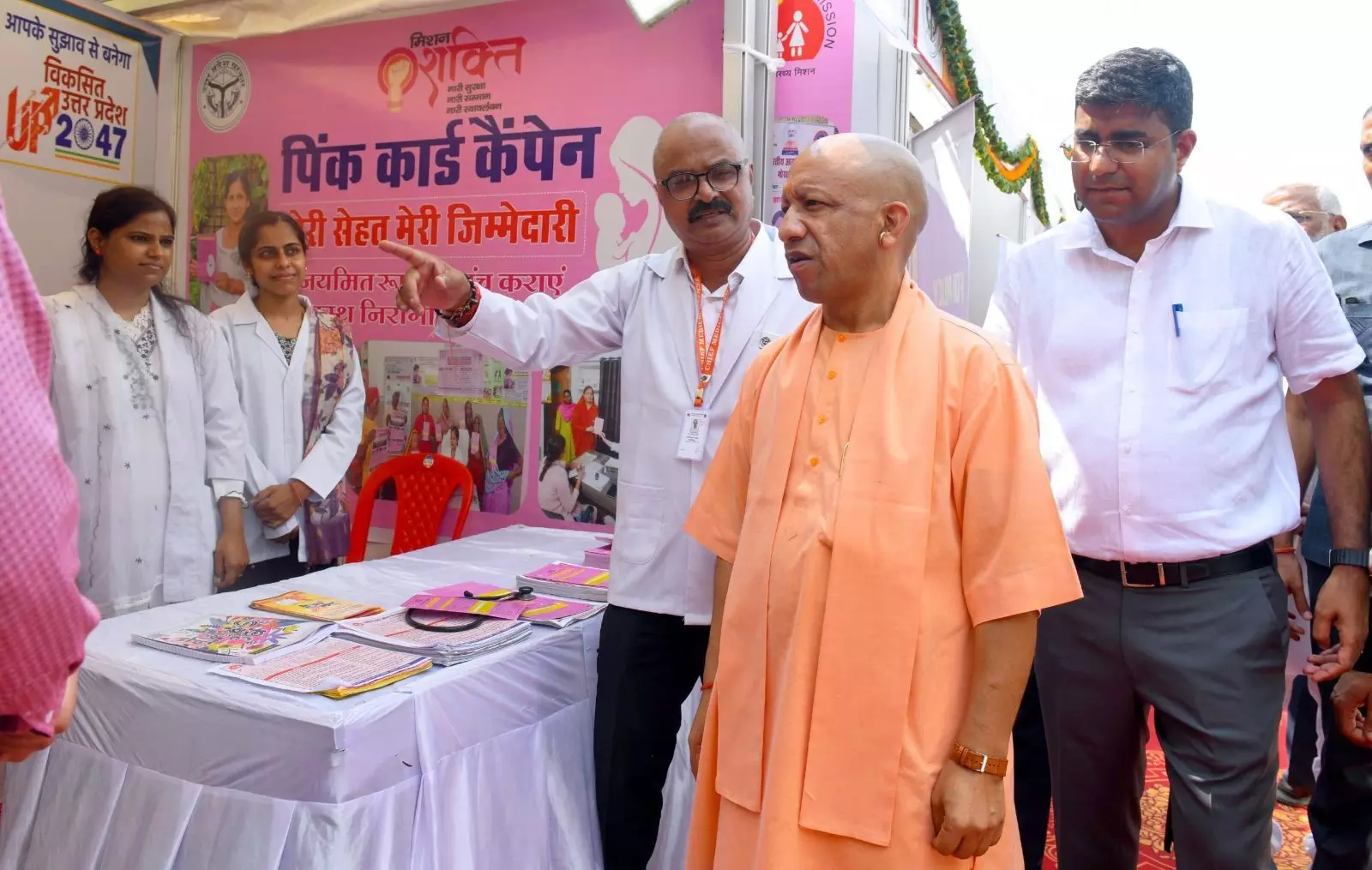
Uttar Pradesh CM Yogi Adityanath speaks at the Vision 2047 workshop, sharing his roadmap for a developed India and developed UP.
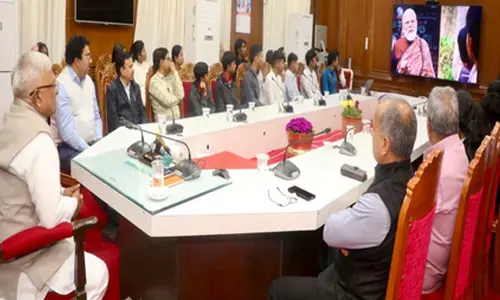
Gorakhpur, September 21: Chief Minister Yogi Adityanath, addressing a workshop on “Developed India – Developed Uttar Pradesh Vision 2047” at Mahayogi Gorakhnath University, on Sunday, highlighted the state’s remarkable economic growth and outlined plans for its future development.
He said that Uttar Pradesh’s GDP and per capita income are set to triple by the end of this year since 2017, increasing from Rs 12.36 trillion to Rs 36 trillion and from Rs 45,000 to Rs 1.2 lakh, respectively. Emphasizing the role of every citizen, CM Yogi urged the public to submit suggestions via the QR code on the Developed Uttar Pradesh Vision 2047 portal, covering 12 key sectors including agriculture, industry, IT, tourism, infrastructure, health, education, and governance.
The Chief Minister was the chief guest at the event organized by the Maharana Pratap Education Council in the auditorium of Mahayogi Gorakhnath University, Gorakhpur (MGUG).
Recalling India’s past prosperity, he said that after independence, UP contributed 14% to the national economy, which steadily declined until 2017. Since 2017, the state has seen progress across sectors, including the eradication of encephalitis in eastern UP, improved irrigation, modernized agriculture, Rs 2.86 lakh crore in PM Kisan Samman Nidhi payments to sugarcane farmers, and expanded cropping patterns, he remarked.
On education and health, the CM noted that Gorakhpur now has four universities and AIIMS, while BRD Medical College has been upgraded. Infrastructure improvements include eight operational expressways, six under construction, Metro Rail in six cities, 16 functional airports, and Jewar Airport in Noida set to become a major logistics hub. Road connectivity, inland waterways, and digital manufacturing have also expanded significantly.
CM Yogi highlighted the One District, One Product (ODOP) scheme as a game-changer for the state economy, with 9.6 million MSME units, 77 SI-tagged products, and exports worth Rs 2 lakh crore. He also emphasized youth potential, entrepreneurship, and emerging technology sectors, including semiconductors, as avenues for economic growth and employment.
Citing PM Modi’s Panch Pranas and nine resolutions for a developed India, the Chief Minister stressed water conservation, environmental protection, cleanliness, self-reliance, tourism promotion, natural farming, healthy lifestyles, and social welfare missions. He urged citizens to adopt these practices in daily life, combining traditional wisdom with modern innovation.
He stated: "We must embrace Prime Minister Narendra Modi's five vows (Panch Pran) taken on the occasion of 75th anniversary of India’s independence (Amrit Mahotsava) to develop the country by 2047. must be implemented, and we must all move forward with them. The five pledges include: eradicating the mentality of slavery; respecting our heritage; honoring and expressing gratitude to the armed forces, paramilitary forces, and uniformed personnel; uniting for an egalitarian society without any discrimination based on caste, region, or any other considerations, and fulfilling our civic duties as part of our daily routine."
Remembering the nation’s freedom fighters on the sacred occasion of Pitru Visarjan, the Chief Minister said those who sacrificed everything for the country dreamed of India becoming a global power. He called the workshop, organized to pledge for a developed India and a developed Uttar Pradesh, the greatest tribute to the ancestors. CM Yogi noted that three years after the Prime Minister’s call, when no one else responded, Uttar Pradesh took the lead in raising its voice for a developed India.
In August, the Legislative Assembly and Council held a 24-hour discussion to draft a vision for a developed Uttar Pradesh, dispelling the notion that legislatures don’t work. Preparations are now underway to form an action plan based on public suggestions. To expand these discussions, over 300 intellectuals—including retired IAS officers, vice-chancellors, teachers, doctors, and entrepreneurs—are visiting institutions across the state. So far, they have engaged with students and citizens in more than 110 institutions, gathering valuable ideas. The Chief Minister said ideas never die, and the vision of a developed India and Uttar Pradesh will surely take concrete shape with collective effort.
The Chief Minister also highlighted UP’s fertile land, tourism potential, historical educational heritage, and balanced economic development. He emphasized that achieving a $1 trillion economy by 2029-30, $3 trillion by 2035, and $6 trillion by 2047 is within reach. Citizens are encouraged to contribute suggestions to shape the Vision 2047 roadmap, with rewards for the best district- and state-level proposals.
The Chief Minister said, "As the fifth resolution, the Prime Minister gave the message of Desh Darshan. We have all the centers of spiritual tourism, including the four Dhams, 51 Shakti Peethas, and 12 Jyotirlingas. India is also rich in heritage tourism." CM Yogi said that every country in the world has its own national character. In India, this national character is India's spirituality, which is beautifully depicted in the Ramayana.
Recalling the Prime Minister’s resolutions, CM Yogi said that natural farming must be promoted, as chemical fertilizers cause serious diseases such as cancer, while diabetes cases are also rising across India. Natural farming, he emphasized, not only reduces costs but also ensures healthy food. He added that adopting a healthy lifestyle with yoga and sports is equally important. Highlighting the ninth resolution, the Chief Minister said the Prime Minister has called for a national mission, which could focus on poverty alleviation, assistance for the disabled, or women’s welfare. CM Yogi stressed that by making these nine resolutions a part of our daily lives, we can lay the foundation of a developed India.
The Chief Minister said that in today’s India, more than 60 percent of the land area is fertile, compared to only about 20 percent in other major countries. India has 160 million hectares of agricultural land, while Russia and China each have about 120 million hectares, with other nations having even less. He added that developed countries have succeeded in reducing costs and increasing production by effectively using technology on their limited agricultural land.
The Chief Minister said that Uttar Pradesh, with its vast pool of talented youth and the most fertile land, has immense potential in the agricultural, industrial, and service sectors. He noted that before 2017, only 30 million tourists visited the state, whereas this year the Maha Kumbh Mela alone drew 660 million visitors.
The service sector, he added, is generating employment opportunities as guides, in the hotel industry, and as taxi operators. Highlighting advancements in modern medicine, the Chief Minister said India faces both challenges and opportunities in the health sector, while traditional systems like Ayurveda hold great promise for developing the country as a health tourism hub.
CM Yogi concluded by stating that the ideas of a developed Uttar Pradesh and India will take concrete shape through collective effort, innovation, and public participation, ensuring progress across every city, town, and village.
UP emerges as a role model under CM Yogi’s leadership: Vice Chancellor
In his welcome address, MGUG Vice Chancellor Dr. Surinder Singh said that Uttar Pradesh, under the leadership of Chief Minister Yogi Adityanath, is rapidly progressing toward the goals set by Prime Minister Narendra Modi for a developed India. He added that the state has emerged as a role model for the entire country in security, good governance, development, investment, and public welfare.
The event was attended by Water Power Minister Swatantra Dev Singh, Mayor Dr. Manglesh Shrivastava, Pipraich MLA Mahendrapal Singh, State Government’s Economic Advisor Dr. KV Raju, State Government’s Pharma Advisor and former Drug Controller General of India Dr. GN Singh, Vice Chancellor of Deendayal Upadhyay Gorakhpur University Prof. Poonam Tandon, Vice Chancellor of MMMUT Prof. JP Saini, Vice Chancellor of Maa Pateshwari University Balrampur Prof. Ravi Shankar Singh, AIIMS Gorakhpur Executive Director Major General Dr. Vibha Dutta, BRD Medical College Principal Dr. Ramkumar, MP Birla Group of Hospitals Director Dr. Sanjay Maheshwari, Guru Gorakhnath Medical College Principal Dr. Anurag Shrivastava, as well as office bearers and members of Maharana Pratap Shiksha Parishad, institutional heads, teachers, students, doctors, advocates, architects, engineers, and industrialists.