‘Golden Silk of Assam’ sarees cost Rs 85k to 5L!

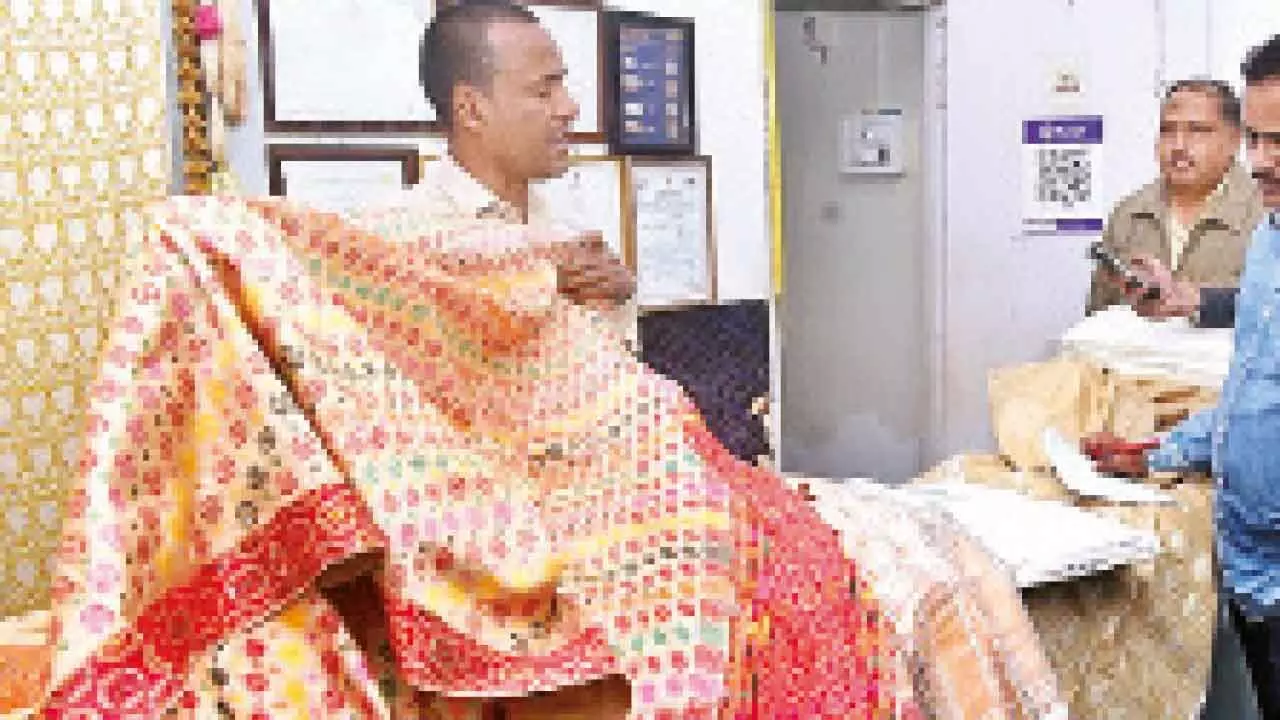
Muga Silk sarees are weaved at Sualkuchi, one of the world's largest weaving villages
Guwahati: Sualkuchi, Assam's textile hub, has been globally recognized for its rich tradition of silk weaving, particularly the king of silks ‘Muga Silk’, also known as ‘Golden Silk of Assam’. The distinctive golden yellow silk, exclusive to Assam, comes from the Antheraea Assamensis silkworm. The price of the pure Muga silk Mekhela chadors, a traditional Assamese three-piece saree ranges roughly from Rs 85,000 to Rs 4.5 lakh and even touches Rs 5 lakh depending on the design. It is valued for its endurance and distinctive sheen.
Assam is unique in producing all four recognised silk varieties in India - Muga, Eri, Mulberry, and Tussar. Muga remains one of the best silks in the country and is said to be having a great demand in Japan, Germany, United States and European countries. Muga Silk becomes more shinier as it ages, and the durability of this silk saree lasts for more than 150 years.
As one of the world's largest weaving villages, Sualkuchi, recognition boosts Assam's textile sectors, showcasing its cultural heritage and artisanal expertise and this has achieved a Geographical Indication (GI) tag as well.
Artisans in this village craft exquisite Mekhela chadors, Gamosas, hats, caps and umbrellas from these silks. These Muga Silk sarees were earlier a traditional wear of Ahom families, and this continued with the rich families in Assam, as the traditional wear in weddings and festivals.
Sualkuchi village produces three exquisites of Assam silk — the golden Muga, the warm Eri, and the Mulberry - each derived from different silkworms. Within its eight sq km area, 12,000 handlooms work tirelessly, producing around 3 lakh sq m of silk fabric a year. Here, all essential processes are carried out, starting from extracting the thread from silkworms, to processing it and preparing it for making apparels.
A visit to the village revealed a wide range of handloom work in almost every house. The men and women of all age groups were seen weaving the silk in the traditional weaver. A weaver said that in 1946, when Mahatma Gandhi arrived in Sualkuchi, a village situated by the Brahmaputra close to Guwahati, he was spellbound by the skill of the local weavers, especially the women.
Hira Lal Kalita, an owner of HarMohan Silks factory said that the unit has been run by his forefathers, and he has been weaving silk for the last 20 years. Hira Lal explained that the optimal months for harvesting Muga silk from the cocoon are October and November, yielding a remarkable silk thread length of 182 meters per cocoon. In contrast, during May and June, the silk thread measures only 110 meters.
Hira Lal said that currently, the market price for one kilogram of silk cocoons is Rs 45,000. When processed, the cocoons yield enough thread for one and a half saree. Each pure silk saree typically weighs around 700 grams once completed. The weight can vary based on the design.
“From the thread processing stage to the final product, generally takes between one to three months, and intricate designs may require additional time.
“Due to the high price of this Muga silk apparels, the number of sales is low in the country, and they are being exported to Japan, United States, European and other countries. Over 80 per cent of the Muga silk apparels manufactured in Sualkuchi are exported,” said Hira Lal.
Another unit owner Bina, who has been weaving silks for over a decade, said “The population of Muga silkworms is dwindling because of the reduction in Som-Soalu trees. These silkworms are extremely sensitive; any fluctuations in weather can lead to their immediate death upon exposure to pesticide odors and other fumes. This poses the greatest challenge for us.”
Mrinal Jyothi Saikia, an executive at the North-Eastern Handicrafts & Handlooms Development Corporation Ltd. (NEHHDC), stated that the Assam government is actively pursuing the 'Muga Mission' initiative aimed at enhancing the Muga silk industry. Significant attention is being taken to the cultivation of Som-Soalu trees, the establishment of seed banks, and the training of weavers.