Kalpvasis’ brave chill, austerity in search of spiritual salvation

The tradition is highlighted in various Vedic texts, including the Mahabharata and the Ramcharitmanas, showcasing its deeprooted significance in Hindu spirituality
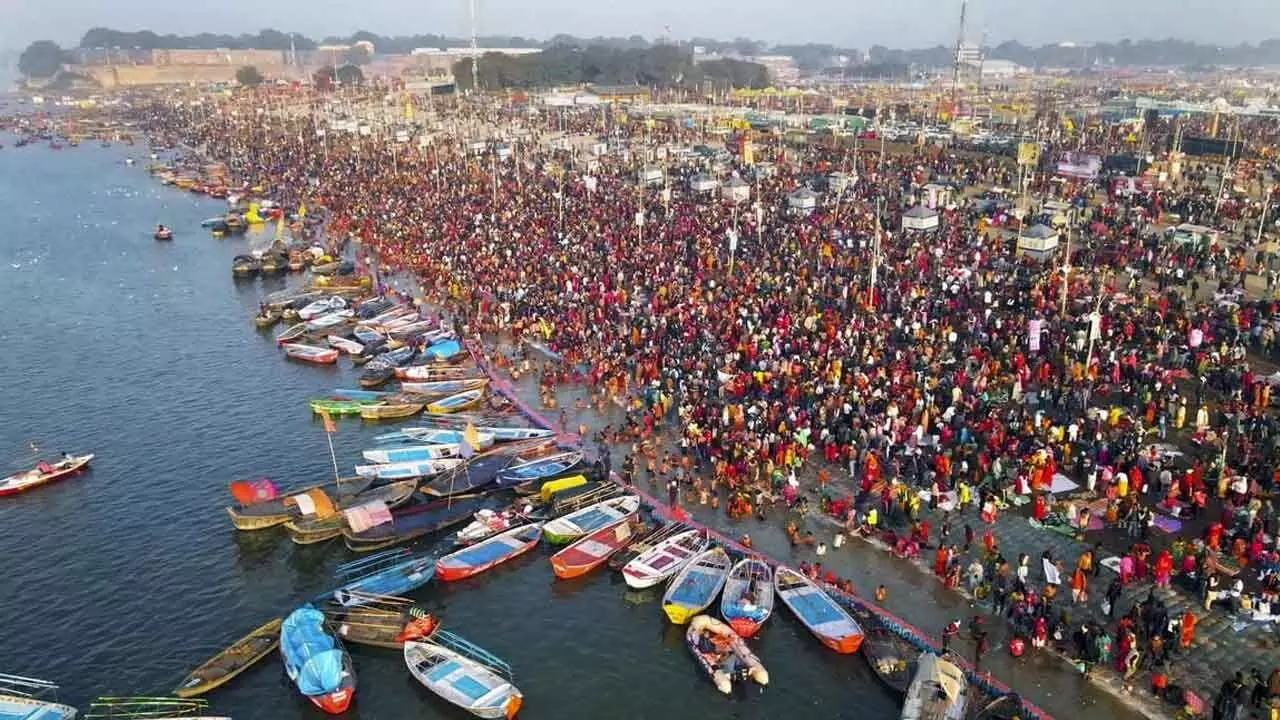
Mahakumbh Nagar: Sexagenarian Rohini Jha from Bihar’s Maithli region sleeps on the ground in her camp on the banks of the Sangam, wakes up early to take up a holy dip, and has one meal a day despite the biting cold. The 68-year-old is performing Kalpvas -- a month-long practice of austerity and spiritual focus -- at the Maha Kumbh. Stretching from Paush Purnima to Magh Purnima, Kalpvas has been a part of the region’s spiritual heritage for centuries.
The tradition is highlighted in various Vedic texts, including the Mahabharata and the Ramcharitmanas, showcasing its deep-rooted significance in Hindu spirituality. Jha is among more than 10 lakh devotees performing Kalpvas at the Maha Kumbh. On her 11th Kalpvas, Jha said her first was when she was four years old, accompanying her mother and father during their Kalpvas. “It is considered auspicious to perform at least 12 Kalpvas.
The rituals begin with the devotees’ arrival at the Sangam where they set up their temporary tents. This is the maiden step in this spiritual journey,” she told PTI. “The devotees move away from all the comforts of home and lead a sim-ple lifestyle, symbolising detachment from material possessions,” she added. Jha is accompanied by seven members of her family, all senior citizens also on their Kalpvas -- a practice she called “living in pain”.
“It is believed the more pain or difficulty you face during Kaplvas, the more successful it is… You feel closer to God and free from pleasures as well as concerns of life,” she said. “When I was young, I would sleep on the sand. Now, since I am old, I place a bedding on the sand. The rules of Kalpvas are strict but people now follow them flexibly… It is the thought that matters,” she added. Throughout the day, she takes at least two holy dips at the Sangam -- the confluence of the Ganga, Yamuna and the mythical Saraswati rivers -- and prays regularly.
The Kalpvasis forsake modern comforts to reside in temporary tents near the Sangam. Their daily routine includes holy dips, attending spiritual discourses and listening to devotional music -- aimed at fostering spiritual growth and in-ner purification. Family members and friends also visit the Kalpvasis to take blessings and be a part of the ritual, even though they cannot stay the entire month and follow the strict routine.
“Kalpvas usually starts by planting bananas, tulsi and barley. We are sup-posed to observe fast and adopt a disciplined lifestyle,” said Shivanand Pan-dey (51). A lawyer, he takes a month’s break from his practice for Kalpvas. Explaining the tradition, he said, “Kalpvasis take a pledge to camp on the chil-ly banks of the Sangam, devoting themselves strictly to religious activities and bathing thrice in the cold but sacred waters, following the principles of pa-tience, non-violence and devotion, besides austerity.”
“This tradition needs to be followed for 12 years non-stop for the pledge to be fulfilled,” he added. His wife Neha Pandey, who has completed 12 Kalpvas and now accompanies her husband, said she didn’t take the pledge this time due to health reasons. “But I visit every time with my husband. It is also auspi-cious to perform ‘seva’ for a Kalpvasi. A significant ritual of Kalpvasis is the dawn dip at the Sangam that is believed to cleanse both the body and the soul. It is considered highly auspicious during various astrological alignments, known as Kumbh Snan,” she said.