




- Bihar Congress plans phased agitation over voter rights until November, demands CEC Gyanesh Kumar’s resignation
- Govt kicks off e-auction process for 5-acre prime industrial plot in Delhi
- NDA will allot 34 pc tickets to Backward Classes in local body polls, says Andhra Pradesh CM
- AP Cabinet to meet tomorrow , to discuss on BC reservations
- Punjab Chief Secretary offers unconditional apology to High Court in DA case
- Bandi Sanjay Begins 11-Day Bhavani Deeksha in Karimnagar
- HC blow to Pinarayi Vijayan, CPI rift cloud LDF’s Assembly plans
- Judges have right sentiment: NDA leaders on open letter of 42 former judges on INDIA Bloc protests
NEET Needs Legislative Mechanism to Fix Accountability—Parliamentary Panel.
In Short
Noting that trust in the examinations conducted by the NTA was a matter of social justice and national integrity, the Parliamentary Committee on Education, Women, Children, Youth and Sports, in its detailed report today, called for a legislative mechanism to fix the accountability of the agency conducting the examination.

Share :
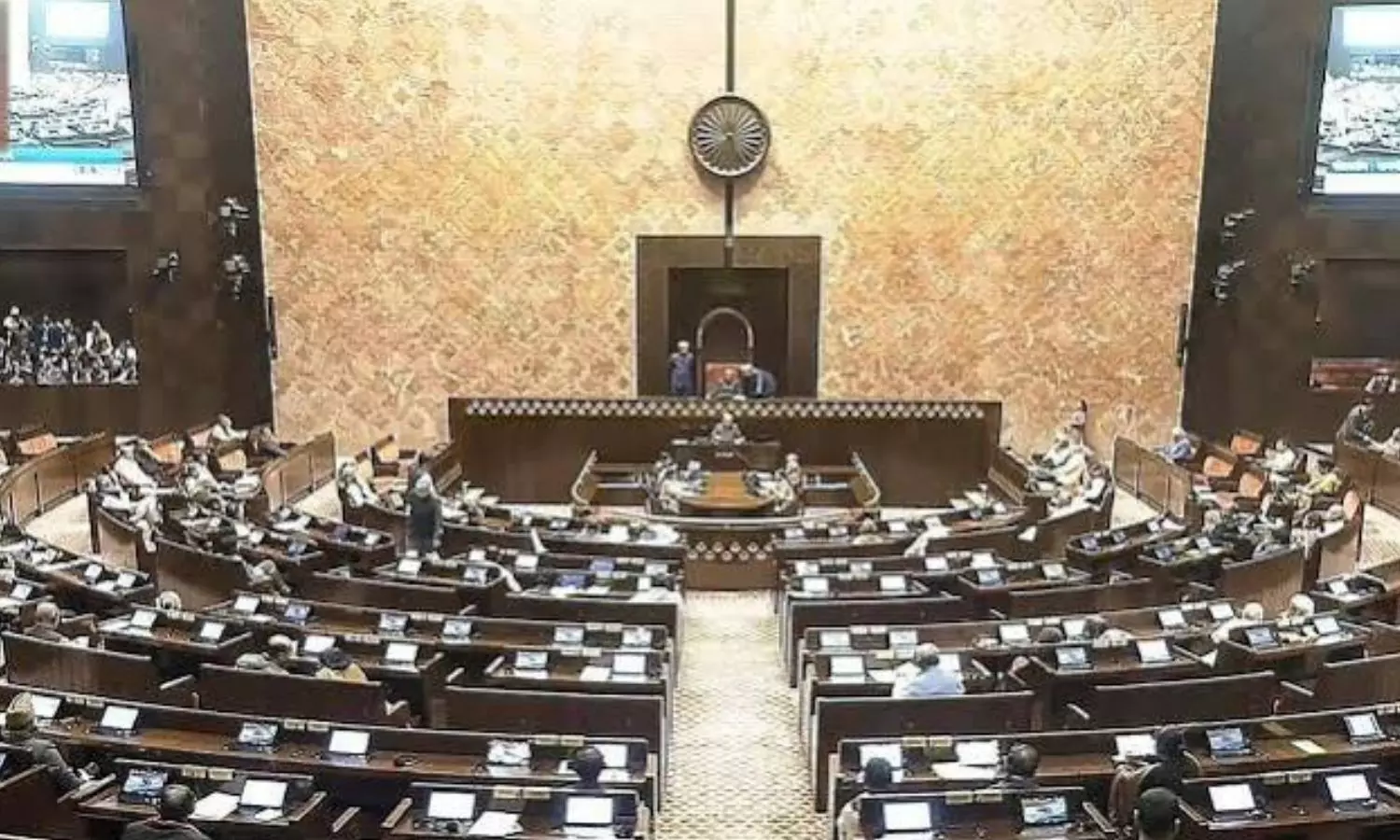
NEET Needs Legislative Mechanism to Fix Accountability—Parliamentary Panel.
Noting that trust in the examinations conducted by the NTA was a matter of social justice and national integrity, the Parliamentary Committee on Education, Women, Children, Youth and Sports, in its detailed report today, called for a legislative mechanism to fix the accountability of the agency conducting the examination.
The detailed report said, "The education department may introduce an appropriate Parliamentary framework that ensures NTA's accountability to Parliament." It said that the cancellation of the NEET (UG) 2026 makes it clear that further improvement is a must. The NTA on May 12 cancelled the NEET (UG) 2026 exam conducted on May 3 amid allegations of paper leak.
"Organised networks that profit from examination fraud are adaptive and resourceful, and will always seek the weakest link in the chain. The NTA therefore needs adequate staff, robust security protocols, clear accountability mechanisms, and digitalization of operations and examinations to ensure that it stays ahead of any challenges," said the panel.
Among major reforms suggested by the committee are conduct of examinations in the computer-based test model instead of pen and paper and also involvement of government-owned and operated centres to hold entrance tests and reduction in reliance on private centres.
This should be contrasted with the demands the opposition parties make during street protests and what many states like Tamil Nadu say. They want NEET to be scrapped. The committee did not endorse that view.
The committee further recommended broad basing of question banks and suggested that students who arrive later at exam centres be allowed to sit for the test after recording an undertaking.
"The Committee notes that investment in question banks is the most viable defence against paper leaks in the long run. The repeated use of the same question sets or the practice of having examiners set new question papers every year can be a risk to the integrity of the examination process.
"The Committee, therefore, is of the view that NTA should invest in building a large, diverse, and continuously updated question bank which can be drawn on to set papers without the advance knowledge of the question-setters," said the panel.
It further recommended that the NTA must rely on bona fide experts from our most renowned educational institutions ' including IITs, AIIMSs, IIMs to develop its question banks and for translation.
"The NTA must also develop a system to check the track record of said experts to establish their integrity and to rule out any conflict of interest (e.g., owners or faculty of private coaching centers, family members giving the exam, etc.) before recruiting them," says the report "Reforms and Strengthening of NTA".
"The Committee notes that of the 39 sanctioned positions in the NTA, only 23 officers are currently in position and on deputation to the NTA - a vacancy of 41%. .. all the 39 permanent posts that exist in the NTA are currently filled through a deputation mode. NTA should therefore hire its own officers on a permanent basis, it added.
Cancer Prevention: Lifestyle Changes That Lower Your Risk
Tesla launches Noida Experience Centre, adds third touchpoint in Delhi-NCR
Preparation of Graduates' MLC Voter List Must Be Done Thoroughly and Within the Deadline: District Collector Adarsh Surabhi
17.03 lakh voters’ documents verified after SIR notices: Delhi CEO
India-Liberia led group aims to bring safety of seafarers to centre of global discourse: MEA
Prez to Meet Opposition Delegaton at 8 PM
Supreme Court gives nod for local body elections in AP
Delhi Turns into a Fortress Amid Hectic Political Activity Against CEC
Supreme Court dismisses AP’s Petition on 34 % BC reservations
Bypoll Results 2026: BJP Leads In Bengal And Assam, Vijay’s TVK Faces Test In Tamil Nadu


