




- 400 students showcase talent at Seva Sankalp Abhiyan contests
- Dasara: Police identify 40-plus parking areas
- Pastors’ training meet concludes
- Hyd–Vijayawada highway set for six-lane upgrade
- SC rejects AP plea on 34% BC quota
- Uttam woos Swiss investors to Telangana
- SC clears way for local body polls
- Ponguleti sets 18-month deadline for land re-survey
Stage Set for Showdown Between CJP and Police; Delhi Under Thick Blanket of Security
In Short
Meanwhile, Delhi police have made unprecedented security arrangements, with around 26000 police and paramilitary personnel deployed across the city. The police have been taking many activists, particularly those with criminal backgrounds, into preventive custody.

Share :
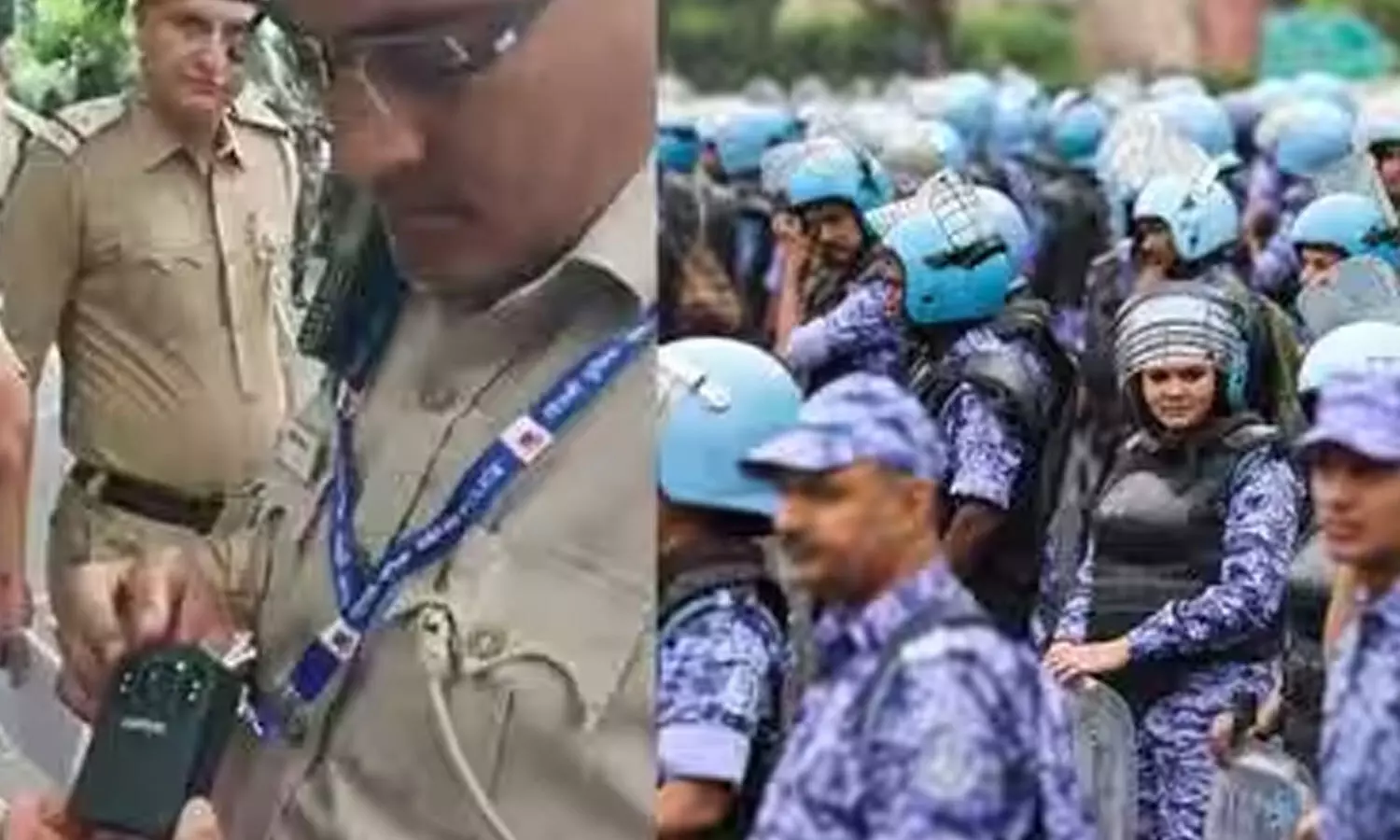
The stage is set for a massive showdown between the Cockroach Janata Party and the Delhi Police. The CJP founder Abhijeet Dipke, his spokesperson Saurav Das, and others would be landing in Delhi at 10 am. Some CJP activists have reached the Delhi airport to receive them.
Meanwhile, Delhi police have made unprecedented security arrangements, with around 26000 police and paramilitary personnel deployed across the city. The police have been taking many activists, particularly those with criminal backgrounds, into preventive custody. They have been shifted to 13 detention centres. It may be recalled that when CJP protested at Jantar Mantar in July, the police detected that over 2800 people with criminal backgrounds had participated in the protest, leading to violence.
The entire Jantar Mantar area and Central Delhi have been completely sealed. Police have advised Delhiites not to come to central Delhi until evening. All Metro stations have been closed, and only passenger interchange at these stations is permitted. Over 200 trains from across the country are said to have been cancelled.
So far there is no crowd at Jantar Mantar, but some high drama is expected after Dipke and his followers land in Delhi. Heavy checking at all entry and exit points of Delhi is being done, and not just for private vehicles or commercial vehicles; even those coming on foot are being put under surveillance.
According to DCP Anant Mittal, "Special security arrangements are in place at inter-state and inter-district borders. We are preventing unauthorised elements from entering New Delhi and checking them. Our effort is to ensure that everything remains peaceful and law and order is maintained."
Police personnel have also been equipped with body cameras to record any instances of manhandling or physical altercations during the demonstration. Railway stations have also been put under drone surveillance.
The New Delhi district has been divided into 20 zones for close monitoring by senior police officers, including joint commissioners, deputy commissioners and additional deputy commissioners. Special commissioners heading various units are also keeping a close watch on developments.
However, the CJP activists feel that this is a panic reaction by the government. Talking to media persons at the airport, some of the CJP activists who went there to receive Dipke said that there was “Tanashahi” in Delhi. But they refuse to accept that they did not follow the rule of applying for permission 10 days in advance, nor are they willing to acknowledge the violence that had taken place in July.
All that they keep repeating is that protest is their fundamental right. True, but they ignore the next clause, which says with reasonable restrictions.
It may be mentioned here that during the UPA regime, when Anna Hazare protested, Rahul Gandhi in Lok Sabha said, such protests are “Dangerous precedent to society.” The then PM Manmohan Singh said such protests would lead to “Economic progress being hijacked and the then Union Minister P Chidambaram said, “Neither such protests were utterly wrong.”
When the opposition parties during the regime of Indira Gandhi took to the streets to protest, she said, “These were the people who were destroying democracy.” When further questioned, she took a jibe, saying, “I am sorry you people have short memory. Those who could not win the election say we must take the battle to the streets. Morarji Desai is on record in an interview saying we are going to surround the PM's house so that she cannot come out.”
But the same opposition feels that it is their fundamental right to protest and that they don’t need any permission and that the government was behaving in an autocratic manner.
Meanwhile, the authorities are monitoring social media platforms for attempts to mobilise people for the protest. Liquor shops across Delhi will remain closed on Saturday as a precautionary measure.
Telangana: Nine-day Bathukamma festival to begin today with Engili Puvvula Bathukamma
Delhi on high alert ahead of Jantar Mantar protest; Metro stations closed, borders sealed
Rains likely in AP, Telangana due to expected cyclonic circulation
Delhi-NCR wakes up to cool breeze; IMD predicts rain, thunderstorms over weekend
Rev up road projects in CURE: CM Revanth to officials
Rs 5,000-cr German aid to boost TG urban makeover
Special Cabinet meet on Oct 12 to tackle El Nino
Kudos to GST Council for charting a new path
Ati Sarvatra Varjayet: Opposition must know where to draw the line
EC yet to take a decision on 18.12L electors


