Curbing Heat Problems In An Industrial Setup With Evaporative Cooling

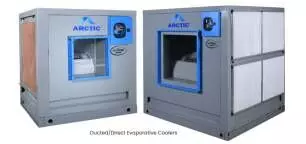
Curbing heat problems in an industrial setup with evaporative cooling
The arrival of summer is accompanied by severe heat waves that sweep the country under a prolonged spell of high temperatures.
The arrival of summer is accompanied by severe heat waves that sweep the country under a prolonged spell of high temperatures. With the temperature exceeding 44° C across several parts of the country, IMD has issued yellow and orange alerts in regions reeling under extreme weather conditions. Raising a lot of concern around public health and safety, the condition requires immediate attention when it comes to the industrial setup.
Given that industrial plants are intrinsically complex structures accommodating heavy machinery for performing critical operations, the heat problem only gets intensified in the facility. The processes conducted are responsible for disseminating a lot of heat, which further escalates the temperature within the space. Additionally, with sweltering summers lying ahead, expected to reach their pinnacle in the coming months, it is only going to worsen the situation in industrial setups.
The uncontrolled heat within the space accounts for acute product deterioration that severely jeopardizes the quality of the products. Moreover, giving rise to uncomfortable conditions, the scorching heat renders the premises unsuitable for working. In extreme conditions, prolonged exposure to excessive heat can culminate in the development of a phenomenon called heat stress among the occupants of the space. Owing to this, the workers become susceptible to health conditions such as dehydration, heat exhaustion, swelling, cramps, etc., which can immensely compromise their productivity. Extreme heat also increases the chances of heatstroke among employees, which can at times take a fatal turn of events. Looking at the repercussions of soaring temperatures, it can create a lot of hassles in the smooth completion of day-to-day operations.
As a result, it necessitates adequate cooling solutions across the industrial setup to maintain the temperature within safe limits and drive the enhanced performance of the employees. However, perceiving the large and complex infrastructure of the facilities, it poses the additional challenge of cooling the extra space, which is responsible for wasting a lot of energy. Therefore, it is essential to deploy industrial evaporative cooling to efficiently cool down the space in the most cost-effective way.
It is adept at cooling down the large spaces as compared to other alternatives available in the market, such as air conditioning, which requires the installation of a large number of systems, resulting in steep maintenance and operational costs. This can be impractical and incur a heavy financial burden on the company, which can be very difficult to comply with most of the time. Contrary to this, making use of evaporative cooling facilitates effective ventilation of the entire space in the most economical way, where it projects minimal installation costs. Additionally, the average setup cost of evaporative cooling accounts for just one-fourth of the total setup cost of air conditioning systems.
The cost-effective solution of industrial evaporative cooling can be majorly attributed to its ability to make use of natural resources. It works on the mechanism of extracting 100 percent natural air from the ambience, providing an environmentally friendly solution for cooling down the space. In the process, it drives a continuous supply of oxygen to the space, which plays a crucial role in ensuring proper circulation of fresh air and reducing the sultriness of the facility significantly. At the same time, it comes in handy for eliminating the stagnant indoor air from the space that provides a conducive environment for the proliferation of microorganisms such as bacteria and viruses. Consequently, it efficiently removes fumes, odors, carbon dioxide, various airborne impurities, and built-in dust present within the enclosed space. Thereby, in addition to cooling down the facility, the role of evaporative cooling extends to improving the indoor air quality as well.
Here, simply by making use of natural resources, it curtails the temperature by 10 °C to 12°C in the industrial setup. It harnesses the benefit of water-saturated cooling pads to filter out the hot, dry air. In order to bring about the cooling effect, the systems initiate evaporation of water that forms cool vapors. For further optimizing the output, evaporative cooling deploys high-adsorbent materials that amplify the saturation efficiency of the systems. Likewise, it plays a crucial role in augmenting the performance of the systems, thereby immensely contributing to starkly bringing down the overall running cost of equipment. It translates to a significant plunge in energy consumption, where evaporative cooling accounts for 80 percent less utilization of electricity as compared to other alternatives available in the market. Furthermore, installing ARCTIC coolers can help in proficiently cooling down the space while maintaining indoor air of the highest quality, and that too in the most hassle-free and comfortable way.
In addition to this, the systems deploy EcoCool evaporative cooling pads that come in handy for converting sensible heat to latent heat. Being highly efficient and durable, it ensures the fresh air leaving the pad is cold and humidified, which plays an instrumental role in reducing the temperature of the space.
Therefore, with the peak summers yet to come, it is essential that industrial setups are prepared beforehand to avoid any unforeseen situation where the health of the employees is impacted or the business operation undergoes a brief hiatus. It is recommended that industrial evaporative cooling solutions are installed to ensure comfortable working conditions with the help of reduced temperature and improved quality of air.
(This article is authored by Debashish Roy Choudhury, AVP, ARCTIC Division, DRI)