Govt Makes Sanchar Saathi Mandatory on All Phones: What the App Does in 5 Key Points

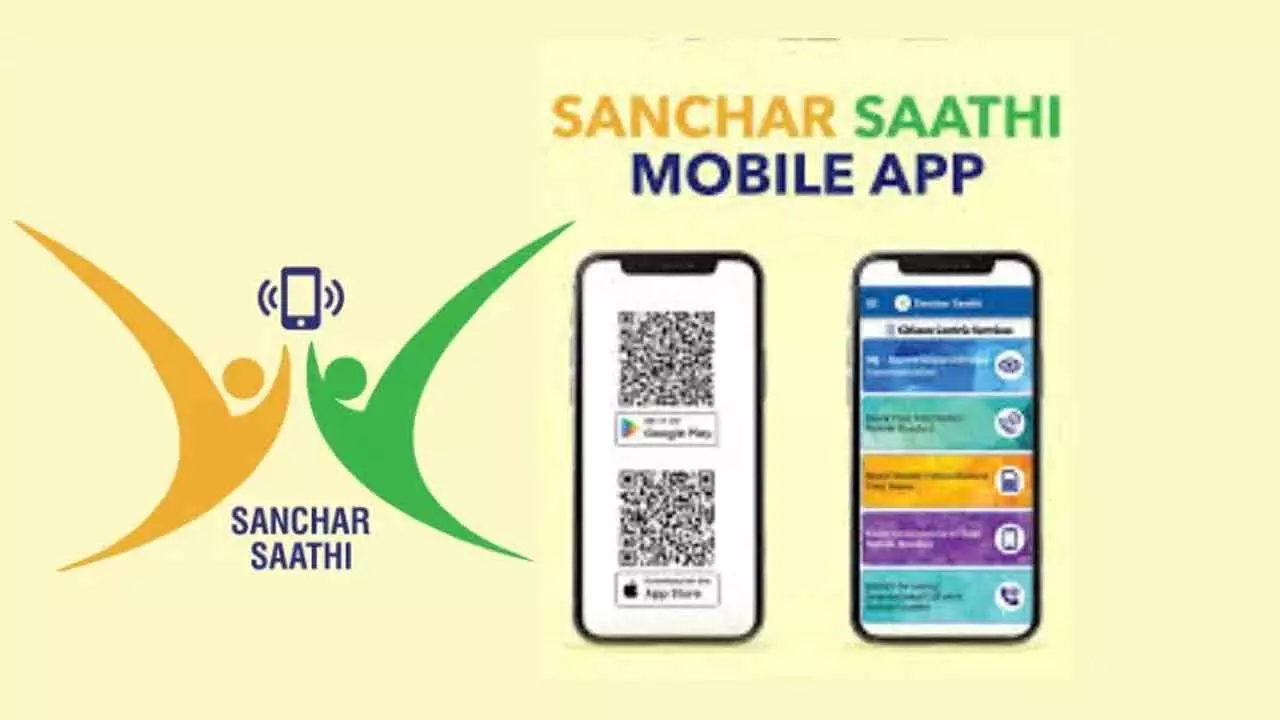
The Indian government has mandated the undeletable Sanchar Saathi app on all smartphones, sparking major privacy concerns and nationwide debate.
The Indian government has officially confirmed that Sanchar Saathi — its telecom security and tracking app — will soon become a mandatory feature on every smartphone sold or used in the country. Hours after a leaked memo hinted at this move, the Ministry of Communications released a late-night PIB statement directing all phone manufacturers to pre-install the app and ensure it remains active and visible to users.
The announcement triggered a countrywide debate, with many raising questions about privacy, data access, and the growing mandate of government-linked apps on personal devices. Here is the full story explained in five key points.
1. Government’s New Mandate for All Phones
The government has issued clear and non-negotiable instructions. As per the directions sent to all major smartphone makers — including Apple, Samsung, Xiaomi, Vivo, and others — Sanchar Saathi must come pre-installed on every device manufactured or imported for India.
The note states that companies must:
Make the app visible during device setup
Prevent users from disabling or uninstalling it
Manufacturers have been given 90 days to comply and 120 days to submit a compliance report.
2. Why the Government Says It Is Needed
According to the Department of Telecommunications (DoT), the move is aimed at curbing cyberfraud, blocking stolen mobile phones, and preventing misuse of telecom resources. The government links this mandate to increasing threats such as duplicated IMEIs, fraudulent SIM connections, and growing mobile-related scams.
The PIB release claims the decision is meant to “safeguard the citizens from buying non-genuine handsets, enable easy reporting of suspected misuse of telecom resources and increase effectiveness of the Sanchar Saathi initiative.”
3. What the Sanchar Saathi App Actually Does
Sanchar Saathi is a government-developed mobile security platform that integrates with the CEIR (Central Equipment Identity Register). Its key features include:
Blocking lost or stolen smartphones across all networks
Validating IMEI numbers to ensure authenticity
Showing users how many mobile numbers are linked to their identity
Reporting suspicious communications or misuse
Supporting police investigations involving stolen devices
However, concerns have emerged because the app requests extensive permissions, including access to call logs, camera, messages, and other sensitive functions.
4. How the App Works Behind the Scenes
Once activated, the app connects the phone’s IMEI with the CEIR database. If a user reports their device as stolen, CEIR can instantly block the IMEI nationwide, rendering the phone unusable even with a new SIM.
Government data claims the system has already:
Helped recover over 700,000 stolen phones
Blocked more than 3.7 million devices
Removed 30 million fraudulent mobile connections
The app also alerts users about unknown SIM cards issued under their name, helping prevent identity misuse.
5. The Major Controversy Surrounding the App
Despite the government’s safety pitch, public sentiment online shows significant discomfort. Many users compare the move to policies in more authoritarian countries, where mandatory, non-removable apps enable state surveillance.
Critics argue that the inability to delete or disable the app gives the government unprecedented access to personal data and device behaviour.
Political commentator Tehseen Poonawala wrote on X: "Outrageous! Wake up INDIA! The Govt's Sanchar Saathi app mandate is a blatant assault on our privacy & freedom! By forcing it pre-installed on every new phone, not allowing us to uninstall the aap, all under the guise of 'safety', the government will potentially have the power to spy on our calls, texts & location. This is surveillance at its worst, & the government will have the power to track us like criminals! We need to fight this."
As the directive rolls out, the debate between security and privacy is only expected to intensify.