India Pushes for Sovereign AI to Secure Data and Strengthen Local Innovation

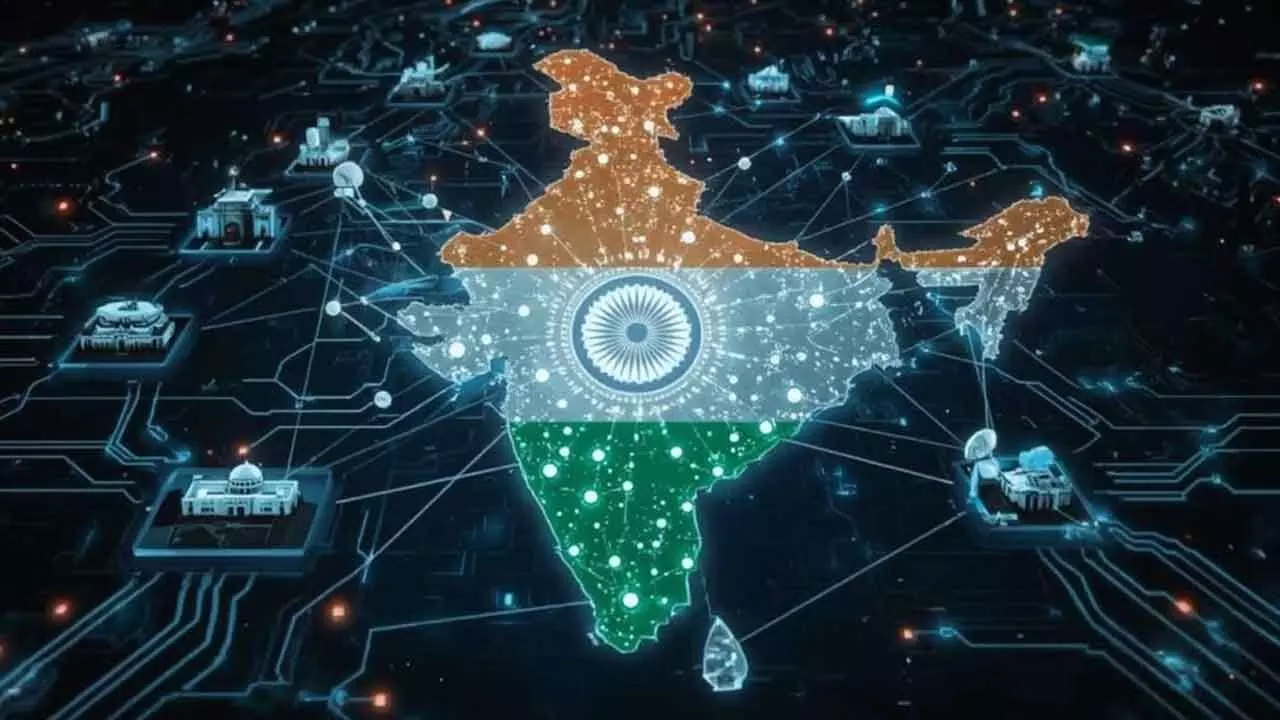
India is accelerating its push for Sovereign AI to secure citizen data, boost local innovation, and reduce reliance on foreign models.
As global technology leaders gather in New Delhi for the India AI Impact Summit, the spotlight is not just on artificial intelligence innovation — but on India’s ambition to build and control its own AI future. With industry heavyweights like Sam Altman of OpenAI, Microsoft executives, and Google’s Sundar Pichai attending, the event underscores AI’s growing influence. Yet, beyond the global presence, India’s long-term strategy is becoming increasingly clear: Sovereign AI.
Sovereign AI refers to the development and deployment of artificial intelligence systems that are built, hosted, and governed within national borders. For India, this means creating AI models tailored to its linguistic diversity, cultural nuances, and regulatory needs — without depending entirely on foreign infrastructure.
The government has been vocal about encouraging domestic players to rise to the challenge. Startups such as Sarvam AI are being positioned as examples of what India can achieve independently. Sarvam AI and its complimenting tools are claimed to be better at ChatGPT and Gemini in various AI benchmark tests and that shows the power of having a local AI model to understand the geographical needs. The government is using Sarvam as an example to get other startups and companies to build for India, and also join its IndiaAI Mission.
The urgency behind Sovereign AI stems largely from data security concerns. With millions of Indians using platforms like ChatGPT and Gemini — both developed by US-based companies — policymakers worry about sensitive data being processed outside India’s jurisdiction. Any possible data mishap with the global AI giants will be hard for India’s regime to act on, which is not the case with a locally-built AI model like Sarvam and others to come in the near future.
Beyond security, there’s also the question of context and relevance. AI models trained primarily on Western datasets may struggle with India’s regional languages and socio-cultural complexities. You also realise the importance of context with AI models and how they can easily hallucinate if the training isn’t localised through the foreign models. This is why Sarvam performs better in Indic languages than ChatGPT and even Google’s Gemini, which shows the value of sovereign AI models.
However, building Sovereign AI is no small feat. Experts argue that India must establish the entire AI stack domestically — from advanced semiconductor hardware and cloud infrastructure to foundational software models. The demand for sovereign AI is credible and paramount for the success of the industry in India. But for the technology to thrive but also survive, we need all the resources to be set up locally. This includes the hardware + software AI stack, built indigenously, and no external support required.
There is a big reason why Gemini and ChatGPT are available for free in India for billions, and the government sees the need to intervene and get the local players assembled, and give them the platform to battle with the best in the world.
As India stakes its claim in the global AI race, the coming years will likely determine whether the country can translate ambition into autonomy. The message from the summit is unmistakable — India wants AI that is not just powerful, but proudly homegrown.