Sam Altman Predicts AI Superintelligence by 2030, Warns of Job Disruptions

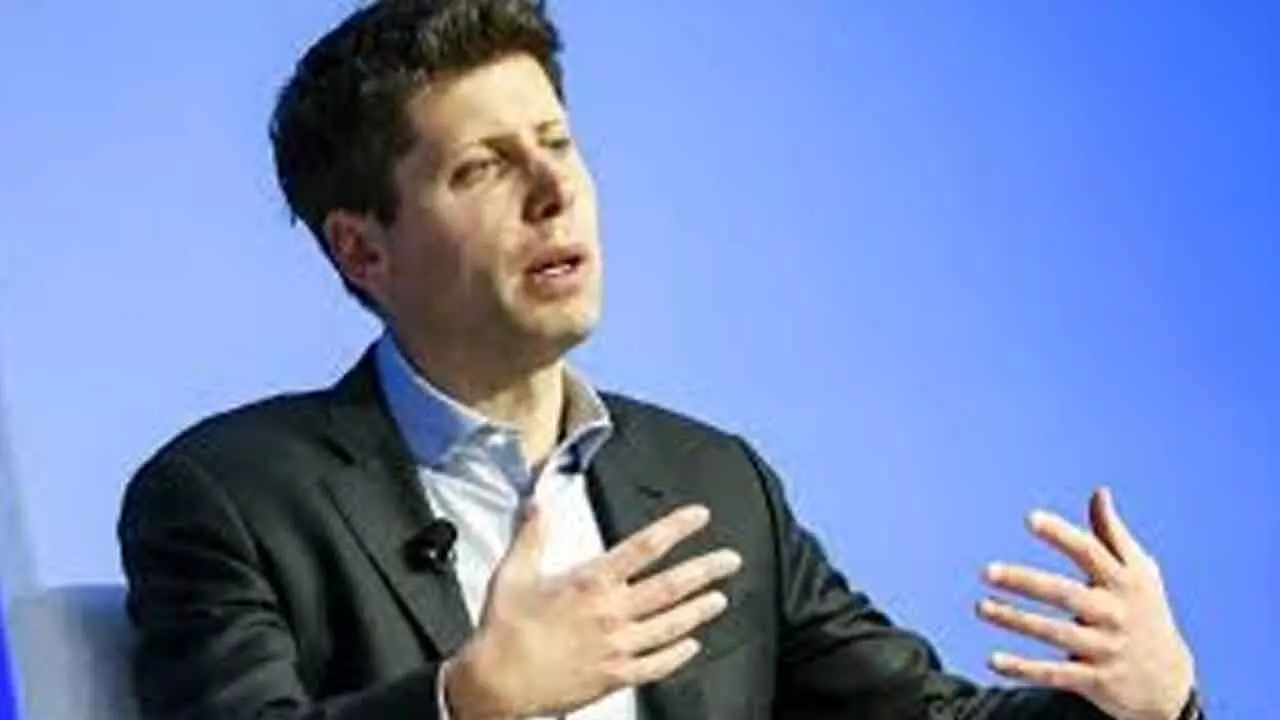
Sam Altman foresees AI reaching superintelligence by 2030, reshaping industries and potentially replacing 40% of human jobs worldwide.
Artificial intelligence is advancing at a pace that could soon outstrip human abilities, according to OpenAI CEO Sam Altman. Speaking after receiving this year’s Axel Springer Award, Altman outlined a vision where AI could fundamentally transform science, work, and society before the end of this decade.
“In many ways, GPT-5 is already smarter than me, and I think a lot of other people too,” he remarked, adding that while AI still falters in tasks humans do naturally, its rate of improvement is “extremely steep,” as reported by Business Insider.
Altman suggested that within just a few years, AI could make scientific breakthroughs beyond human capability. “In another couple of years, it will become very plausible for AI to make, for example, scientific discoveries that humans cannot make on their own. To me, that'll start to feel like something we could properly call superintelligence.”
He even provided a timeline: “By the end of this decade, by 2030, if we don't have extraordinarily capable models that do things that we ourselves cannot do, I'd be very surprised.”
The Jobs Question
While the prospect excites researchers, Altman also acknowledged the darker side—potential mass job loss. He estimated that AI could soon perform 30 to 40 per cent of tasks currently handled by humans. “I can easily imagine a world where 30 to 40 per cent of the tasks that happen in the economy today get done by AI in the not very distant future,” he said.
Still, he stressed that this doesn’t mean all jobs will vanish. Instead, the nature of work will shift, with some roles disappearing and entirely new ones emerging. The challenge, according to him, lies in adaptability. Altman calls this the “meta-skill of learning how to learn”—a necessity for thriving in the AI-driven economy.
Hope Amid Fears
Altman dismissed the notion that superintelligence would render humans irrelevant. Referencing OpenAI cofounder Ilya Sutskever, he recalled the hope that AGI might treat humanity “like a loving parent.” His own stance was more measured: “Even if it has no intentionality, asking it to do something could have consequences we don't understand. So, it is very important that we align it with human values. I don't think it'll treat humans like ants.”
From Software to Hardware
The OpenAI chief also hinted at hardware ambitions. With the company recently hiring a former Apple designer, Altman teased a “small family of devices” designed to change how people use computers. “It will be good-looking,” he quipped, envisioning tools where AI manages complex tasks end-to-end, sparing users the burden of juggling countless apps and notifications.
Politics, Parenting, and the Future
Altman, who became a father this year, reflected on the qualities he hopes to instill in his son—adaptability, resilience, and creativity. These, he argued, will remain vital in a world increasingly shaped by AI.
On politics, he ruled out AI leaders for now but acknowledged that governments will soon lean heavily on AI for decision-making. Still, he emphasized that people want humans making the final calls.
While he laughed off AI for relationship advice— “I’ve tried it, but no, that’s not one of my big personal use cases”—he insisted AI will soon sit at the center of nearly every conversation, reshaping industries, economies, and daily life.