Union Budget 2026: What India’s Tech Leaders Expect from the Government

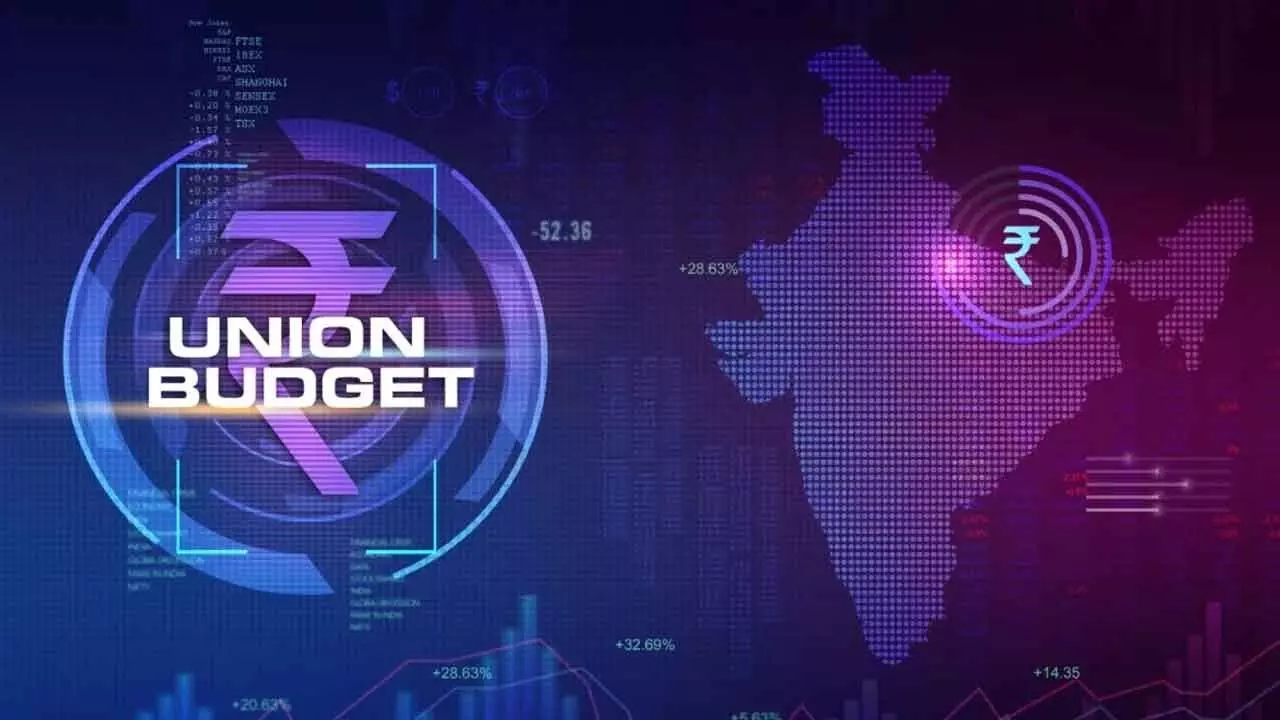
As India prepares for the Union Budget 2026, anticipation is building across industries—but nowhere is the buzz louder than in the technology sector. With digital innovation driving economic growth and transforming how businesses and consumers operate, industry leaders are looking to the government for policies that will fuel investment, bolster infrastructure, and empower Indian tech talent on the global stage.
From calls for enhanced R&D incentives to demands for robust data protection frameworks, top executives from leading technology brands are weighing in with clear expectations.
Mr Rajeev Singh, Managing Director, BenQ India and South Asia
"The Union Budget 2026–27 will boldly advance India's Viksit Bharat@2047 vision by prioritizing transformative investments in education technology, youth skilling, and middle-class prosperity—essential catalysts for the consumer electronics and edtech sectors. As a pioneer in monitors, projectors, and interactive flat panels (IFPs) that power modern homes, hybrid offices, and smart classrooms across the nation, we anticipate a comprehensive strategy that aligns fiscal measures with our sector's growth trajectory.
In particular, we foresee a substantial allocation under PM SHRI and Samagra Shiksha schemes to revolutionize smart classrooms, mandating at least 50% local procurement of IFPs and projectors to equip 1.5 lakh schools and transform hybrid learning for 20 million students, enabling brands like ours to deploy over 2.5 lakh units annually. Complementing this, an enhanced PLI 2.0 scheme with ₹10,000 crore outlay would offer 7-10% incentives for localizing advanced 4K/8K panels, laser projection technology, and eye-care monitors, slashing import dependence from 45% to under 10% while scaling manufacturing capacity.
Moreover, a dedicated skilling fund for display manufacturing, AV integration, and optics training would empower the upskilling of over 4 lakh youth across 20 Tier-2/3 hubs, generating 6 lakh direct and indirect jobs in the ecosystem."
Mr Pankaj Rana, CEO, Hisense India
"The Union Budget 2026–27 offers a transformative platform to operationalize India's Viksit Bharat@2047 vision, with youth skilling and middle-class empowerment as foundational pillars that will cascade benefits to high-growth sectors like consumer electronics. As Hisense India accelerates its 'Make in India' commitment—producing advanced MiniLED TVs, smart ACs, refrigerators, and washing machines—we anticipate a few targeted measures to unlock our sector's potential.
For instance, an increase in allocation for electronics by 20-25% with simplified norms for next-gen components like RGB MiniLED panels and AI chipsets would enable us to localize 60% of TV production value by FY27. Moreover, a dedicated fund for vocational training in semiconductors, display tech, and assembly lines, potentially partnering with tech brands, would also serve to skill 5 lakh youth annually and create 2 million jobs in the electronics value chain.
Furthermore, fast-tracking electronics parks in Tier-2/3 cities with subsidized power/land, plus duty drawbacks on exports would help target $50 billion in TV/appliance shipments by 2028, aligning with global innovation."
Mr Ravi Agarwal, Co-founder and Managing Director, Cellecor
“The Union Budget 2026–27 is a pivotal opportunity to accelerate India’s Viksit Bharat@2047 vision by reinforcing domestic manufacturing as the backbone of the consumer electronics sector. For Cellecor, which is steadily expanding its Make in India footprint across smart TVs, air conditioners, refrigerators, and kitchen appliances, policy stability and targeted manufacturing support will be critical to building long-term scale and competitiveness.
A sharper focus on electronics manufacturing incentives, rationalised component duties, and simplified input norms can meaningfully deepen localisation and help the industry progress towards 50–60 percent domestic value addition. Strengthening India’s manufacturing ecosystem through investments in skilling, electronics clusters, and MSME supplier networks will be essential to move up the value chain and reduce import dependence.
With Tier-2 and Tier-3 markets emerging as the next engines of both consumption and production growth, a manufacturing-first policy approach can enable Indian brands to serve domestic demand while building globally competitive capabilities. Such measures will not only accelerate Make in India outcomes but also position India as a credible hub for consumer electronics manufacturing aligned with the Viksit Bharat@2047 roadmap.”
Srividya Kannan, Founder-CEO Avaali
“As India prepares for Union Budget 2026, the focus should continue on building a robust ecosystem for technology, innovation, and trust. We hope to see continued support for AI research and development, including grants, incentives, and policy measures that encourage enterprises to adopt AI and automation, strengthen efficiencies, and make data-driven decisions. Strengthening cybersecurity infrastructure and frameworks will be essential as digital and AI workflows become more pervasive.
India’s Data Protection and Privacy landscape also marks a critical juncture. While the DPDP Rules introduce global-standard protections, enterprises face the challenge of aligning compliance with trust. Budget 2026 could help by supporting technology-driven approaches to privacy, promoting architectures where consent, encryption, access controls, and automated governance are foundational, not performative. This will empower Indian tech companies to position themselves as privacy champions while building globally competitive solutions.
Continued focus on the Global Capability Center (GCC) ecosystem, Tier-II/Tier-III city growth, and future-ready talent development, including initiatives promoting women in tech, remains crucial. Similarly, MSMEs and deep-tech startups should receive support through easier access to credit, innovation grants, and technology adoption incentives.”
Rahul Garg, Founder & CEO, Moglix
“As India approaches the Union Budget on 1 February, the global landscape defined by shifting trade blocs and evolving tariff structures demands a pivot from resilience to dominance. Geography may be in flux, but capability is what endures. To achieve the Viksit Bharat vision, the Budget must move beyond basic incentives to deepen our industrial roots. We need targeted support for MSMEs to integrate into global value chains, alongside fiscal frameworks that accelerate green manufacturing and technological self-reliance in defence and electronics. By strengthening our logistics backbone and incentivizing domestic R&D, we can transform global volatility into a competitive edge for Indian industry.”
Mr. Murali Mantravadi, Joint Managing Director of Energy Bots
"India’s digital ecosystem has reached a structural inflection point. The foundation of digital identity, payments and connectivity is in place. The next decade of economic growth now depends on turning scale into sustained technological leadership. This budget presents an opportunity to move beyond short-term announcements and focus on long-term technology capacity building. It must treat AI, cloud, cybersecurity and deep tech as national digital infrastructure. Strategic allocation for compute capacity, sovereign AI stacks and data centre expansion, paired with robust R and D tax incentives and faster pathways from prototype to product, will unlock the true economic potential of India’s tech base.
If India wants to compete globally and export high value software and innovation, policy must move beyond pilots, reduce cloud and data tax friction, and create long term predictability in funding and regulation. In 2026 27, the question is not whether India can adopt technology. It is whether policy can keep pace with India’s capability."