




- Google claims Gemini hacked three companies but stopped before causing damage
- CM Chandrababu to visit two-day tour to Chittoor fro. 21-22 Sept
- Elon Musk claims AI could double the US GDP growth rate to 4% by 2027
- AI models could soon improve themselves, leading labs suggest
- iPhone 18 Pro Battery Replacement Cost in India Rises to Rs 13,900
- SER GM inspects Jharsuguda station
- Naveen bats for small traders amid UPI charge row
- Low pressure over Bay, 20 districts on alert
Elon Musk claims AI could double the US GDP growth rate to 4% by 2027
In Short
Musk’s estimate of 4 per cent is higher than the Federal Reserve’s estimate of 2.4 percent. This comes at a time when higher borrowing costs are testing the AI investment cycle.

Share :
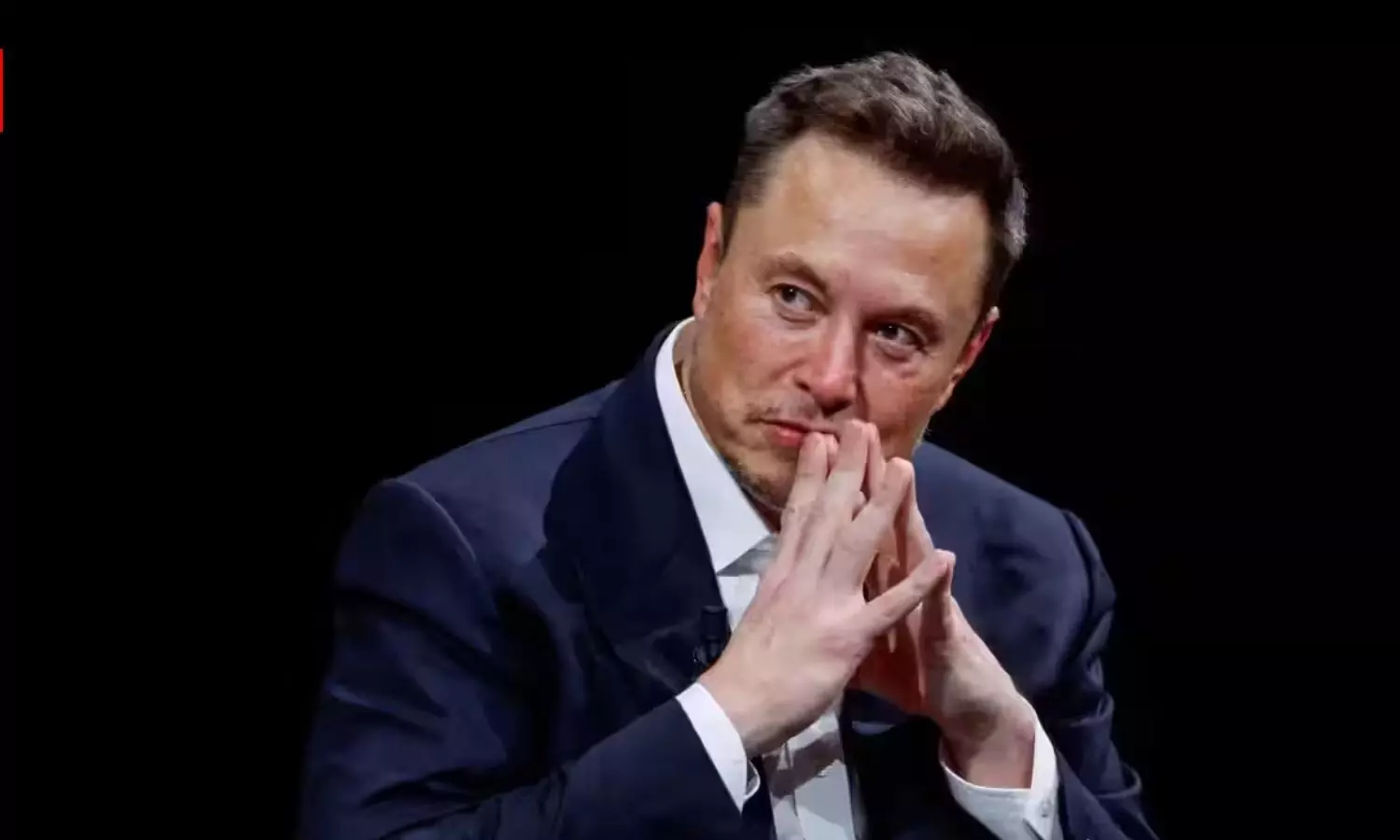
Elon Musk
Tesla CEO Elon Musk has estimated that artificial intelligence could boost US economic growth to nearly 4% by 2027-roughly double the rate forecast without the technology.
"My guess is that AI will roughly double US GDP growth next year, going from ~2% to ~4%. Maybe even more," Musk stated in a post on X on September 18.
Musk did not disclose the premises behind his estimate nor specify how he measured annual growth. His forecast is much higher than the recent projection from the US Federal Reserve. Fed officials expect real GDP to grow at a rate of 2.4 per cent in 2027 according to projections released on September 16. Some individual forecasts were as low as 2 per cent and as high as 2.9 per cent. The Fed also projects 2.3, per cent growth for 2026.
The US economy grew by 1.5 per cent on a basis during the second quarter of 2026. This is a slowdown compared to the 2.1 per cent recorded in the three months as reported by the Bureau of Economic Analysis. The annualised quarterly numbers are not the same as the projections made by the Federal Reserve. The Fed looks at growth, from the quarter of one year to the fourth quarter of the next.
Musk has repeatedly predicted that AI and automation will drive a sharp increase in economic output. In early September, it estimated that AI could expand the global economy by 20 per cent to 30 per cent, equivalent to an additional $20 trillion to $30 trillion in annual output. It also identified electricity supply as a potential constraint on the expansion of AI computing capacity.
Its latest forecast comes as the AI investment cycle faces higher borrowing costs and lingering doubts about when the massive spending on data centres, chips, and computing infrastructure will generate adequate returns.
A recent report by Dolat Capital noted that the current cycle differs from previous tech booms because major cloud computing companies-known as " hyperscalers"-have shifted from asset-light business models focused on shareholder returns to AI infrastructure programs requiring massive capital investment.
Companies are funding this expenditure through internal cash flows as well as debt and equity, the brokerage firm indicated.
"Consequently, the AI capital expenditure (capex) cycle is facing its first significant macroeconomic test, as a more restrictive stance by central banks raises financing costs for an investment cycle that already demands substantial capital," Dolat Capital stated.
On September 16, the Federal Reserve raised its benchmark interest rate range by 25 basis points, setting it between 3.75 per cent and 4 per cent, after observing that inflation remained elevated.
Dolat Capital noted that rising bond yields, high US government debt, the normalisation of monetary policy in Japan, and increased spending on infrastructure and defence expenditure were putting upward pressure on the global cost of capital. It also highlighted the need to refinance an estimated $8 trillion in US Treasury securities.
The firm identified monetisation as the primary outstanding unknown regarding AI investment. Factors such as falling costs per token, improved model efficiency, and the short commercial lifespan of successive versions could make it difficult for companies to generate revenue quickly enough to justify current spending levels, according to the report.
"The key risk lies not in the demand for AI, but in whether incremental investment will continue to yield sufficient returns to sustain the current pace of spending," the document noted.
This analysis follows calls from some AI industry leaders to slow down the development of frontier models. Dario Amodei, CEO of Anthropic, recently urged companies to moderate the pace of advances in capabilities-a stance supported by Elon Musk and OpenAI CEO Sam Altman, according to a famous publication.

Danam disqualified: HC 'punishes' Khairatabad BRS MLA for joining Cong
Danam: Ready to contest Khairatabad bypoll
KTR welcomes High Court verdict
CM Revanth seeks Centre's help to tackle El Nino effect
Ties with US: India must stay focused on national interest
Land Chori returns to haunt Telangana politics - Will 2028 throw up a hung Assembly?


